

What is Sonic Chain?
Beginner
 5m
5m 


Introduction
In the ever-evolving world of blockchain, performance and scalability are key drivers of innovation. One of the latest advancements in this space is Sonic Chain, a high-performance Layer-1 blockchain that emerges as the successor to Fantom Opera.
At the heart of this transformation is Andre Cronje, one of the most influential figures in DeFi. Known for his groundbreaking work on Yearn Finance and his deep involvement in Fantom’s architecture, Cronje has returned to the forefront of blockchain development as the Chief Technology Officer (CTO) of Sonic Labs.
Beyond its technological upgrades, Sonic aims to foster a thriving ecosystem of DeFi protocols, NFT platforms, and developer-focused incentives. With its high-speed transactions (10,000+ TPS), full EVM compatibility, and a unique Fee Monetization model, Sonic is not just an upgrade from Fantom—it’s a bold new vision for Layer-1 blockchains.
This article will explore the evolution of Sonic, Andre Cronje’s role in its development, and some of the most promising projects launching on the network.
The Evolution from Fantom to Sonic
Fantom Opera emerged as one of the most promising Layer-1 blockchains in the race to solve Ethereum’s scalability issues. Launched in 2019, Fantom was known for its Directed Acyclic Graph (DAG)-based Lachesis consensus mechanism, which allowed for fast finality (1-2 seconds) and low transaction costs. Unlike traditional blockchains, Lachesis offered asynchronous processing, enabling high throughput without compromising security.
Fantom gained significant traction in DeFi and GameFi, with protocols like SpookySwap, Geist Finance, and Tomb Finance thriving in its ecosystem. At its peak, Fantom’s total value locked (TVL) exceeded $7 billion in 2021, positioning it as a major competitor to Ethereum, Solana, and Avalanche. However, despite its early success, Fantom faced several challenges that hindered its long-term growth.
As blockchain adoption increased, Fantom began to face performance and sustainability issues, leading to the decision to evolve into Sonic Chain. Fantom Foundation rebranded to Sonic Labs in 2024, launching Sonic Chain as a next-generation blockchain that builds upon Fantom’s strengths while overcoming its weaknesses.

Source: https://www.soniclabs.com/
Sonic retains full Ethereum Virtual Machine (EVM) compatibility, allowing seamless migration for existing Fantom and Ethereum-based dApps. However, its biggest game-changer is the Fee Monetization program, which directs up to 90% of transaction fees back to developers, creating a more sustainable and rewarding ecosystem.
Andre Cronje: The Architect Behind Sonic
Few figures in the blockchain space command as much respect as Andre Cronje, a developer, architect, and thought leader whose work has profoundly shaped decentralized finance (DeFi). Best known for creating Yearn Finance (YFI) in 2020, Cronje revolutionized yield aggregation by automating DeFi strategies, making high-yield farming more accessible to users. His contributions to DeFi extend beyond Yearn, having played a key role in the development of Keep3r Network, Solidly, and various other innovative protocols.
Cronje’s influence also extends to Fantom, where he was instrumental in designing the Lachesis consensus mechanism, which powered the Fantom Opera blockchain. His technical expertise and deep understanding of DeFi helped Fantom establish itself as a high-performance Layer-1 chain with a thriving DeFi ecosystem.
Despite his success, Cronje has been known for his on-again, off-again relationship with crypto development. In 2022, he publicly announced his departure from DeFi, citing concerns over its speculative nature and unsustainable financial models. However, his absence was short-lived, as he continued to contribute behind the scenes to Fantom’s development.

In 2024, Fantom announced its rebranding to Sonic, and with it, Cronje officially returned as the Chief Technology Officer (CTO) of Sonic Labs.
Key Features of the Sonic Chain
Sonic Chain introduces several enhancements over its predecessor, Fantom, focusing on scalability, developer incentives, and security. Designed as a high-performance Layer-1 blockchain, it aims to provide faster transactions, improved consensus mechanisms, and a more sustainable economic model for developers and users.
High-Speed Transactions: 10,000+ TPS with Sub-Second Finality
Sonic is designed to process over 10,000 transactions per second (TPS) while achieving sub-second finality. This represents an improvement over Fantom, which operated at 1-2 second finality and occasionally experienced network congestion during peak usage.
By refining its consensus mechanism and transaction validation process, Sonic aims to provide a more efficient and scalable blockchain environment, particularly for applications that require high-speed interactions, such as DeFi platforms and gaming applications.
EVM Compatibility: Seamless Transition for Ethereum and Fantom dApps
Sonic maintains full Ethereum Virtual Machine (EVM) compatibility, ensuring that developers can migrate existing Ethereum and Fantom-based applications without modifying their code.
This allows applications from Ethereum, Arbitrum, Optimism, and Fantom to operate on Sonic while benefiting from its improved speed and lower transaction costs. For developers, this compatibility simplifies deployment and expands accessibility to a wider user base.
Fee Monetization Model: Up to 90% of Transaction Fees Allocated to Developers
A key feature of Sonic is its Fee Monetization Model, which redistributes up to 90% of transaction fees to developers who contribute to the ecosystem.
This model is intended to:
- Provide an alternative to traditional blockchain reward structures, which often rely on inflationary token emissions.
- Incentivize developers based on actual network usage, potentially encouraging long-term engagement.
- Support sustainable dApp development by creating a more direct revenue model for builders.
By linking developer rewards to network activity rather than token emissions, Sonic introduces a different approach to incentivizing blockchain growth.
Major Projects and Ecosystem Growth on Sonic
Top DeFi protocols, including Aave, Pendle, and Silo Finance, are coming to Sonic. Additionally, several Sonic-native protocols are worth exploring.
Shadow Exchange
Shadow Exchange is a decentralized exchange (DEX) built natively on the Sonic Chain. Launched in January 2025, Shadow Exchange stands out as a concentrated liquidity platform, designed to optimize trading efficiency and reward liquidity providers in Sonic’s fast, low-cost ecosystem. With Sonic’s capability to handle 10,000 transactions per second (TPS) and deliver sub-second finality, Shadow Exchange leverages this speed to offer a responsive trading experience with near-zero slippage, making it a key hub for decentralized finance (DeFi) activity on the network.
At its core, Shadow Exchange introduces an innovative twist on the traditional automated market maker (AMM) model with its concentrated liquidity approach. This allows liquidity providers to focus their capital within specific price ranges, boosting capital efficiency and improving returns compared to older DEX designs. It’s powered by a unique incentive system called x(3,3), an evolution of Andre Cronje’s ve(3,3) framework from Solidly. Unlike its predecessor, which relied on long token lockups, x(3,3) offers flexibility—users can stake the native $SHADOW token to mint xSHADOW, a non-transferable token that grants voting rights, 100% of protocol fees, and rewards from exit penalties, all with a maximum vesting period of six months. This fluidity reduces friction and keeps participants engaged.
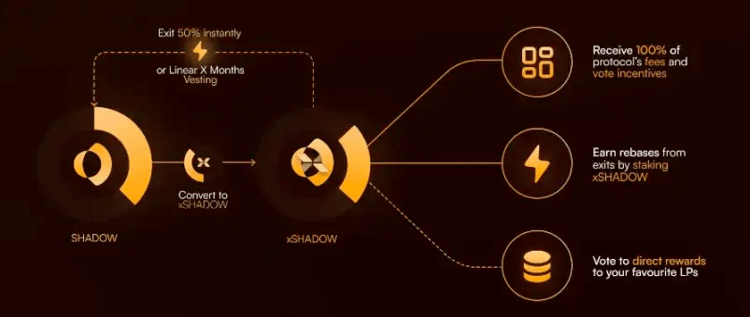
Shadow Exchange also features custom fee splits tailored to pool volatility, ensuring liquidity providers are rewarded based on risk, and a player-versus-player (PvP) rebasing mechanism that redistributes penalties from early exits to committed xSHADOW holders.
Sonic Gateway
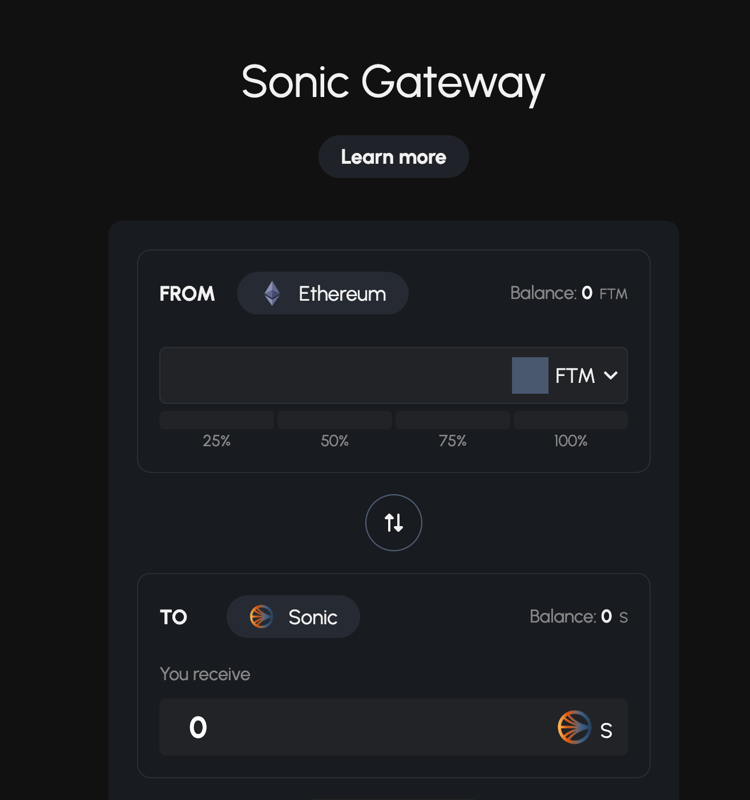
The Sonic Gateway is a decentralized bridge launched by Sonic Labs to connect the Sonic Chain with Ethereum, seamlessly linking the two ecosystems. Introduced alongside Sonic’s mainnet rollout in late 2024, the Gateway is a cornerstone of Sonic’s infrastructure, designed to tap into Ethereum’s vast liquidity while leveraging Sonic’s ability to process 10,000 transactions per second (TPS) with sub-second finality.
The Gateway operates as a trustless, validator-driven bridge, distinct from centralized or custodial alternatives. It uses a decentralized network of Sonic validators to secure and verify cross-chain transactions, ensuring assets like ERC-20 tokens (e.g., USDC, WETH) can move between Ethereum and Sonic without relying on a single point of failure. The process is straightforward: users initiate a transfer via the Sonic Gateway interface, locking assets on Ethereum, which are then minted as wrapped equivalents on Sonic (or vice versa for withdrawals).
Security is a priority, with the validator network staked via Sonic’s native $S token, aligning incentives to prevent fraud or downtime. If a validator acts maliciously (e.g., approving a fraudulent transfer), their staked $S can be slashed—partially or fully confiscated—disincentivizing bad behavior.
Origin Protocol
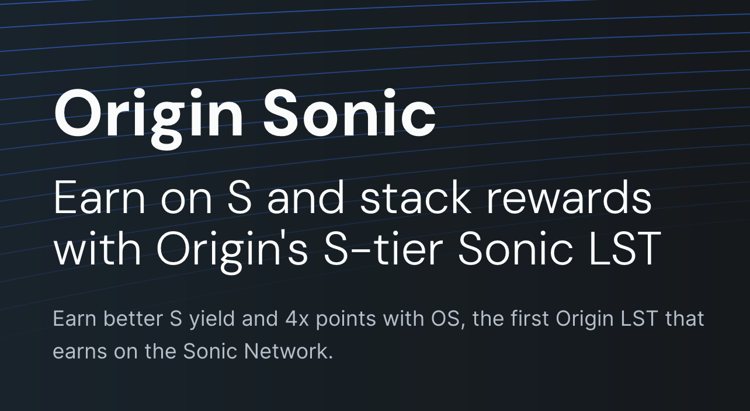
Origin Protocol is a liquid staking platform that launched on the Sonic Chain on January 22, 2025, bringing a powerful tool to Sonic’s fast-growing ecosystem. Built natively for Sonic, Origin allows users to stake Sonic’s native $S token while keeping their assets liquid for use in decentralized finance (DeFi) applications.
At its heart, Origin Protocol enables users to deposit $S tokens into its staking contract, receiving a liquid staked token, oS (Origin Staked Sonic), in return. This oS token represents the staked $S plus accrued rewards, which users can then deploy across Sonic’s DeFi protocols—like Shadow Exchange, Silo Finance, or Rings Protocol—for lending, trading, or liquidity provision. Unlike traditional staking, where assets are locked and illiquid, Origin’s liquid staking model ensures users don’t miss out on Sonic’s low-fee, high-speed opportunities while still contributing to network security (Sonic’s consensus relies on $S staking).
Origin leverages Sonic’s Fee Monetization model, where developers can earn up to 90% of transaction fees, incentivizing its tight integration with the chain. The protocol stakes the deposited $S with Sonic’s validator network, earning staking rewards (typically 5-10% APR, though variable based on network conditions), which are then distributed to oS holders after a small protocol fee.
Security-wise, Origin benefits from Sonic’s validator-backed infrastructure and its own audited smart contracts, launched with transparency to bolster trust. Its synergy with the Sonic Gateway bridge also means oS could eventually play a role in cross-chain strategies, though it’s currently Sonic-native.
In short, Origin Protocol is a foundational piece of Sonic’s DeFi puzzle, unlocking liquidity for stakers and amplifying the chain’s ecosystem momentum as of February 25, 2025. It’s ideal for anyone wanting to stake $S, earn rewards, and still dive into Sonic’s high-speed DeFi action—all in one shot.
Conclusion
Sonic Chain introduces several enhancements over its predecessor, Fantom, with a focus on higher transaction speeds, improved security, and a new developer incentive model. With its ability to process 10,000+ TPS with sub-second finality, full EVM compatibility, and a Fee Monetization model that redistributes up to 90% of transaction fees to developers, Sonic aims to create a more scalable and developer-friendly blockchain ecosystem.
The transition from Fantom to Sonic has been guided by Andre Cronje, who returned as CTO of Sonic Labs to lead its technical development. Sonic is designed to address some of the challenges faced by Layer-1 blockchains, including network congestion, developer retention, and security concerns in DeFi applications. By maintaining Ethereum compatibility and improving on Fantom’s original consensus mechanism, Sonic provides an updated framework that could appeal to developers and users looking for a more efficient blockchain platform.
Layer 1
Andre Cronje
What else do you want to learn?
Send
In This Article
Disclaimer

For questions & inquiries
info@tokeninsight.com
For research & editorial
research@tokeninsight.com
2018 – 2026 © TokenInsight Ltd. All rights reserved


Use TokenInsight App All Crypto Insights Are In Your Hands
Open