Inspired by Liquity with more collateral and flexible govern-parameters, Vesta is expanding capital efficiency on Layer 2. Kinda of a DeFi infrastructure builder role.
Vesta Finance is a lending protocol on Layer2. Currently built on Arbitrum, it will be deployed on more layer 2s in the future. It is inspired by Liquity protocol but with more collaterals supported like renBTC and gOHM. It also has the same features as Liquity like: over-collateral to mint stable coins, 110% collateral ratios for ETH, zero interest rate, etc. The project was incubated by OlympusDAO and received investments and support from 0xMaki, DCFGod, Lau Brothers and others as advisors. The project went live on February 9, 2022.
Unique Features of Vesta
Same features with Liquity
Initially deployed on Arbitrum, Vesta Finance is a decentralized lending protocol that supports multiple collateral, allowing users to overcollateralize three assets - ETH, renBTC and gOHM - to mint the USD-pegged stablecoin VST. The minimum collateralization ratio for ETH and renBTC must not be less than 110%, and the minimum collateralization rate for gOHM must not be less than 175%, otherwise it will face liquidation.
That means: a user who has $2,210 worth of ETH deposited in Vesta can lend up to 2,000 VST (reaching the lower limit of 110% collateralization rate) and pay a fee of 10 VST. However, in reality this user can only lend less than 2,000 VST to avoid being liquidated.
Minting a stable coin with a lower collateral ratio will improve capital efficiency but is extremely risky and can easily be liquidated if the price fluctuates slightly. However, even in the event of liquidation, the user's loss is limited to the difference between his collateral ratio at the time of opening and the collateral ratio at the time of liquidation, so as long as the market is not extreme, the loss is still controllable.
As for the repayment term, the protocol has no deadline, users just need to constantly ensure their collateralization ratio and not be liquidated. When repayment is made, users will return the stable coin VST and get back his own collaterals.
Each borrower is required to open their own unique Vault to mint the stablecoin VST, and the Vaults record users' debt. The minted VST is pegged 1:1 to USD through a "hard peg" mechanism executed by the Vesta smart contract. That is, any user can trade 1 VST for $1 of current collaterals at Vesta. This process is called Redemption. This "hard peg" mechanism creates a strong arbitrage incentive to redeem or mint VSTs, thus to maintain their price peg when the VST price is drifting away. In addition, Vesta dynamically adjusts the cost (fees) of minting VSTs, indirectly using a "soft peg" mechanism to peg prices.
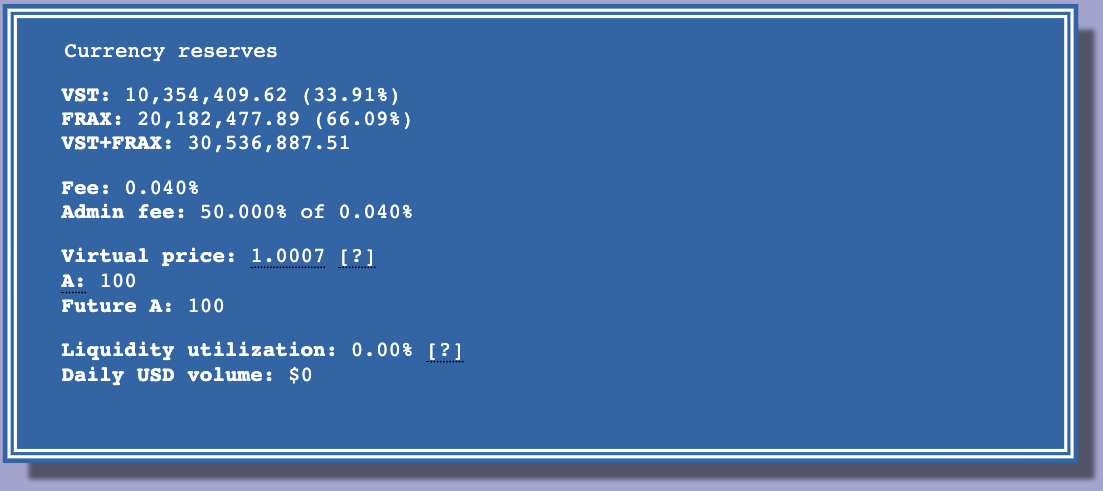
As a USD stablecoin, within the Vesta ecosystem, VST will be used directly as USD. Externally, if VST is not recognized or accepted enough, users can go to Curve's Factory Pool to trade VST into FRAX stablecoin (more pairs of stablecoins pools may be launched in the future) to use FRAX directly. While early in the project, Vesta is also adopting liquidity farming incentives to encourage users who have VST to deposit into Curve to stimulate liquidity.
The pool of VSTs in Curve is as follows: https://arbitrum.curve.fi/factory/19
In lending protocols like Vesta and Liquity, redemption process is different from repayment. Redemption means that any user who holds VST (acquired in from minting, purchasing in DEX, transferring by others, etc.) can go to Vesta and redeem for collaterals (minus a fee of course, which is automatically adjusted according to the algorithm), which will be used to liquidate the debt in other Vaults with a collateral ratio below 110%. Since most of these liquidated Vaults are still over collateralized, after these collateral is liquidated, an equivalent amount is allocated to the redeemer and the surplus is returned to the liquidated person. The basic principle of the liquidation order is that priority is given to liquidating the riskier and less collateralized vaults. This is also consistent with Liquity. The repayment is specific to each Vault opener. Using the VST redemption feature to exchange collateral does not reduce your debt position. It requires you to complete your own repayment processes independently.
This part is basically identical to Liquity, this article will briefly introduce the logic, more specific rules see: https://docs.vestafinance.xyz/technical-overview/liquidation-and-the-stability-pool
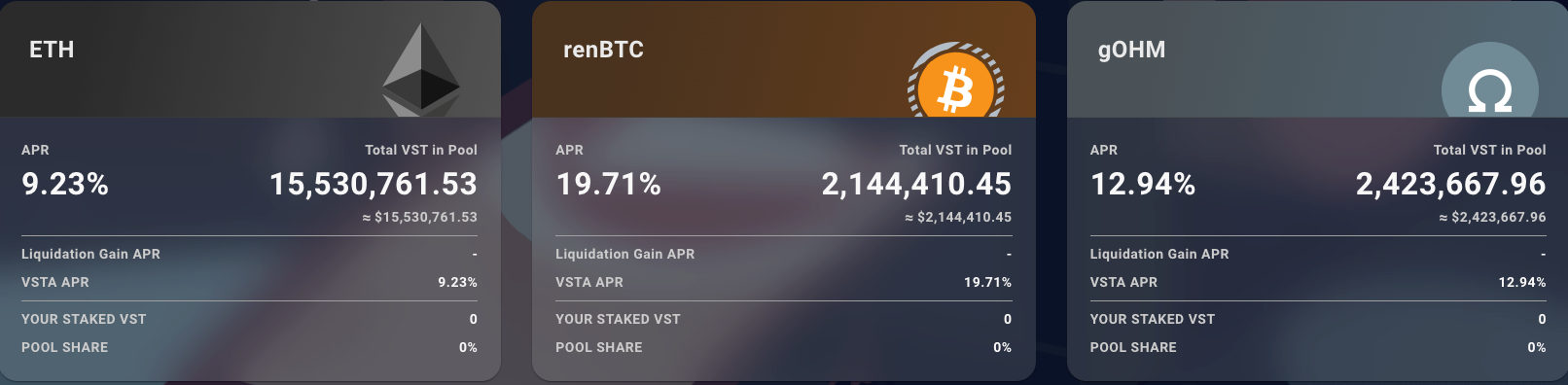
Vesta has built a Stability Pool composed entirely of VST stable coins as a first layer of protection to liquidate defaulted loans. Likewise, Vesta provides farming incentives to encourage the expansion of this stable pool.
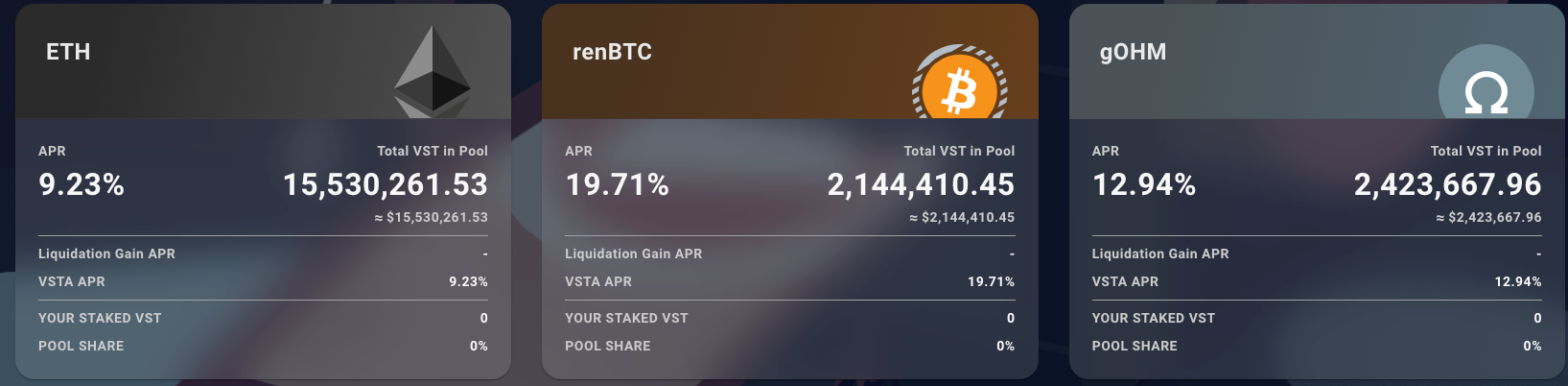
Any user may deposit VST to the Stability Pool. When liquidation occurs, the liquidated debt is cancelled with the same amount of VST in the Stability Pool. The cancelled debt will be burnt, and the liquidated collateral will be proportionally distributed to depositors.
Since all loans are over collateralized and when they fall below 110%, they will trigger liquidation, there is a portion of the excess collateral that will be distributed to Stability Pool participants after the loan is cancelled (offset) with VST from the Pool. Stability Pool participants who receive a collateral bonus may choose not to withdraw the bonus and instead transfer the collateral to their Vaults.
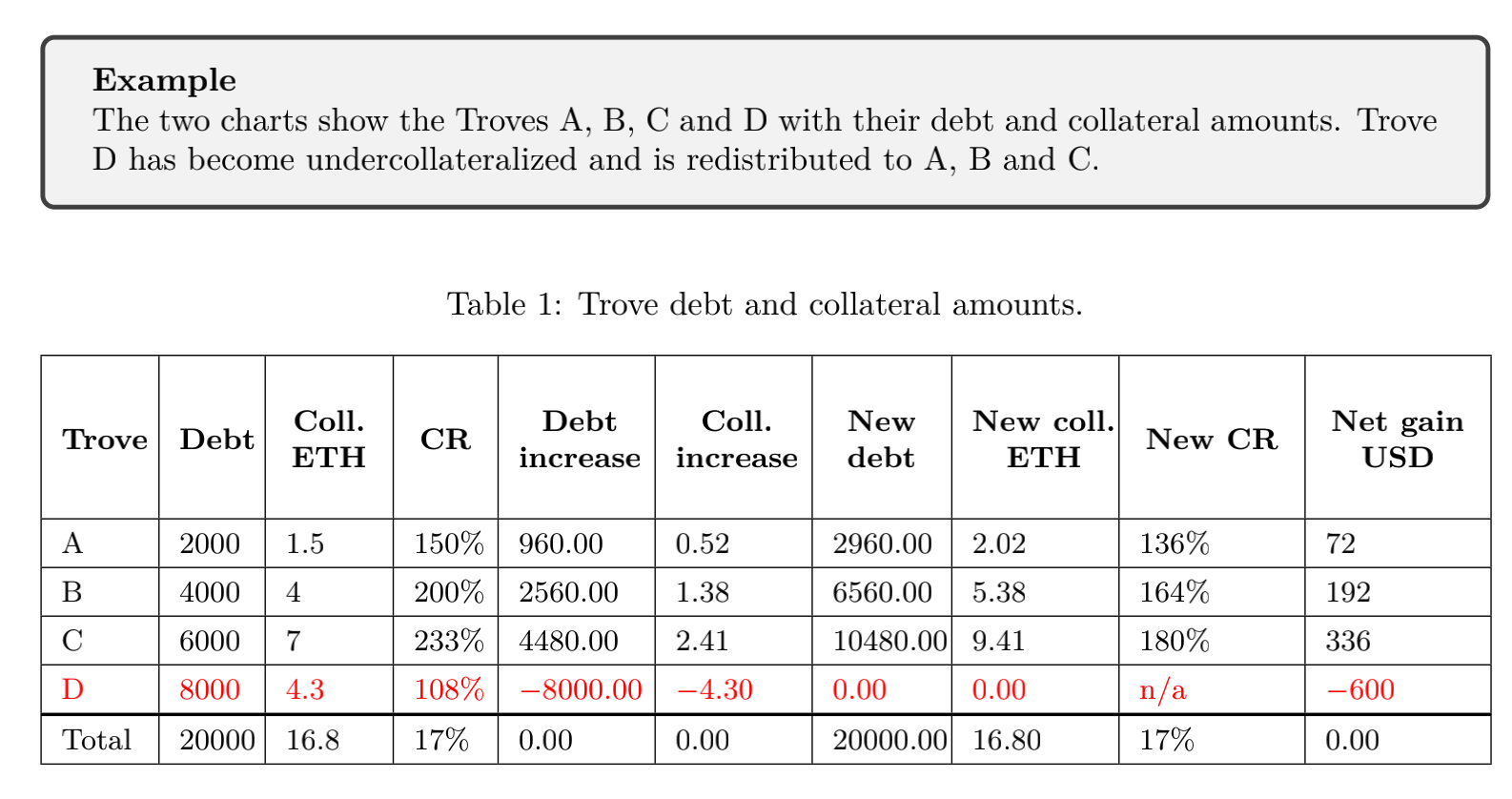
If there is still not enough to liquidate the loan after the Pool's liquidity is already exhausted, a redistribution is triggered. It will reallocate the debts that need to be liquidated to other vaults (increasing others collaterals, decreasing others CR). Allocated users will receive a net gain with a lower collateral rate, for example (we used Liquity's example for clarity).
When the system's total collateral ratio falls below a critical value (150% in Liquity), the system enters a recovery mode: all borrowing transactions that will continue to reduce the collateral ratio are forcibly stopped, and all Vaults below 150% are queued in line for liquidation: the lowest collateral ratio is prioritized until the system's total collateral ratio is restored above 150%.
Borrow VST
After connecting the wallet to Arbitrum, users who want to borrow money can deposit collaterals, enter the amount they want to borrow, mint VST coins, and open their own borrowing Vaults, in the Portfolio interface on the Vesta website.
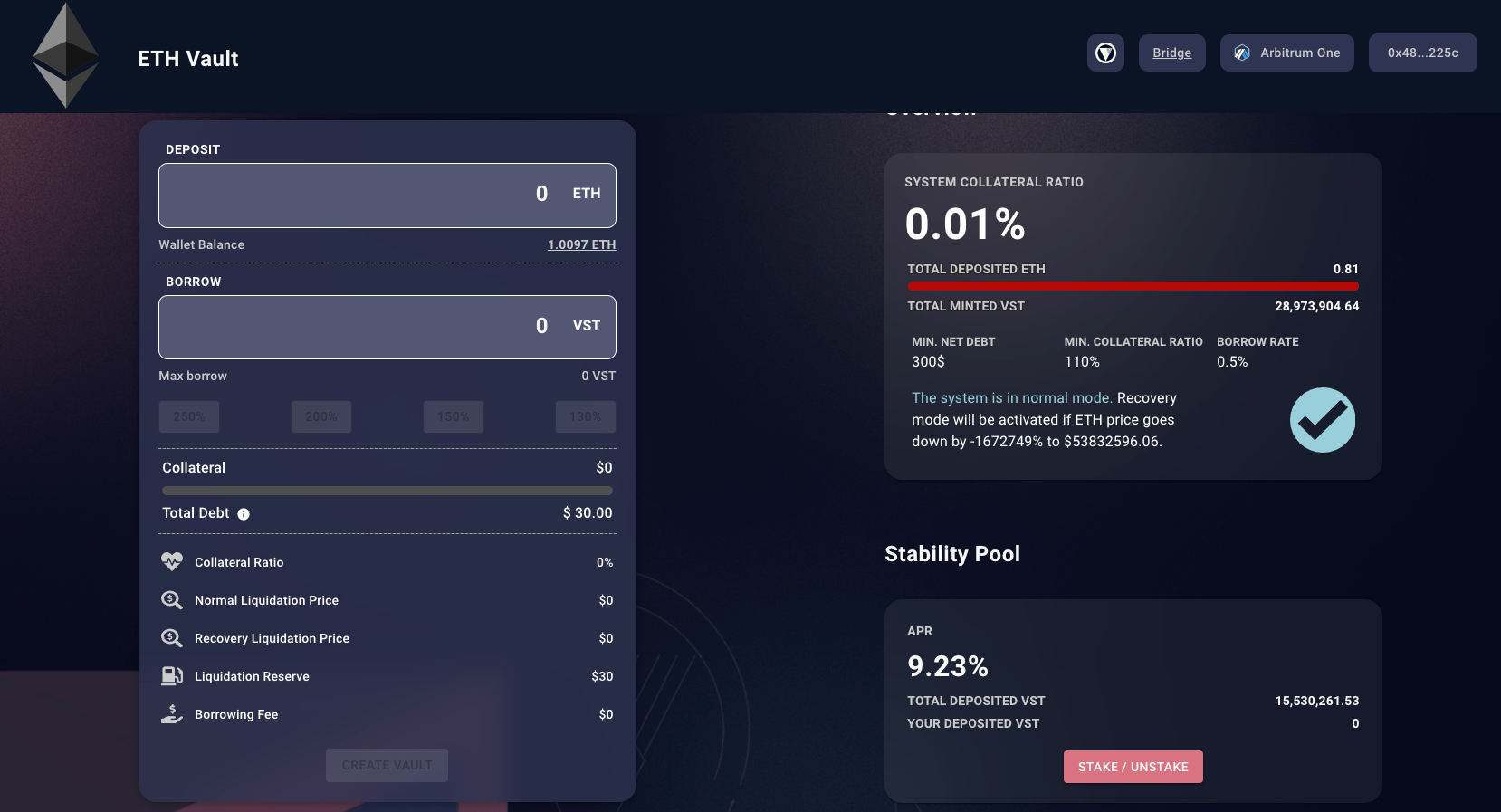
The acquired VST can be used to: Stability Pool, deposited in Curve forming a Pair with Frax to farm on Vesta, or traded into Frax in Curve for other operations.
Participate in liquidity incentive activities
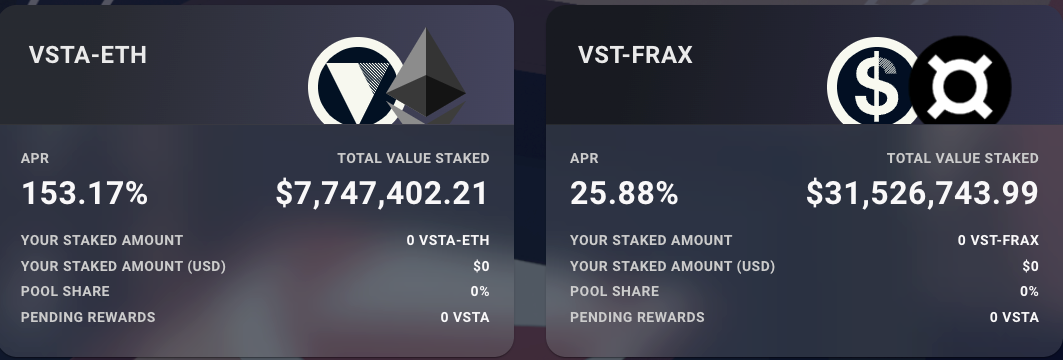
Currently, there are three types farming activities: Stability Pool farming (described above), compose VSTA/ETH pair in Balancer for liquidity farming, and compose VST/FRAX pair in Curve for liquidity farming.
The method of participation is simple: after the liquidity is provided by the respective platform, the LP Token is deposited into the Staking mode of Vesta. For a detailed tutorial, please refer to: https://docs.vestafinance.xyz/tutorials/liquidity-incentive-tutorials/staking-your-lp-token
Core functions:
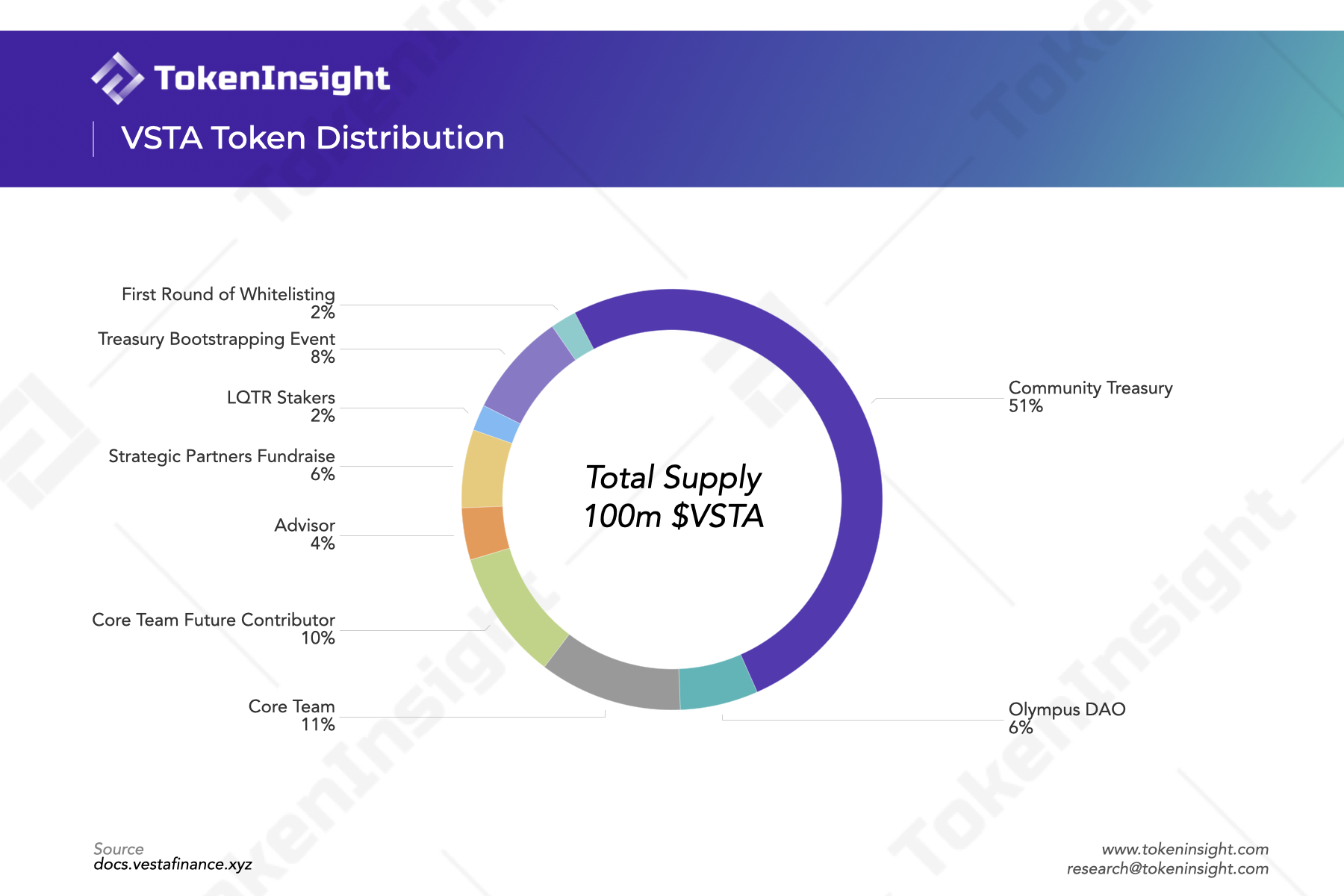
51%, as a reward for the community treasury incentive, where the initial farming activity is rewarded, distributed in the following five pools.
Remaining rewards will be allocated to future participation in liquidation, partnership and community incentive programs (up to 47% of tokens are used for this purpose)
25%, allocated to core contributors, which will be locked for 6 months and then vest into 2 years in linear. The advisory team includes: 0xMaki, DCFGod, Lau Brother (Not3Lau Capital), etc.
14%, allocated to investors and partners, which will also be locked for 6 months and then vested linearly over 2 years. 6% is held by the OlympusDAO community, mainly due to the fact that Vesta Finance is a project incubated by the OlympusDAO community, and the use of gOHM as collateral is also an effort to further promote OHM as a common reserve currency in Crypto. 2% will be allocated to stakers of LQTY, Liquity's governance token.
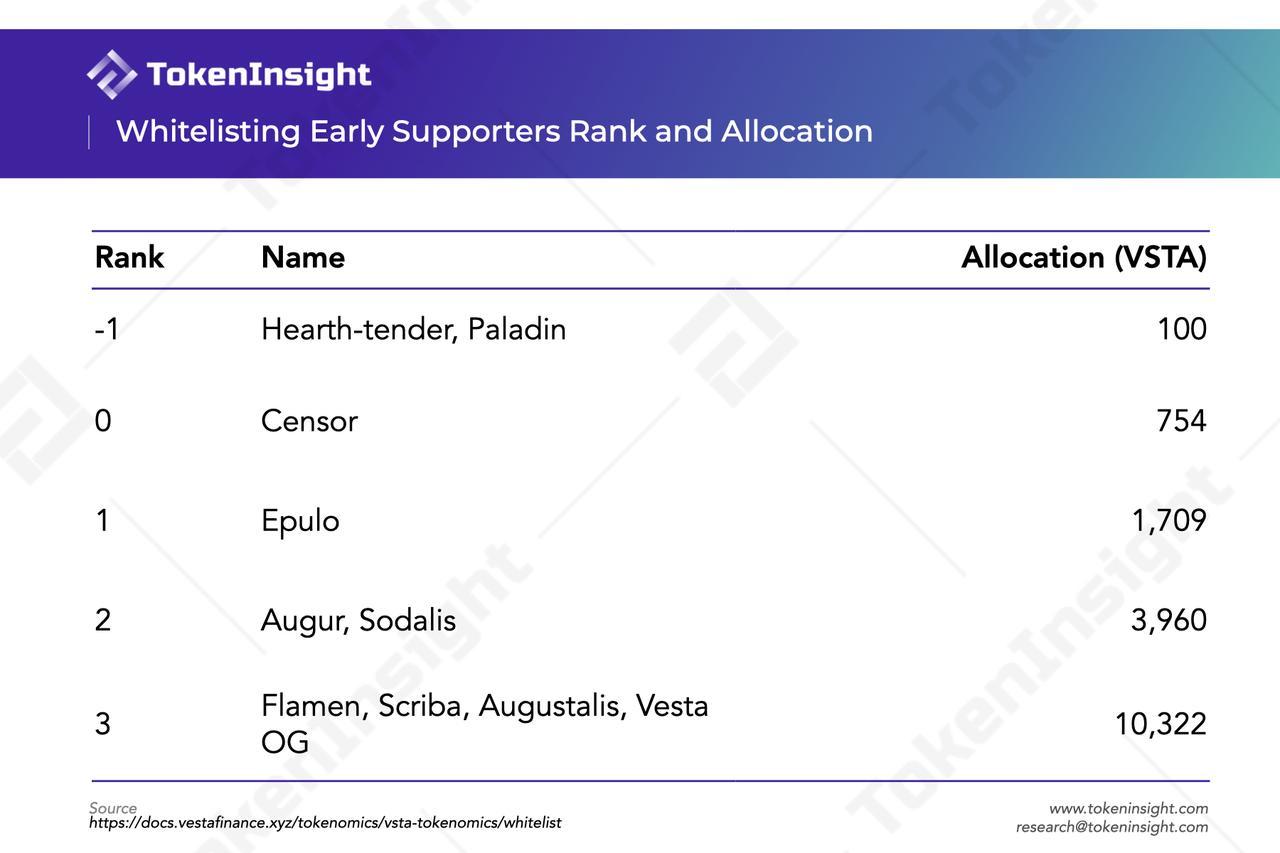
Early supporters and whitelisting:
Governance
Unlike Liquity, Vesta Finance allocates a larger share of tokens to the community with the primary purpose of incentivizing members to actively govern. Members holding governance tokens can vote on improvements to parameters such as: interest rates, mint rates and new collateral types, and in the early stage, the project will use snapshots for voting. Currently, Vesta's DAO uses Barnbridge's multi-signature Genesis DAO model to prevent bad behaviours by whales.
In their official documentation, the content of the parameters that can be modified by voting is given as:
Future Roadmap
Website: https://vestafinance.xyz/
Twitter: https://twitter.com/vestafinance
Medium: https://medium.com/@VestaFinance
Curve factory: https://arbitrum.curve.fi/factory/19
Currently, Balancer got the best liquidity for trading:https://arbitrum.balancer.fi/#/trade/ether/0xa684cd057951541187f288294a1e1c2646aa2d24
Balancer VSTA's analytics page:https://arbitrum.balancer.fi/#/pool/0xc61ff48f94d801c1ceface0289085197b5ec44f000020000000000000000004d
 APP
APP