Q2 2026 moved the crypto exchange industry from broad deleveraging into a phase of cautious stabilization. Total trading volume declined a further 8% QoQ to $16.5 trillion, but the underlying mix improved as spot volume rebounded from $3.3 trillion to $4.5 trillion while derivatives activity fell from $14.6 trillion to $12.0 trillion. At the same time, market share continued to consolidate around the largest venues, while TradFi perpetuals emerged as the clearest incremental growth segment. Against this backdrop of improving spot participation, restrained leverage, and accelerating product diversification, this report examines 20 major exchanges across trading volume, open interest, and the expanding equity and commodity perpetuals market.
Q2 2026 marked a period of stabilization for the crypto exchange industry following the broad deleveraging seen in Q1. Total trading volume declined modestly to $16.5 trillion, down 8% QoQ, while market activity showed clear signs of normalization. Spot trading rebounded from $3.3T to $4.5T, partially offsetting a decline in derivatives volume from $14.6T to $12.0T. Throughout June, Bitcoin repeatedly tested the $60K support zone, briefly falling below it intraday before recovering, generating elevated spot and derivatives trading activity despite continued macro uncertainty. Average futures open interest declined further to $0.08T, indicating that leverage appetite remained subdued even as trading activity stabilized.
Market leadership continued to consolidate among the largest exchanges. Binance increased its total market share from 32.77% to 35.34% (+2.57 pp), recording the largest quarterly gain despite already holding the industry’s largest share. Market structure also shifted during the quarter - derivatives remained the dominant trading product, representing 73% of total market volume, although the decline from 82% in Q1 reflected a meaningful recovery in spot market participation.
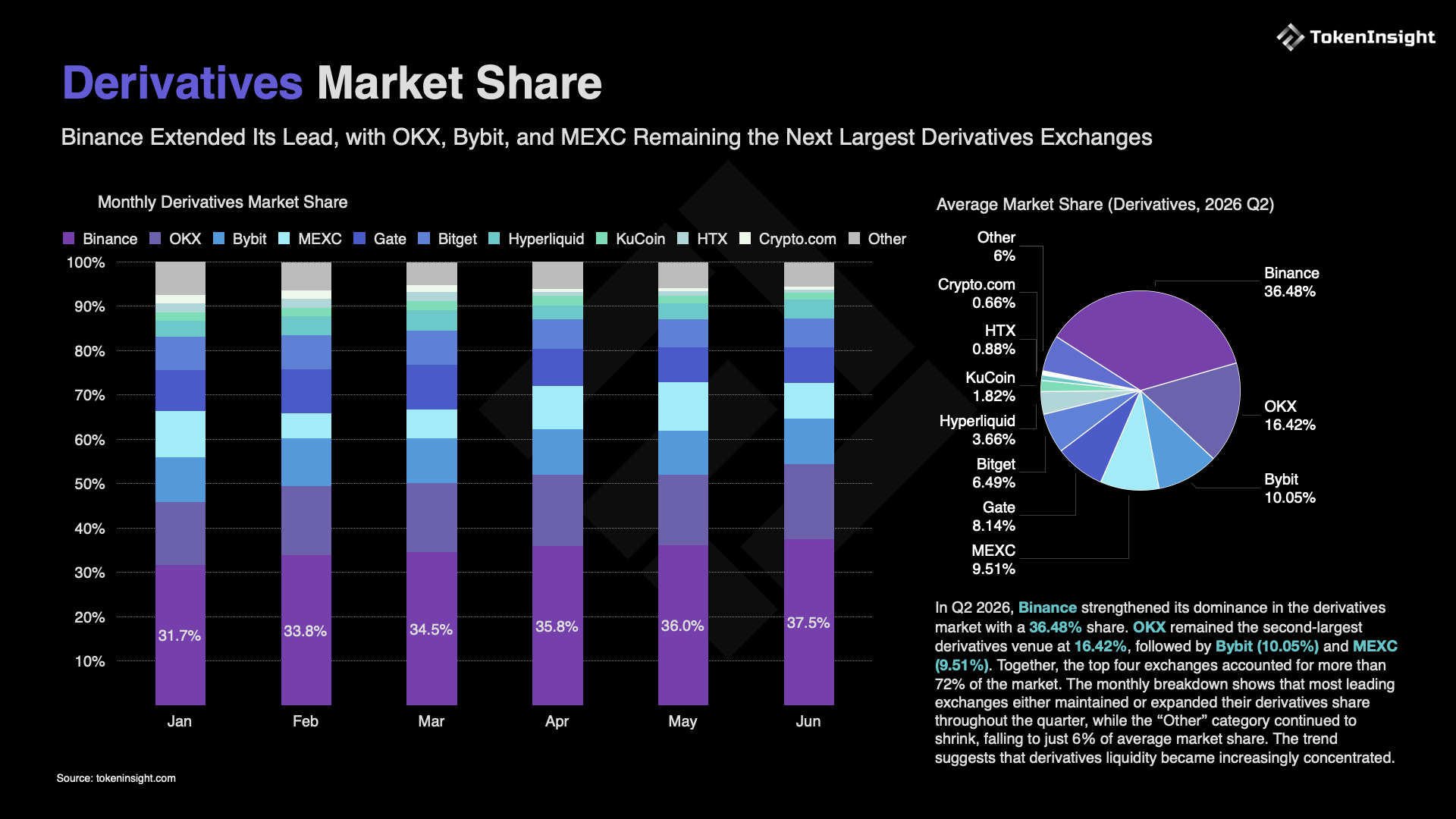
In spot, Binance led at 32.26%, with a relatively diversified field behind it — Bybit (9.19%), Gate (8.01%), and OKX (7.08%). In derivatives, concentration remained far higher: Binance held 36.48%, OKX a firm second at 16.42%, followed by Bybit (10.05%) and MEXC (9.51%), with these four controlling over 70% of the segment. Open interest stayed concentrated among major venues, with Binance leading at 26.35%, while KuCoin (+3.97 pp) recorded the strongest quarterly gain and Bitget (8.58%) and MEXC (9.21%) also expanded their positions.
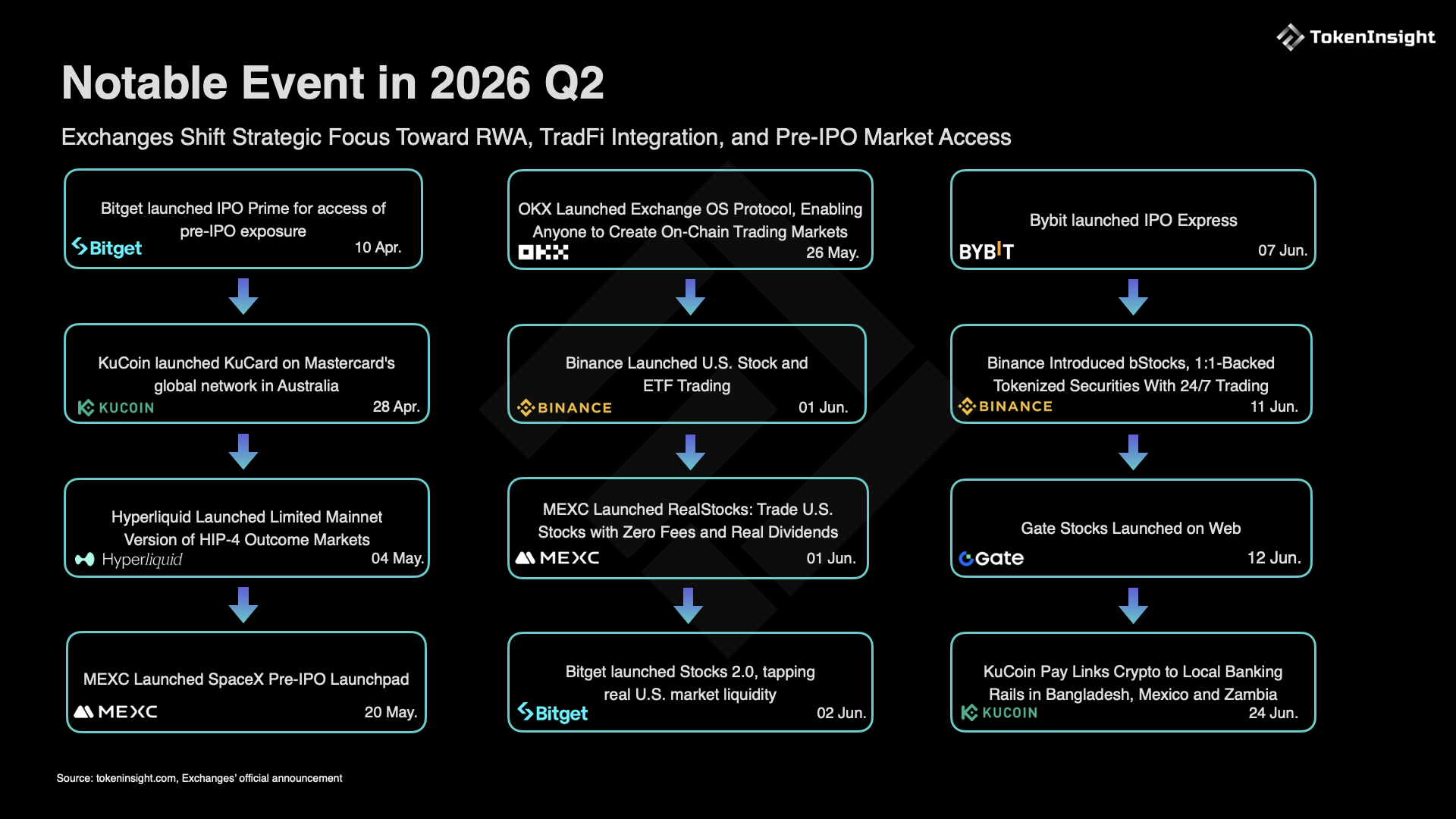
Beyond crypto-native markets, TradFi perpetuals emerged as the industry’s fastest-growing product segment in Q2. Monthly trading volume expanded from $52B in January to $268B in June, with equity perpetuals overtaking commodities as the primary growth driver. TradFi perpetuals also became an increasingly meaningful component of exchange activity, exceeding 15% of total derivatives volume on several peak trading days. This expansion was reinforced by a wave of strategic launches, as Binance, Bitget, Bybit, MEXC and Gate all rolled out tokenized equity, U.S. stock trading, or IPO/pre-IPO products during the quarter.
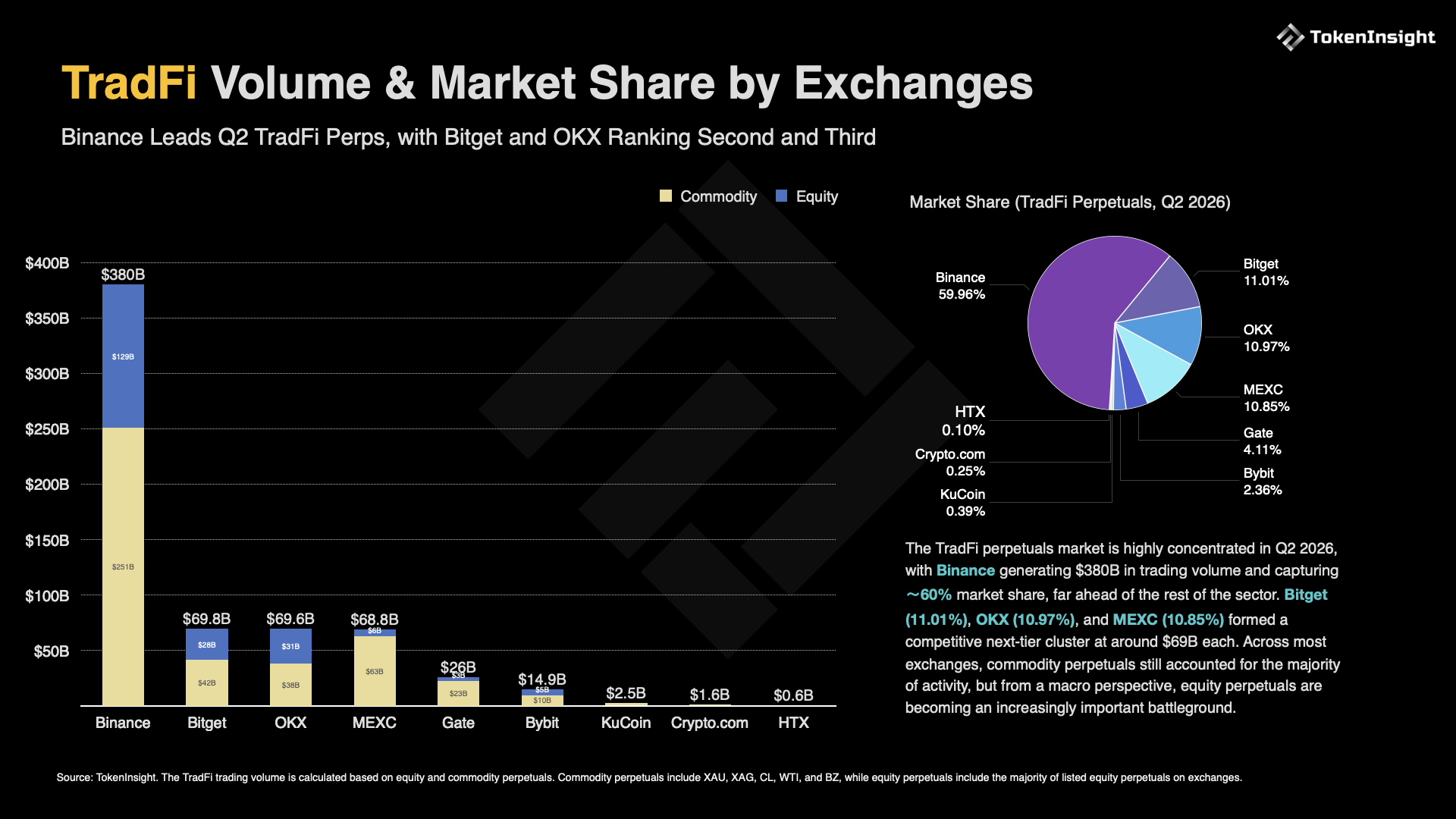
The TradFi perps market remained highly concentrated: Binance led the overall TradFi perpetuals market with a ~60% share and $380B in quarterly trading volume, while Bitget ranked second with nearly $70B in TradFi perpetuals volume, and maintained a top-three position across both commodity and equity perpetuals. Across individual product segments, commodity perpetuals remained led by Binance, while MEXC and Bitget recorded the strongest market share gains. Equity perpetuals experienced a significant leadership reshuffle, with Binance expanding its share to 63.0% (+21.5 pp) and OKX rising to second place (+10.8 pp). The quarter demonstrated that TradFi perpetuals have evolved from an experimental offering into a strategically important battleground for exchange differentiation and future volume growth.
This report examines the crypto exchange industry in Q2 2026, drawing on trading volume, open interest and other analytical data across 20 exchanges: Binance, OKX, Bybit, Bitget, Hyperliquid (Futures Only), MEXC, Gate, KuCoin, Coinbase (Spot Only), BingX, Crypto.com, HTX, Kraken, Bullish (Spot Only), Upbit (Spot Only), Deribit (Futures Only), Bitfinex, Bitstamp (Spot Only), Hashkey Exchange (Spot Only), and Gemini (Spot Only). Based on market share, trading volume, and open interest, 11 exchanges — Binance, OKX, Bybit, Bitget, Hyperliquid (Futures), MEXC, Gate, KuCoin, Coinbase (Spot), Crypto.com, and HTX — were selected as primary subjects of analysis. The remaining exchanges are aggregated under "Other."
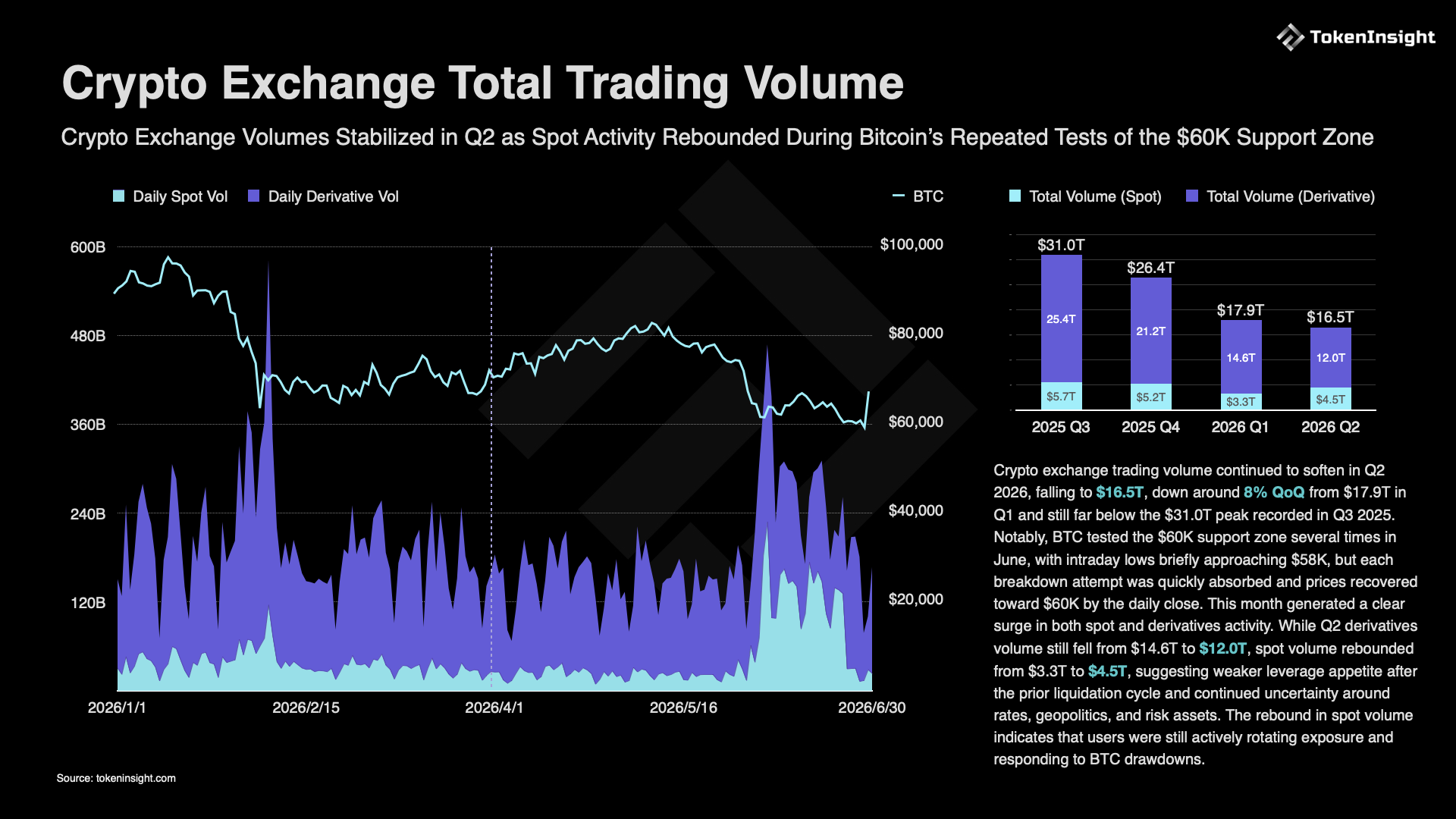
Crypto Exchange Volumes Stabilized in Q2 as Spot Activity Rebounded During Bitcoin’s Repeated Tests of the $60K Support Zone
Crypto exchange trading volume continued to soften in Q2 2026, falling to $16.5T, down around 8% QoQ from $17.9T in Q1 and still far below the $31.0T peak recorded in Q3 2025. Notably, BTC tested the $60K support zone several times in June, with intraday lows briefly approaching $58K, but each breakdown attempt was quickly absorbed and prices recovered toward $60K by the daily close. This month generated a clear surge in both spot and derivatives activity. While Q2 derivatives volume still fell from $14.6T to $12.0T, spot volume rebounded from $3.3T to $4.5T, suggesting weaker leverage appetite after the prior liquidation cycle and continued uncertainty around rates, geopolitics, and risk assets. The rebound in spot volume indicates that users were still actively rotating exposure and responding to BTC drawdowns.
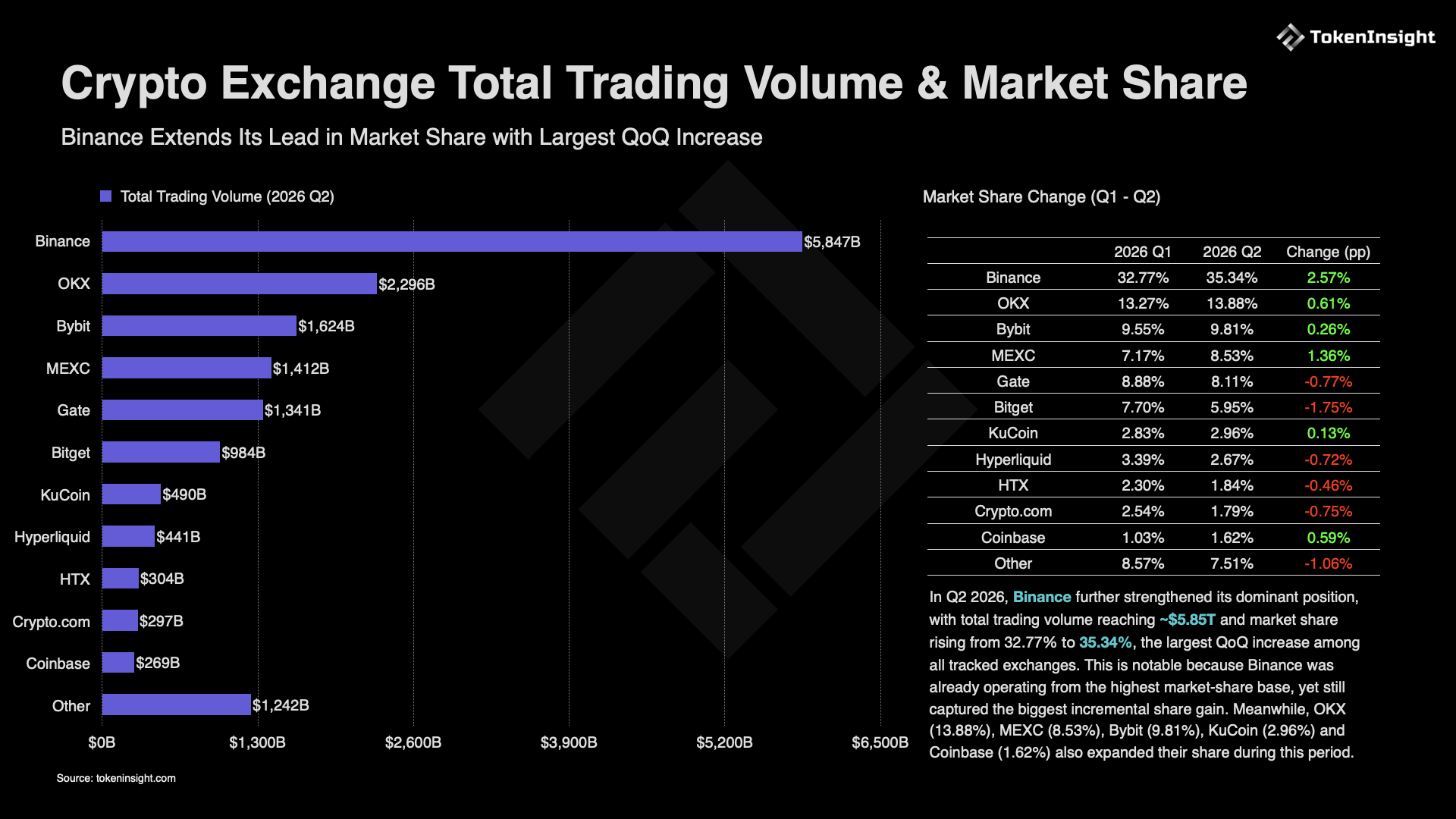
Binance Extends Its Lead in Market Share with Largest QoQ Increase
In Q2 2026, Binance further strengthened its dominant position, with total trading volume reaching ~$5.85T and market share rising from 32.77% to 35.34%, the largest QoQ increase among all tracked exchanges. This is notable because Binance was already operating from the highest market-share base, yet still captured the biggest incremental share gain. Meanwhile, OKX (13.88%), MEXC (8.53%), Bybit (9.81%), KuCoin (2.96%) and Coinbase (1.62%) also expanded their share during this period.
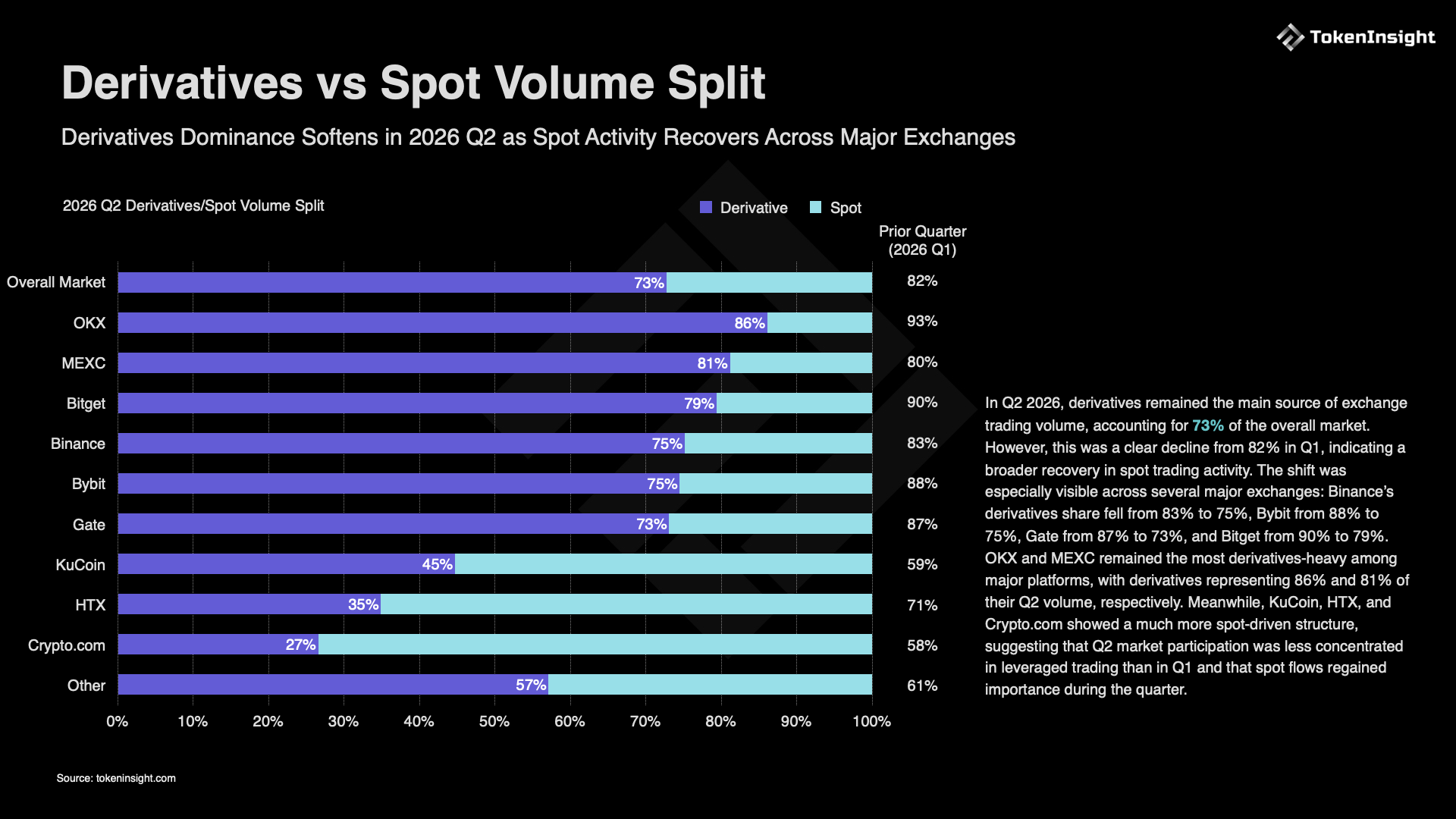
Derivatives Dominance Softens in 2026 Q2 as Spot Activity Recovers Across Major Exchanges
In Q2 2026, derivatives remained the main source of exchange trading volume, accounting for 73% of the overall market. However, this was a clear decline from 82% in Q1, indicating a broader recovery in spot trading activity. The shift was especially visible across several major exchanges: Binance’s derivatives share fell from 83% to 75%, Bybit from 88% to 75%, Gate from 87% to 73%, and Bitget from 90% to 79%. OKX and MEXC remained the most derivatives-heavy among major platforms, with derivatives representing 86% and 81% of their Q2 volume, respectively. Meanwhile, KuCoin, HTX, and Crypto.com showed a much more spot-driven structure, suggesting that Q2 market participation was less concentrated in leveraged trading than in Q1 and that spot flows regained importance during the quarter.
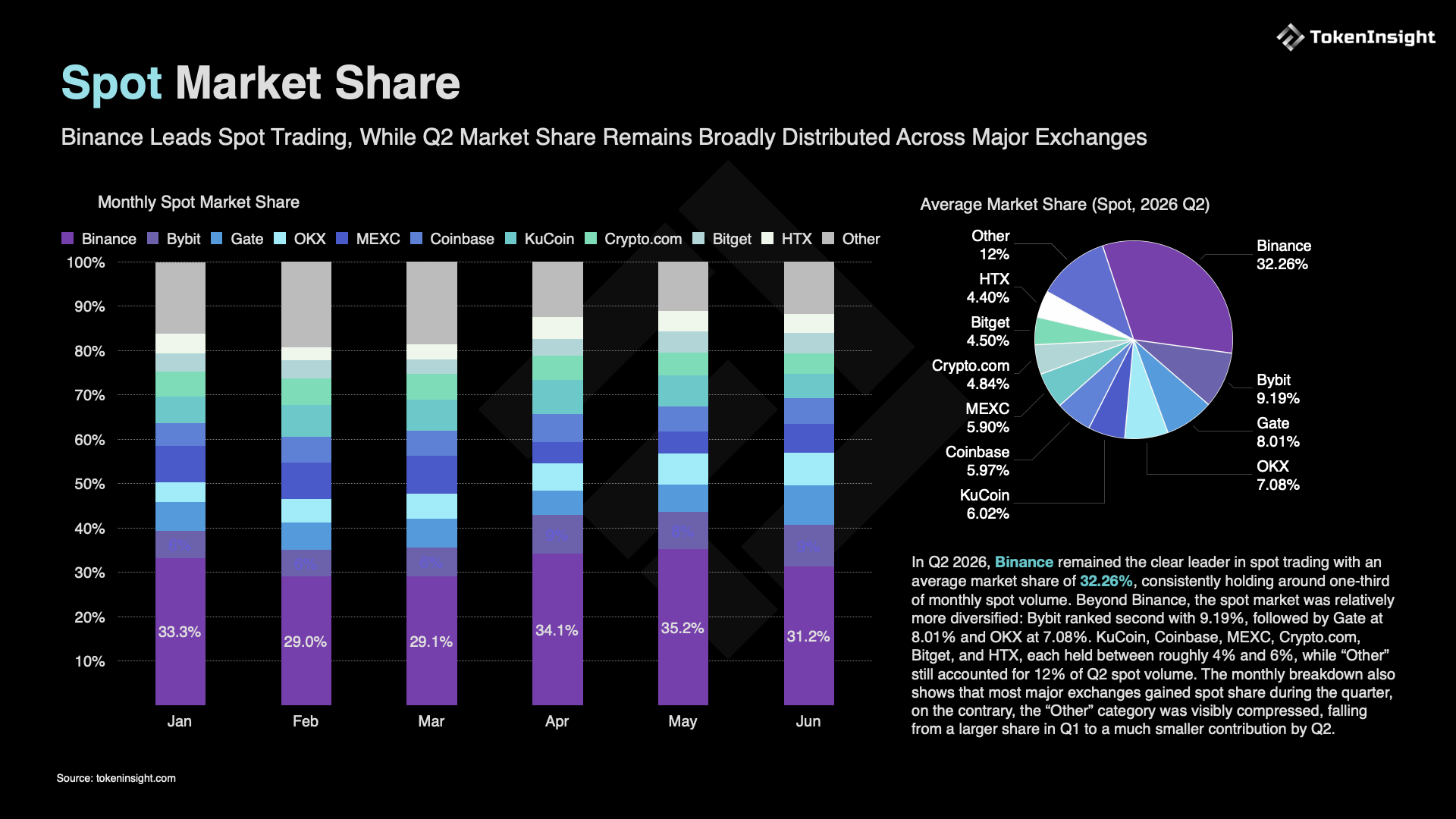
Binance Leads Spot Trading, While Q2 Market Share Remains Broadly Distributed Across Major Exchanges
In Q2 2026, Binance remained the clear leader in spot trading with an average market share of 32.26%, consistently holding around one-third of monthly spot volume. Beyond Binance, the spot market was relatively more diversified: Bybit ranked second with 9.19%, followed by Gate at 8.01% and OKX at 7.08%. KuCoin, Coinbase, MEXC, Crypto.com, Bitget, and HTX, each held between roughly 4% and 6%, while “Other” still accounted for 12% of Q2 spot volume. The monthly breakdown also shows that most major exchanges gained spot share during the quarter, on the contrary, the “Other” category was visibly compressed, falling from a larger share in Q1 to a much smaller contribution by Q2.
Binance Extended Its Lead, with OKX, Bybit, and MEXC Remaining the Next Largest Derivatives Exchanges
In Q2 2026, Binance strengthened its dominance in the derivatives market with a 36.48% share. OKX remained the second-largest derivatives venue at 16.42%, followed by Bybit (10.05%) and MEXC (9.51%). Together, the top four exchanges accounted for more than 72% of the market. The monthly breakdown shows that most leading exchanges either maintained or expanded their derivatives share throughout the quarter, while the “Other” category continued to shrink, falling to just 6% of average market share. The trend suggests that derivatives liquidity became increasingly concentrated.
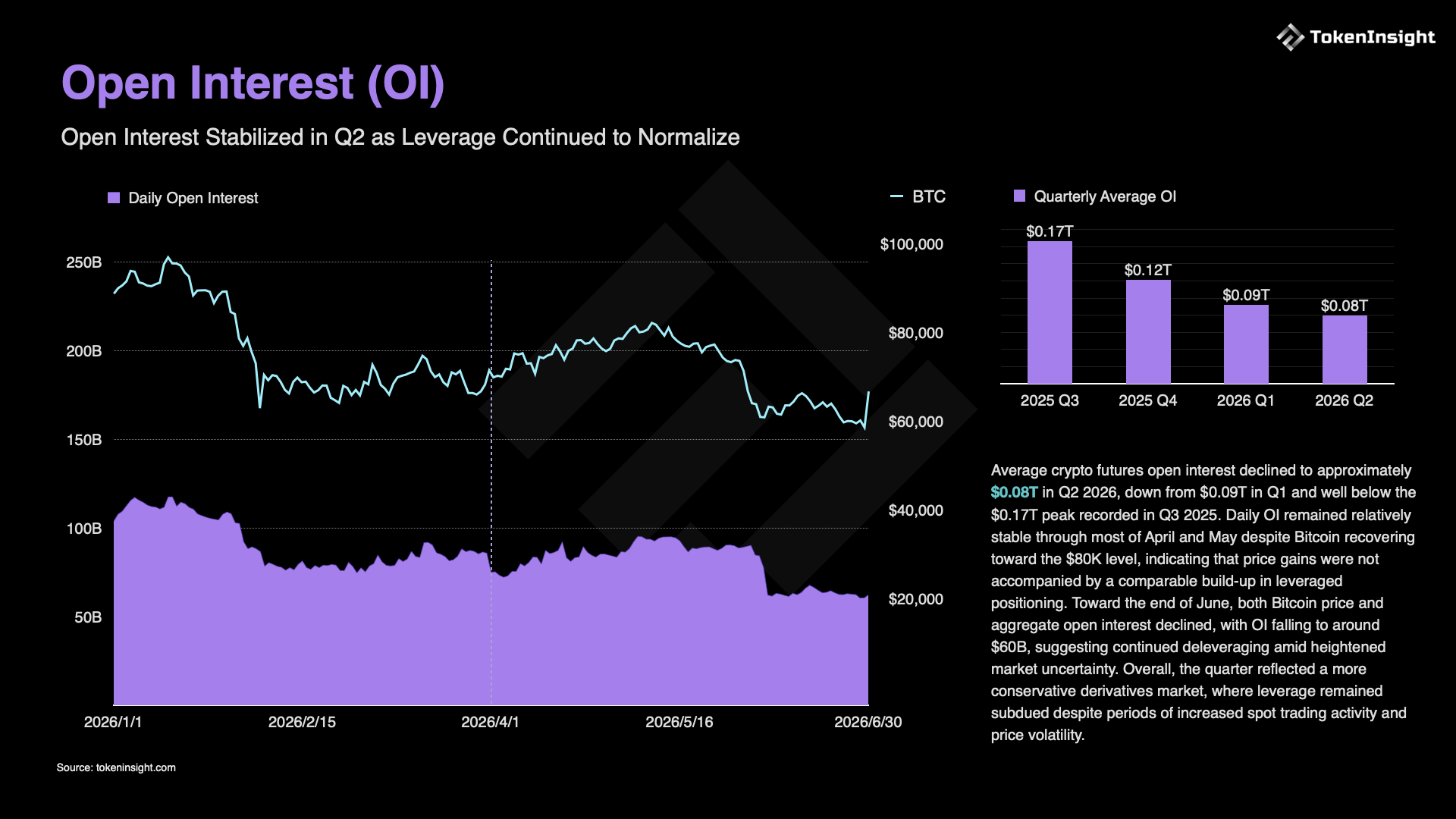
Open Interest Stabilized in Q2 as Leverage Continued to Normalize
Average crypto futures open interest declined to approximately $0.08T in Q2 2026, down from $0.09T in Q1 and well below the $0.17T peak recorded in Q3 2025. Daily OI remained relatively stable through most of April and May despite Bitcoin recovering toward the $80K level, indicating that price gains were not accompanied by a comparable build-up in leveraged positioning. Toward the end of June, both Bitcoin price and aggregate open interest declined, with OI falling to around $60B, suggesting continued deleveraging amid heightened market uncertainty. Overall, the quarter reflected a more conservative derivatives market, where leverage remained subdued despite periods of increased spot trading activity and price volatility.
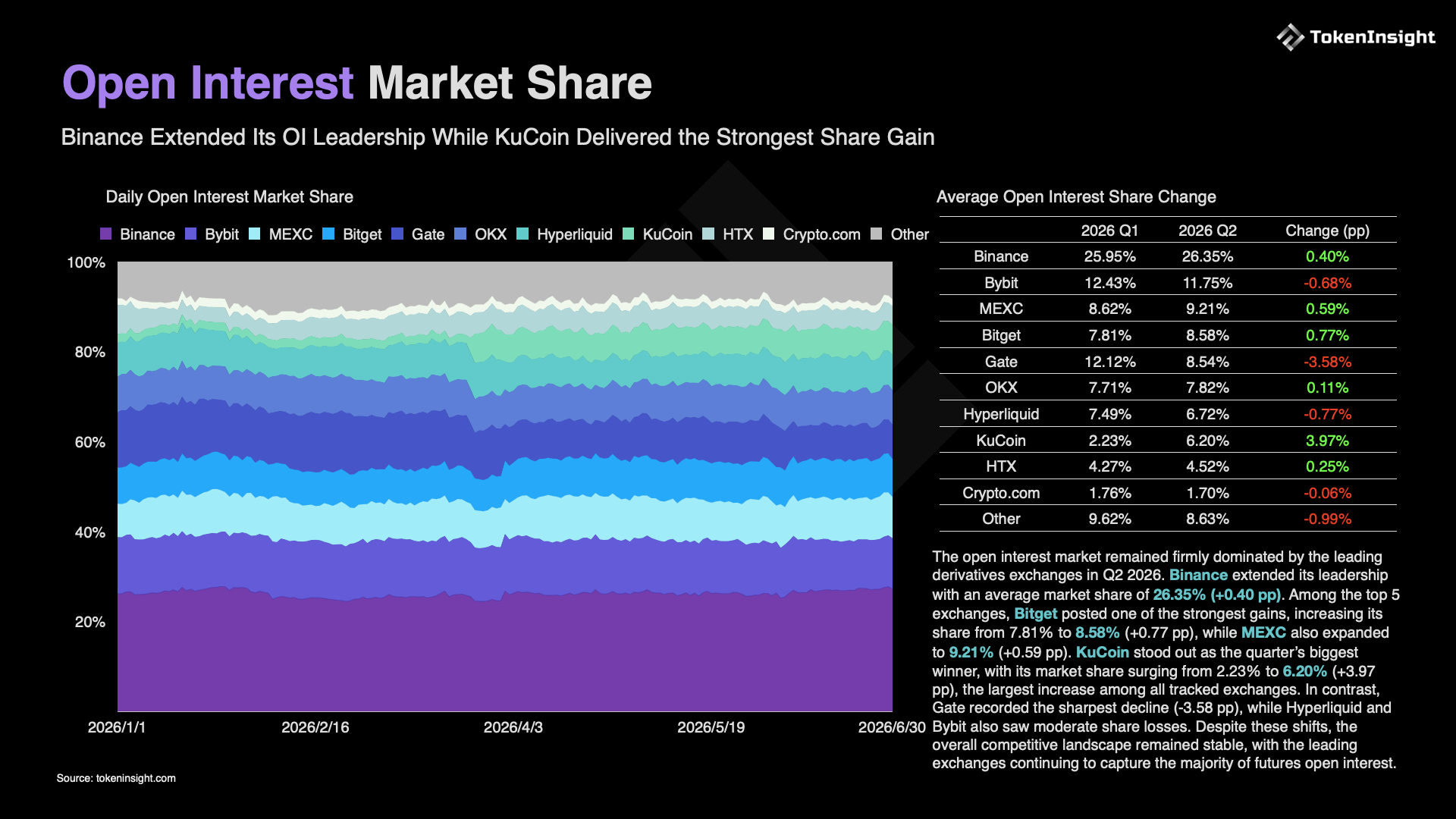
Binance Extended Its OI Leadership While KuCoin Delivered the Strongest Share Gain
The open interest market remained firmly dominated by the leading derivatives exchanges in Q2 2026. Binance extended its leadership with an average market share of 26.35% (+0.40 pp). Among the top 5 exchanges, Bitget posted one of the strongest gains, increasing its share from 7.81% to 8.58% (+0.77 pp), while MEXC also expanded to 9.21% (+0.59 pp). KuCoin stood out as the quarter’s biggest winner, with its market share surging from 2.23% to 6.20% (+3.97 pp), the largest increase among all tracked exchanges. In contrast, Gate recorded the sharpest decline (-3.58 pp), while Hyperliquid and Bybit also saw moderate share losses. Despite these shifts, the overall competitive landscape remained stable, with the leading exchanges continuing to capture the majority of futures open interest.
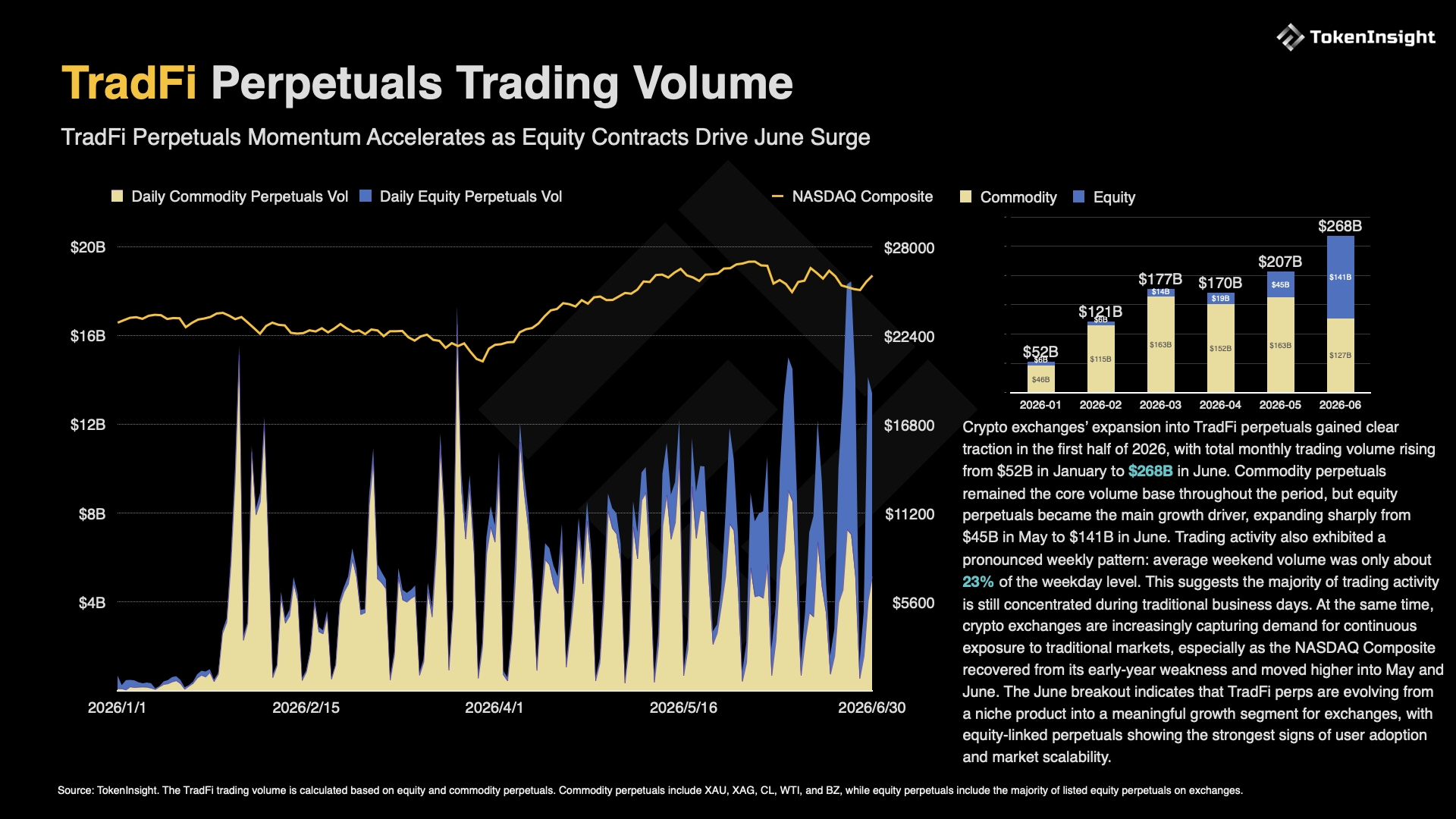
TradFi Perpetuals Momentum Accelerates as Equity Contracts Drive June Surge
Crypto exchanges’ expansion into TradFi perpetuals gained clear traction in the first half of 2026, with total monthly trading volume rising from $52B in January to $268B in June. Commodity perpetuals remained the core volume base throughout the period, but equity perpetuals became the main growth driver, expanding sharply from $45B in May to $141B in June. Trading activity also exhibited a pronounced weekly pattern: average weekend volume was only about 23% of the weekday level. This suggests the majority of trading activity is still concentrated during traditional business days. At the same time, crypto exchanges are increasingly capturing demand for continuous exposure to traditional markets, especially as the NASDAQ Composite recovered from its early-year weakness and moved higher into May and June. The June breakout indicates that TradFi perps are evolving from a niche product into a meaningful growth segment for exchanges, with equity-linked perpetuals showing the strongest signs of user adoption and market scalability.
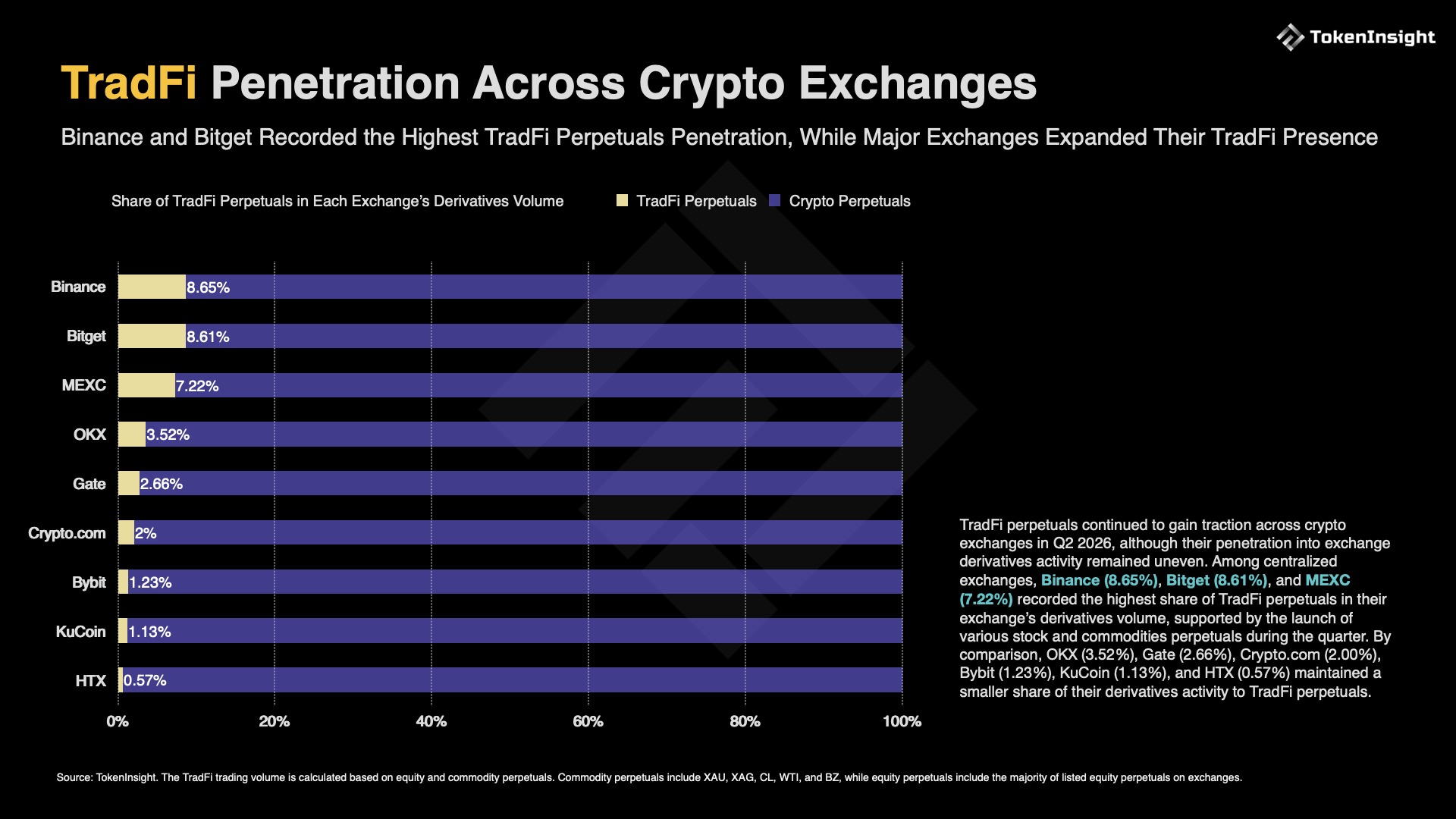
Binance and Bitget Recorded the Highest TradFi Perpetuals Penetration, While Major Exchanges Expanded Their TradFi Presence
TradFi perpetuals continued to gain traction across crypto exchanges in Q2 2026, although their penetration into exchange derivatives activity remained uneven. Among centralized exchanges, Binance (8.65%), Bitget (8.61%), and MEXC (7.22%) recorded the highest share of TradFi perpetuals in their exchange’s derivatives volume, supported by the launch of various stock and commodities perpetuals during the quarter. By comparison, OKX (3.52%), Gate (2.66%), Crypto.com (2.00%), Bybit (1.23%), KuCoin (1.13%), and HTX (0.57%) maintained a smaller share of their derivatives activity to TradFi perpetuals.
Binance Leads Q2 TradFi Perps, with Bitget and OKX Ranking Second and Third
The TradFi perpetuals market is highly concentrated in Q2 2026, with Binance generating $380B in trading volume and capturing ~60% market share, far ahead of the rest of the sector. Bitget (11.01%), OKX (10.97%), and MEXC (10.85%) formed a competitive next-tier cluster at around $69B each. Across most exchanges, commodity perpetuals still accounted for the majority of activity, but from a macro perspective, equity perpetuals are becoming an increasingly important battleground.
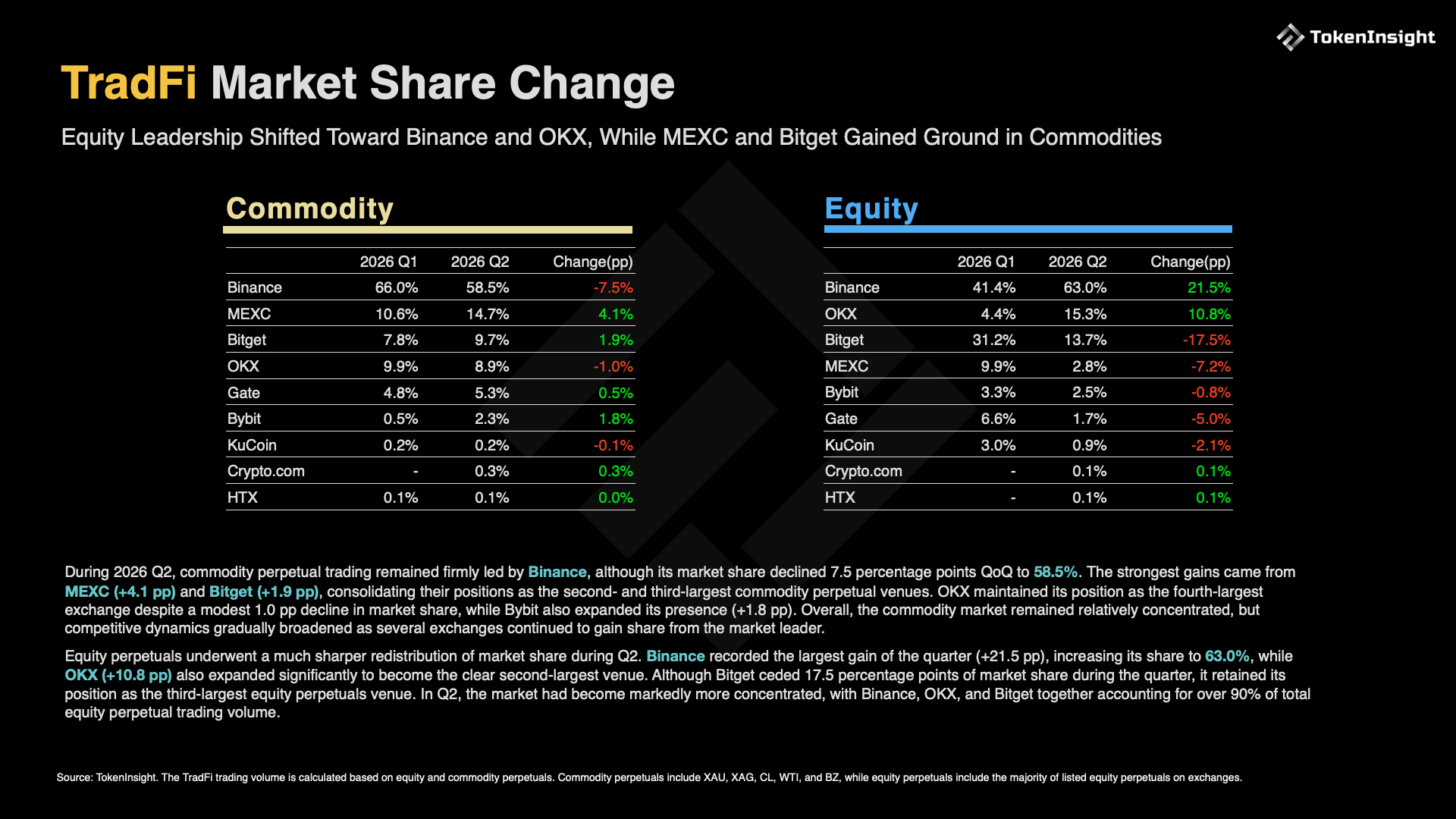
Equity Leadership Shifted Toward Binance and OKX, While MEXC and Bitget Gained Ground in Commodities
During 2026 Q2, commodity perpetual trading remained firmly led by Binance, although its market share declined 7.5 percentage points QoQ to 58.5%. The strongest gains came from MEXC (+4.1 pp) and Bitget (+1.9 pp), consolidating their positions as the second- and third-largest commodity perpetual venues. OKX maintained its position as the fourth-largest exchange despite a modest 1.0 pp decline in market share, while Bybit also expanded its presence (+1.8 pp). Overall, the commodity market remained relatively concentrated, but competitive dynamics gradually broadened as several exchanges continued to gain share from the market leader.
Equity perpetuals underwent a much sharper redistribution of market share during Q2. Binance recorded the largest gain of the quarter (+21.5 pp), increasing its share to 63.0%, while OKX (+10.8 pp) also expanded significantly to become the clear second-largest venue. Although Bitget ceded 17.5 percentage points of market share during the quarter, it retained its position as the third-largest equity perpetuals venue. In Q2, the market had become markedly more concentrated, with Binance, OKX, and Bitget together accounting for over 90% of total equity perpetual trading volume.
Exchanges Shift Strategic Focus Toward RWA, TradFi Integration, and Pre-IPO Market Access
2026 Q2 marked a transition from post-liquidation repair toward a more normalized, spot-supported market structure rather than a full-cycle recovery. Trading activity stabilized and spot participation rebounded, while open interest remained subdued, indicating that risk appetite returned selectively rather than through renewed leverage. This environment continues to favor large exchanges with deeper liquidity, broader product coverage, and stronger distribution, reinforcing market-share concentration. Meanwhile, TradFi perpetuals are emerging as the clearest incremental growth vector, led by the rapid expansion of equity-linked perpetuals. Looking ahead, exchange growth will increasingly depend on product execution, liquidity depth, regulatory clarity, and the ability to convert demand for traditional-market exposure into recurring trading activity. Competition around equity- and commodity-linked products is therefore likely to intensify, while a broader recovery in derivatives leverage may remain gradual unless macro conditions and Bitcoin market structure become decisively more supportive.
 APP
APP