

 5m
5m
Fractal Bitcoin is an innovative scaling solution designed to enhance the Bitcoin network's capacity and usability. By utilizing the Bitcoin Core code, Fractal Bitcoin introduces a recursive scaling methodology that allows for unlimited layers of processing on the Bitcoin blockchain. This approach aims to alleviate network congestion and facilitate broader adoption of Bitcoin as a platform for decentralized applications. The project launched its mainnet on September 9, 2024, and has already garnered significant interest.
Fractal Bitcoin offers several core features that distinguish it from other scaling solutions:
Fractal Bitcoin is an innovative scaling solution that utilizes the Bitcoin Core code to create multiple recursive layers on the Bitcoin blockchain. This unique approach allows Fractal Bitcoin to maintain full compatibility with the existing Bitcoin infrastructure while enhancing transaction processing capacity and speed. By leveraging the native code of Bitcoin, Fractal Bitcoin ensures that all layers are consistent and compatible, avoiding the complications and security risks associated with integrating foreign constructs from other blockchain systems.
The recursive structure of Fractal Bitcoin forms a tree-like architecture where each layer can independently process transactions. This design not only increases the overall throughput of the network but also preserves the integrity of the Bitcoin consensus mechanism. Each layer remains anchored to the main Bitcoin chain, enabling seamless tracing of transactions back to the original blockchain. This self-replicating consistency ensures that any transaction processed on a secondary layer adheres to the same security protocols and rules as those on the main chain, thereby enhancing both security and usability for developers and users alike.
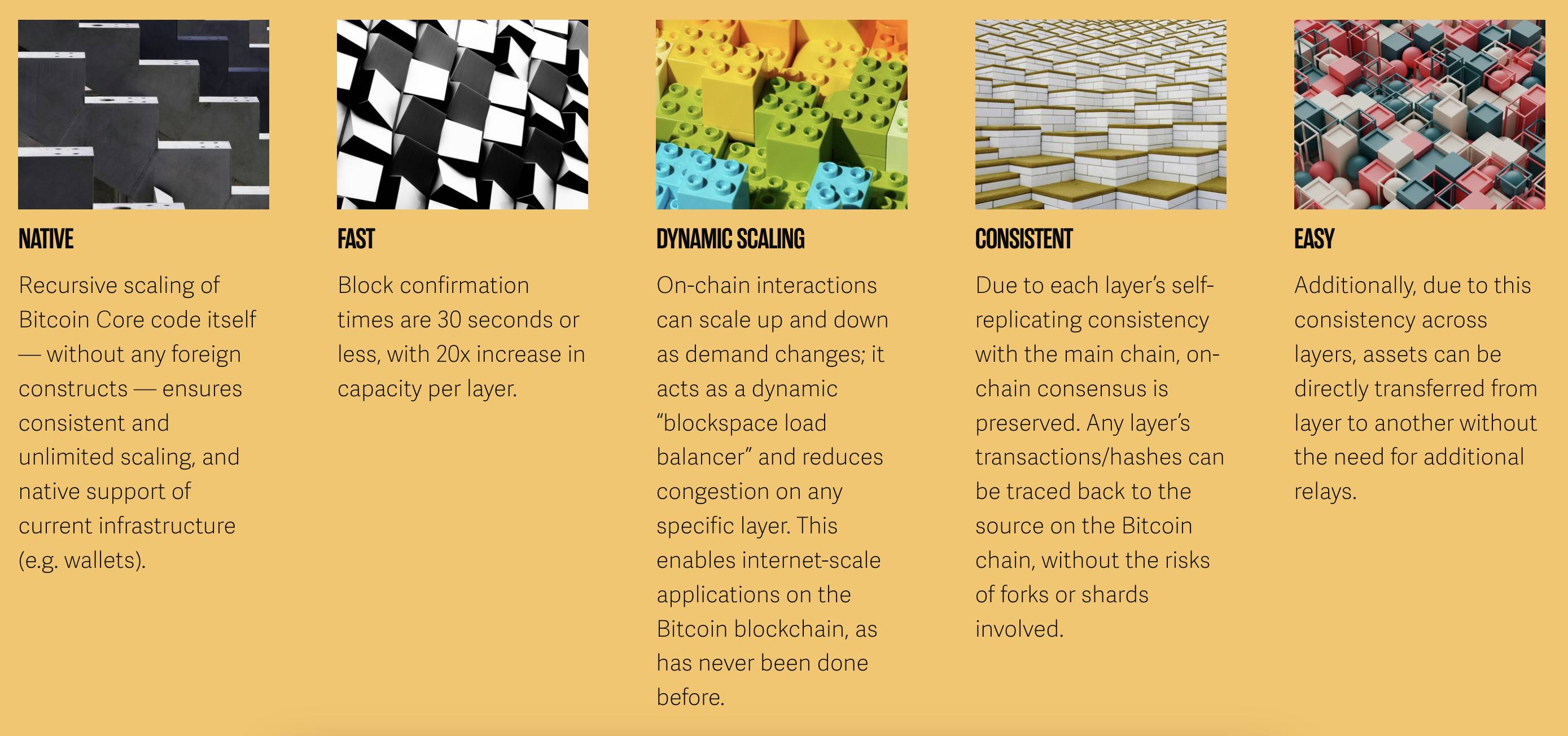
The platform features a dynamic "blockspace load balancer" that allows on-chain interactions to scale up or down based on demand. This flexibility helps reduce congestion on specific layers, enabling applications to operate efficiently even during peak usage times
The dynamic load balancer operates by monitoring transaction volumes and network activity. When demand increases, the system can automatically deploy additional layers to accommodate the surge in transactions. Conversely, during periods of lower demand, it can scale back the number of active layers. This flexibility is crucial for maintaining a seamless user experience, as it prevents bottlenecks that could lead to slow transaction speeds or increased costs. By distributing transactions across multiple layers, Fractal Bitcoin ensures that no single layer becomes overwhelmed, thus enhancing overall network efficiency and responsiveness.
Fractal Bitcoin boasts block confirmation times of 30 seconds or less, significantly improving transaction speed compared to Bitcoin transactions. This enhancement is crucial for applications requiring rapid processing, such as gaming and DeFi
The architecture of Fractal Bitcoin allows for easy asset transfers between layers without the need for additional relays. This feature simplifies user interactions and enhances the overall experience of using the platform
Fractal Bitcoin employs the same Proof of Work (PoW) consensus mechanism as the original Bitcoin, allowing miners to transition seamlessly to mining Fractal blocks using their existing hardware, such as ASICs and GPUs.
Fractal Bitcoin introduces a unique mining approach called Cadence Mining, which combines two methods: Permissionless Mining and Merge Mining.
Fractal Bitcoin is best classified as a sidechain rather than a Layer 2 solution. It operates by creating multiple independent layers that run as separate instances while remaining anchored to the Bitcoin main network. This architecture allows Fractal Bitcoin to disperse transaction loads effectively, enabling each layer to handle a significant number of transactions simultaneously without compromising the core principles of the Bitcoin blockchain.
Each layer in the Fractal Bitcoin ecosystem functions as an independent instance, which means it has its own miners and nodes. While Fractal Bitcoin operates as a sidechain, it maintains a connection to the Bitcoin mainnet. Fractal Bitcoin introduces a unique anchoring mechanism that connects its multi-layered architecture back to the Bitcoin mainnet.
Fractal Bitcoin's tokenomics is designed to ensure sustainability and incentivize participation within its ecosystem. The total supply of the Fractal token (FB) is set at 210 million, with allocations structured as follows:
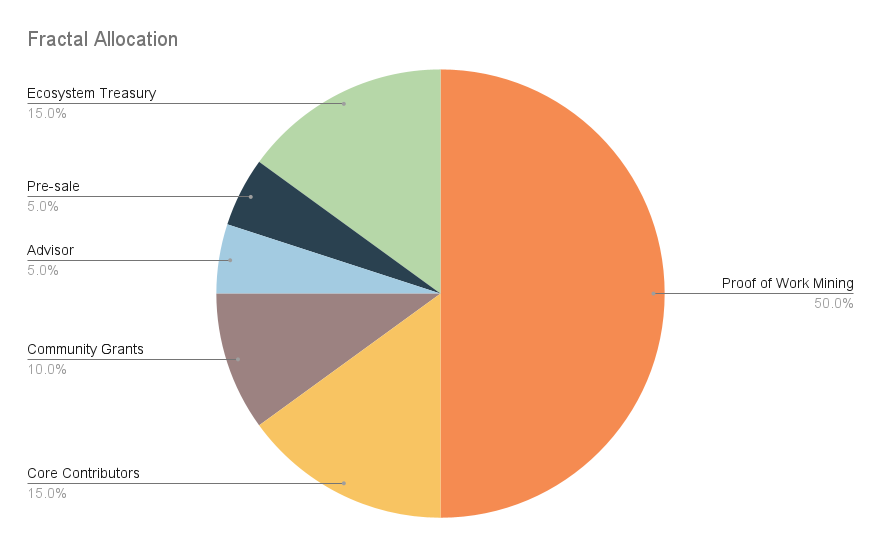
The vesting schedule for the pre-sale tokens ensures that participants are incentivized to support the network's long-term health, while the community-focused allocation emphasizes decentralization and user engagement.
Fractal Bitcoin was developed by the Unisat team, which is known for creating tools and services that enhance the Bitcoin ecosystem, particularly in relation to the Ordinals protocol and the BRC-20 standard. The concept of Fractal Bitcoin emerged in 2023, driven by the need to address Bitcoin's inherent limitations in scalability and on-chain computing power.The Unisat team recognized the growing interest in Bitcoin's application potential, especially with the rise of Ordinals, and sought to innovate a solution that would expand Bitcoin's processing capacity without compromising its core principles.
Fractal Bitcoin is committed to fostering a robust ecosystem by encouraging developers to build applications on its platform. The project plans to launch with foundational applications, including the UniSat Wallet for secure transactions, a block explorer for tracking blockchain data, and a decentralized exchange (PizzaSwap) to drive liquidity.
Fractal Bitcoin's roadmap for the second half of 2024 and into 2025 focuses on expanding its ecosystem and enhancing user experiences. Following the mainnet launch on September 9, 2024, the team plans to roll out additional features and improvements based on community feedback and usage patterns. This includes refining the mining algorithm and deploying independent nodes to further decentralize the network.
 APP
APP

 28372
28372