Angle is an EURO stablecoin issuance platform on Ethereum. This article will briefly introduce the mechanism and token information of Angle.
Angle is a stablecoin issuance and derivative trading protocol that allows users to use collateral to mint different types of stablecoins. It also supports traders to trade stablecoins minted in a way of perpetual swap.
The Angle protocol provides three application scenarios and corresponding types of users:
Minting and burning are always based on the oracle prices from Uniswap or Chainlink. There will be no slippage no matter how many stablecoins are minted or burned. Users are actually trading against Angle's smart contracts.
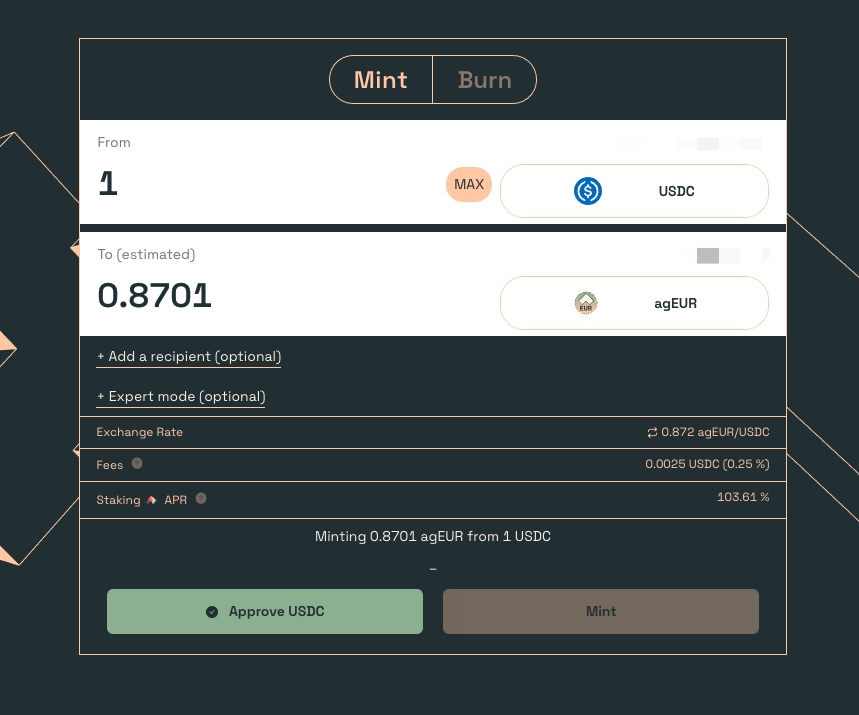
In contrast to Maker, the user deposit ETH in Maker's contract in exchange for DAI. Although the ETH collateral provided by the user is kept in the Maker contract, it still belongs to the user and is only a position opened by the user. Users can take the exchanged DAI and redeem the original amount of ETH.
But in Angle, after the user has minted the stablecoin with collaterals, the collateral then belongs to the contract. You can get collaterals back by burning stablecoins, but the quantity will probably change. These two processes are buying and selling. However, when the oracle price of the stablecoin changes, the amount of collateral exchanged by users will also change.
For example, you sold 1000 USDC to the contract for stablecoin with the oracle price at 1 USDC = 1 STABLE, and minted 1000 units of STABLE (transaction fees are not counted here).
In less extreme cases, market arbitrage can keep the price balance between oracle and AMM markets by minting or burning. When the price of the oracle is higher, buy stables and burn them to exchange back more collateral; when the market price is higher, mint stable coins and sell them in the AMM market.
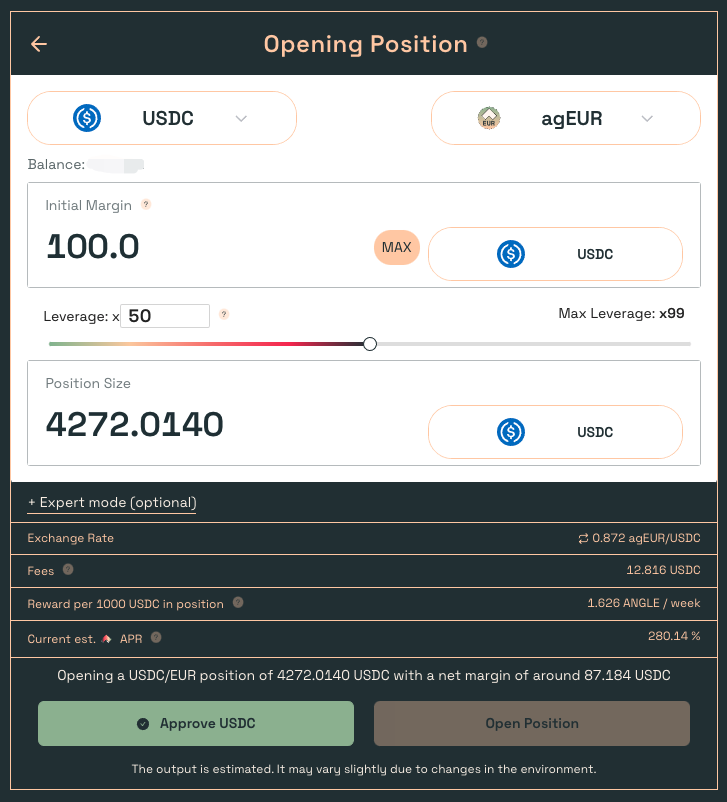
The perpetual swap provided by Angle is relatively simple. You only need to select the supported collateral and the stablecoins that you want to open, and the leverage. In the above picture, 100 USDC is selected as collateral to open the agEUR (EURO stable currency minted in Angle) position, and 50x leverage is selected. The nominal value of the position is 4272 USDC, and the difference of 72.8 U from 500 USDC is the transaction fee.
In Angle, the higher the leverage ratio, the higher the fee ratio.
Due to the existence of perpetual swap in Angle, the provision of liquidity actually constitutes an insurance fund. The insurance fund in Angle is similar to the insurance fund in the centralized exchange working as a buffer.
When the insurance fund is idle, it will be allocated to other protocols to earn interest (Yearn, Compound, etc.). Users who provide liquidity can receive the yield earned from reusing idle funds. In addition, part of the transaction fee paid by users in minting and burning will also be distributed to liquidity providers.
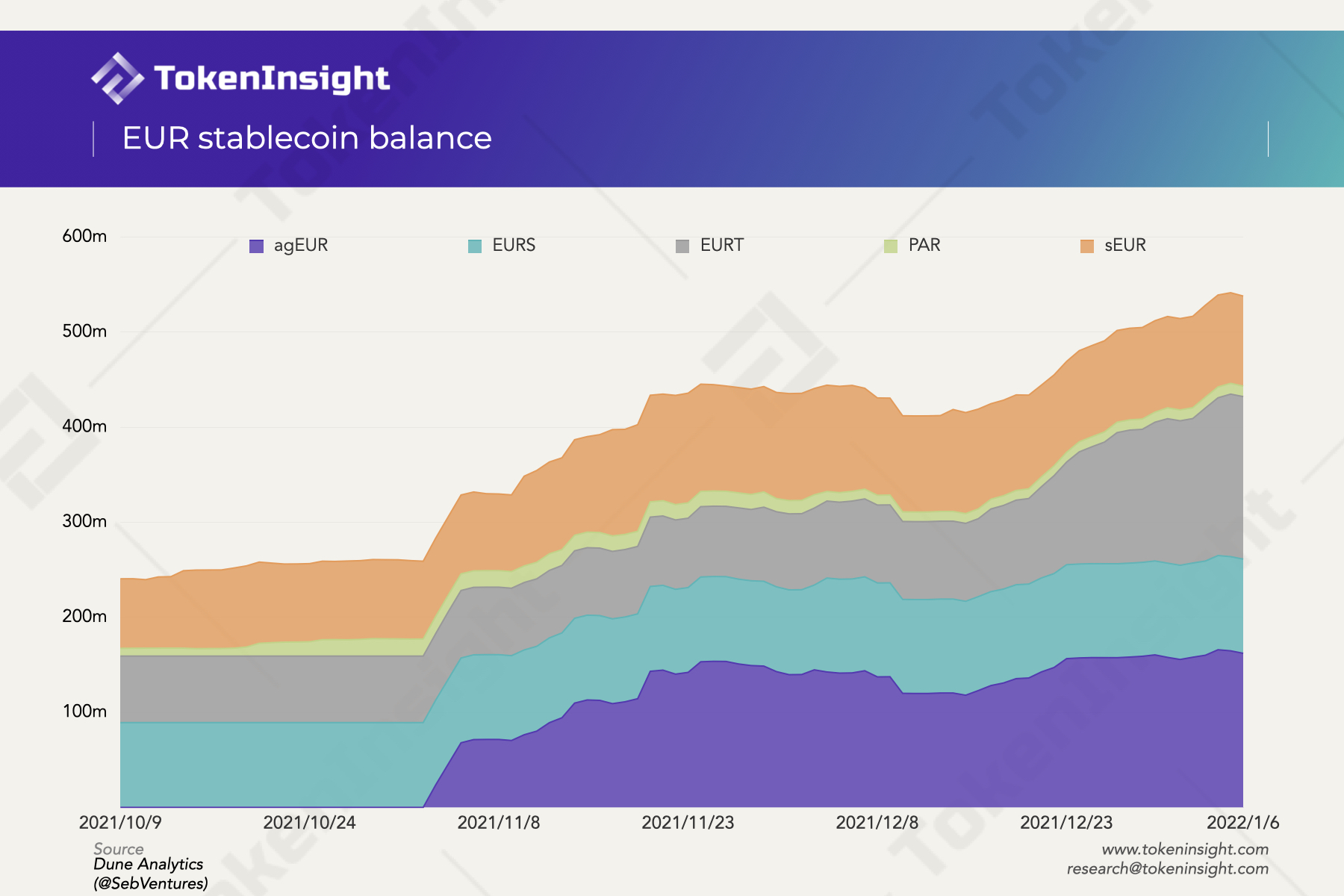
Although the demand for euro stablecoins is still low in Crypto market, the balance of on-chain euro stablecoins has grown from 250 million to over 500 million in the past 3 months, an increase of over 100%. Angle, which went live in November, already has a foothold in the euro stablecoin market, with agEUR's currently accounting for about 30% of the market share.
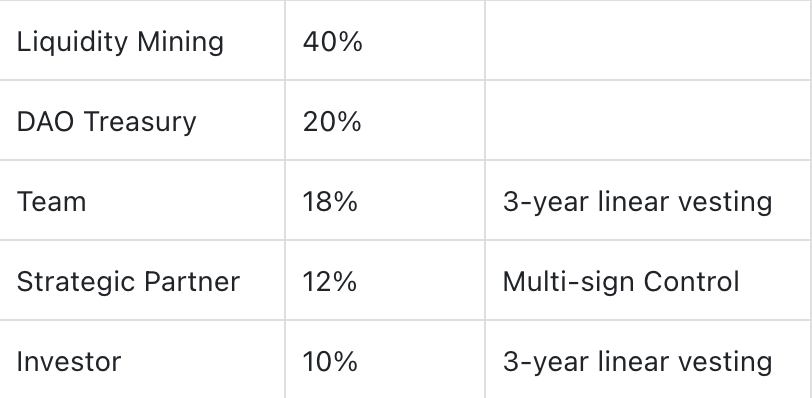
Token Information: Angle Protocol(ANGLE)
 APP
APP