

 10m
10m
Real-world asset (RWA) tokenization is the process of converting physical or traditional financial assets into digital tokens that are represented on a blockchain. This concept has gained significant traction in recent years, bridging the gap between traditional finance (TradFi) and decentralized finance (DeFi). The tokenization of assets like real estate, bonds, and commodities opens new opportunities for liquidity, transparency, and fractional ownership in markets that have historically been illiquid or difficult to access.
As of 2024, the RWA tokenization market is projected to reach trillions of dollars by 2030, driven by increased interest from institutional investors and advancements in blockchain infrastructure. Projects focused on RWAs are vital in making traditional assets accessible to a broader range of investors, particularly in emerging markets. By integrating these assets into DeFi, tokenized RWAs allow for more efficient capital allocation, reducing barriers for both investors and businesses.
RWA tokens represent a digital version of real-world assets, allowing them to be traded, fractionally owned, or used as collateral on blockchain networks. These tokens are secured on-chain by smart contracts, which automate the rules and ownership transfers tied to the assets.
The types of assets that can be tokenized include:
While some assets, such as U.S. Treasuries, have been relatively easy to tokenize due to their standardization and regulatory framework, others, like real estate, present more complex challenges due to legal, regulatory, and market liquidity issues .
Tokenized treasuries are easier to develop than other asset classes due to their standardized structure and predictable returns, which make them ideal for blockchain tokenization. U.S. Treasury securities are considered low-risk, highly liquid, and have a clear regulatory framework. Their well-defined issuance and redemption processes simplify the technical implementation on blockchain networks.
There are a number of players in the market in this sector. The two largest ones in terms of TVL are Ondo Finance, and BlockRock's BUIDL.
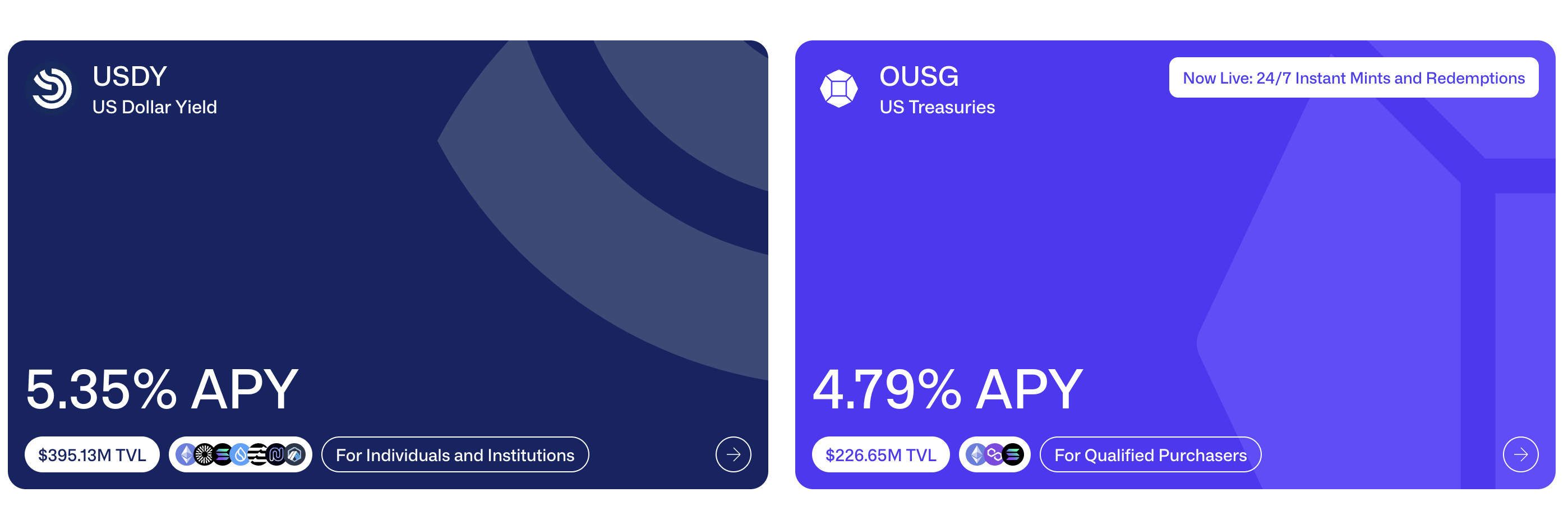
Ondo Finance is a decentralized finance (DeFi) protocol launched in January 2024 that specializes in tokenizing real-world assets (RWA), particularly U.S. Treasury bonds and money market funds. The platform enables both institutional and retail investors to gain exposure to low-risk, income-generating assets through blockchain technology. Since its inception, Ondo has experienced rapid growth, with its Total Value Locked (TVL) surpassing $600 million across its products, including USDY and OUSG, which are backed by U.S. Treasury bonds.
Core Features
Ondo Finance’s primary offerings revolve around the tokenization of stable, income-generating real-world assets, particularly U.S. Treasury bonds and money market funds. The platform’s flagship products include:
ONDO Token
ONDO is the governance token for the Ondo DAO and Flux Finance protocol. It was introduced by the Ondo Foundation, an independent nonprofit that supports real-world asset tokenization projects.
BlackRock launched its tokenized fund, BUIDL (BlackRock USD Institutional Digital Liquidity Fund), in March 2024, marking a significant entry into blockchain-based real-world asset (RWA) tokenization. Built on the Ethereum network, BUIDL offers institutional investors access to tokenized U.S. Treasury bonds, providing a secure and efficient way to generate U.S. dollar-denominated yields.
BlackRock partnered with Securitize to enable tokenization, and the fund allows qualified investors to participate by purchasing tokens representing shares of the fund. The project is part of BlackRock’s broader strategy to integrate traditional finance with blockchain technology, enhancing liquidity and operational efficiency through the tokenization of institutional-grade assets.
BlackRock BUIDL offers several core features, making it a leading player in tokenized assets:
Tokenized commodities represent traditional physical assets, such as precious metals, energy resources, and agricultural products, through digital tokens on a blockchain. This allows for fractional ownership and trading, making these commodities more accessible to investors.
Tokenized gold has emerged as the leading commodity in the crypto market due to its unique properties and market appeal compared to other commodities. Gold’s historical role as a safe-haven asset during economic uncertainty, combined with its relatively stable price and high liquidity, makes it a prime candidate for tokenization.
Other commodities, such as oil, gas, or agricultural products, face greater complexities for tokenization. These assets are more volatile and harder to tokenize due to issues like storage logistics, fluctuating prices, and regulatory hurdles.
Tether Gold (XAUT) is a digital asset backed by physical gold, offering a blockchain-based way to buy, hold, and transfer gold ownership. Each XAUT token represents indirect ownership of one troy ounce of physical gold, stored in secure vaults in Switzerland.
Key Features of Tether Gold
Alloy by Tether
In June 2024, Tether announced the launch of Alloy by Tether, a tethered asset backed by Tether Gold. Alloy by Tether aims to redefine stability in the digital economy by combining the strengths of a stable unit of account with the security and reliability of gold.
The first token in the Alloy by Tether lineup is aUSDT, designed to track the value of one US dollar and over-collateralized by Tether Gold (XAUT). Users can create aUSDT tokens using Tether Gold as collateral, allowing them to engage in digital transactions while maintaining their XAUT holdings.
Tokenized real estate has gained traction as an innovative way to make property investment more accessible, secure, and efficient through blockchain.
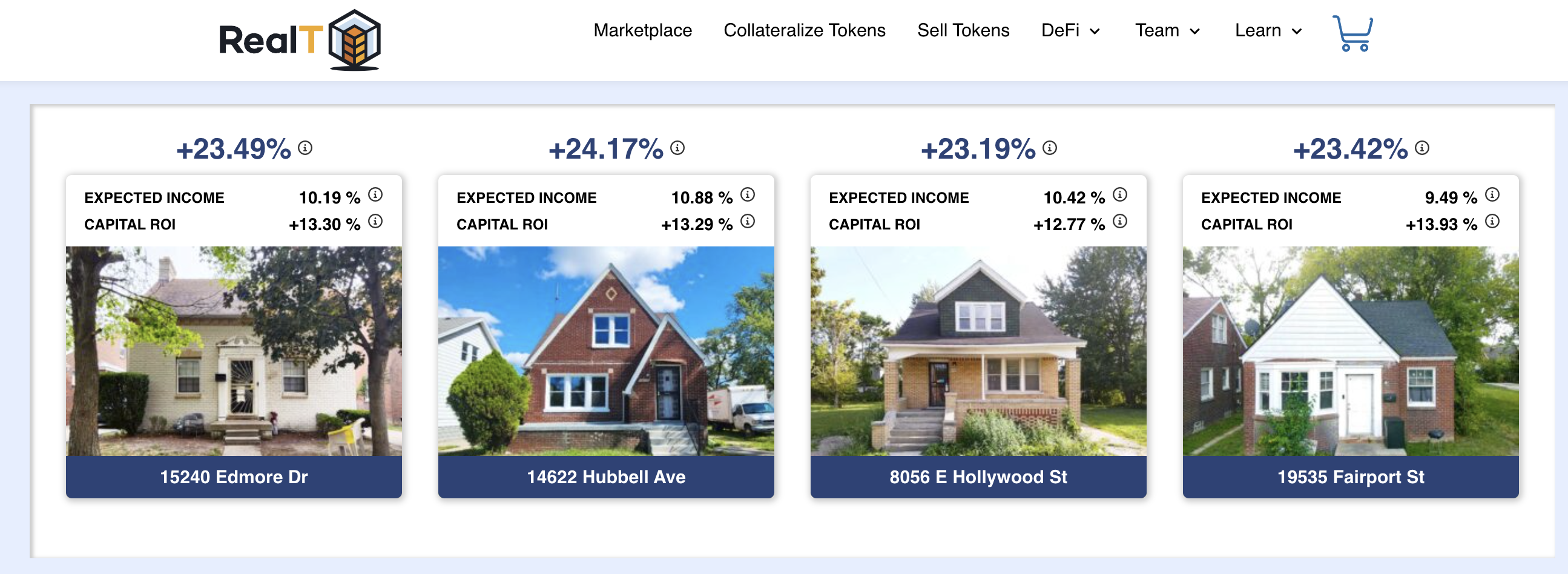
Several projects are leading this space. For instance, RealT offers fractional ownership of properties using Ethereum, allowing global investors to own shares in U.S. real estate. Parcl, built on Solana, facilitates trading real estate assets similarly to equities, allowing micro-investments and even shorting of properties.
RealT is a blockchain-based fractional real estate investment platform that allows investors to own portions of U.S. residential properties. Here are the key features of RealT:
How RealT Works
Benefits of RealT
RealT offers several key benefits to investors looking to diversify into real estate:
Parcl is a decentralized finance (DeFi) protocol built on the Solana blockchain that allows users to invest in and trade real estate markets through synthetic assets. The platform does not involve the direct buying or selling of physical properties; instead, users can speculate on real estate price movements.
Parcl achieves this by using data feeds to track residential property prices per square foot across various markets, enabling users to take long or short positions based on their expectations of market trends. This makes real estate more accessible to a broader audience by enabling fractional investments.
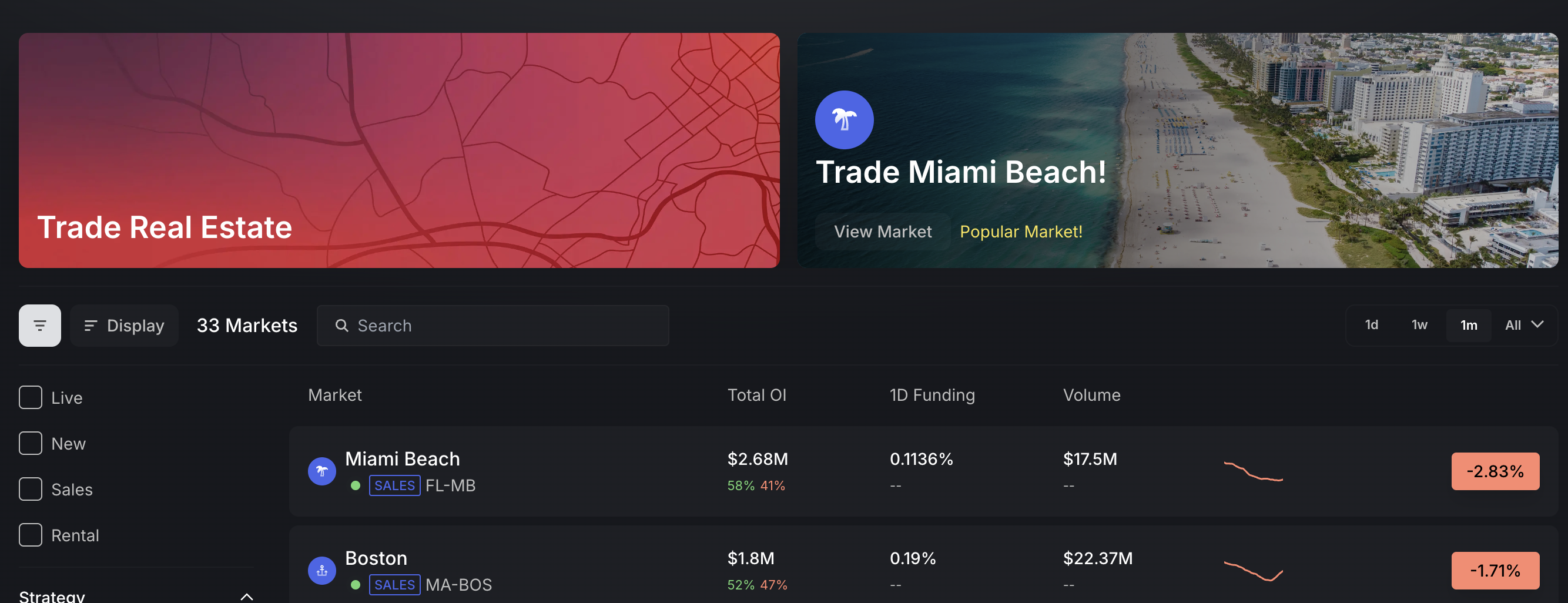
Perpetual Contracts: Parcl enables users to trade perpetual contracts that are tied to the price movements of real estate in specific geographic areas. This allows traders to take long or short positions on city indexes, which represent the aggregate value of property prices in cities such as New York, Miami, and Paris.
Risk Management Features: Parcl incorporates various risk management mechanisms to promote market balance. These features include funding rates, a margin system, and penalties for traders who increase market skew, ensuring a more stable trading environment.
The PRCL token is the native utility and governance token for the Parcl ecosystem, which operates on Solana and focuses on tokenizing real estate markets. Launched in 2024, PRCL is essential to Parcl’s mission of decentralizing its platform and providing users with real-time access to global real estate data and trading.
RWA Layer 1 blockchains are specialized blockchain platforms designed to facilitate the tokenization of real-world assets (RWAs). These blockchains aim to bridge the gap between traditional finance and decentralized finance. Many RWA Layer 1 blockchains, such as MANTRA, are built with a focus on regulatory compliance.
MANTRA Chain is a Layer 1 blockchain designed specifically for the tokenization of Real-World Assets (RWAs). Its primary goal is to bridge traditional finance (TradFi) with decentralized finance (DeFi), creating a compliant and efficient platform for developers and institutions to build decentralized applications (dApps).
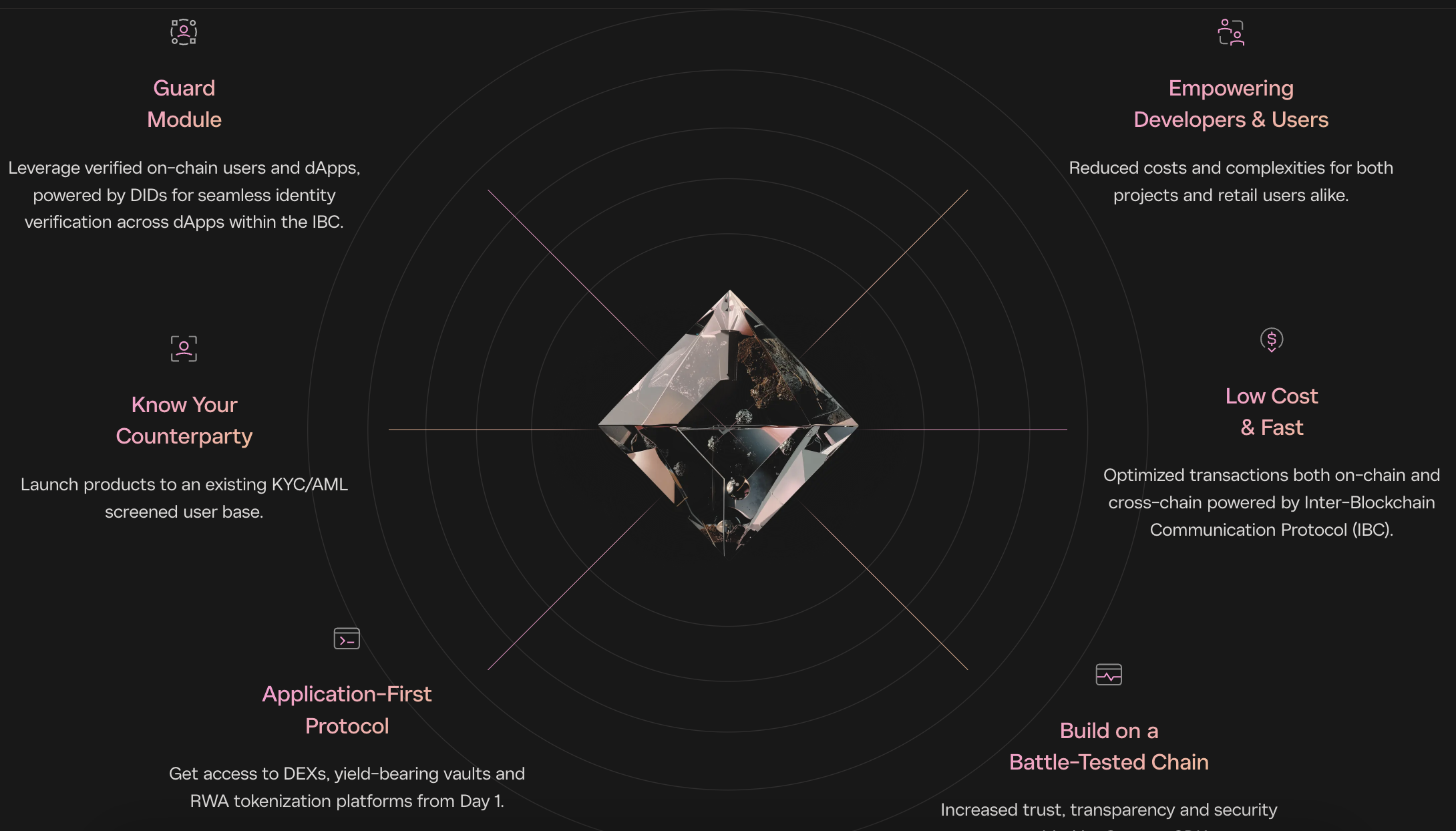
Key Features
MO Token
The OM token is a crucial component of the MANTRA ecosystem, specifically designed to facilitate various functionalities within the MANTRA Chain.
Polymesh is an institutional-grade blockchain designed specifically for regulated securities, addressing the needs of capital markets. Unlike general-purpose blockchains, Polymesh is a permissioned blockchain, meaning participants must go through identity verification to comply with financial regulations. This structure ensures that transactions on the network are secure, compliant, and confidential—key features for handling regulated assets like securities.
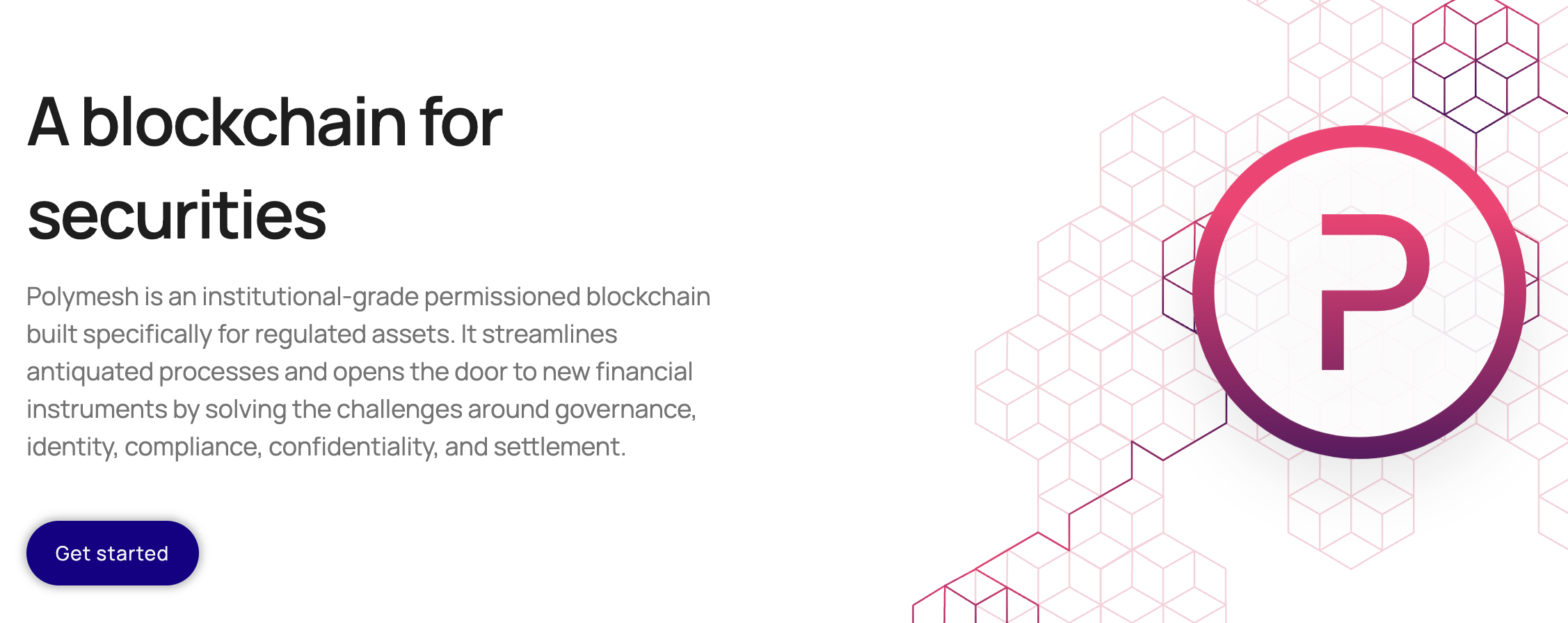
Polymesh is built to solve common challenges in financial markets, particularly those around compliance and settlement. It offers deterministic finality, ensuring transactions cannot be reversed once settled, which is critical for maintaining a clear record of asset ownership. Additionally, the platform integrates identity verification and automated compliance mechanisms, making it easier for institutions to meet legal requirements.
Polymesh is also designed to simplify the tokenization of real-world assets such as real estate, bonds, and equities, allowing for easier management and trading of these high-value assets on a blockchain. This focus on streamlining settlement processes and enhancing compliance positions Polymesh as a strong solution for institutions looking to digitize traditional financial assets.
POLYX Token
POLYX is the native utility token of the Polymesh blockchain. POLYX plays several crucial roles:
 APP
APP
 19938
19938