

 6m
6m
EigenLayer is a Restaking protocol based on Ethereum. It can be seen as an intermediary platform connecting Stakers, AVS, and Application chains.
The main role of EigenLayer is to act as a platform connecting these three entities. It can:
EigenLayer's business model is built around Stakers, AVS, and Application Chains. The specific operational process is as follows:
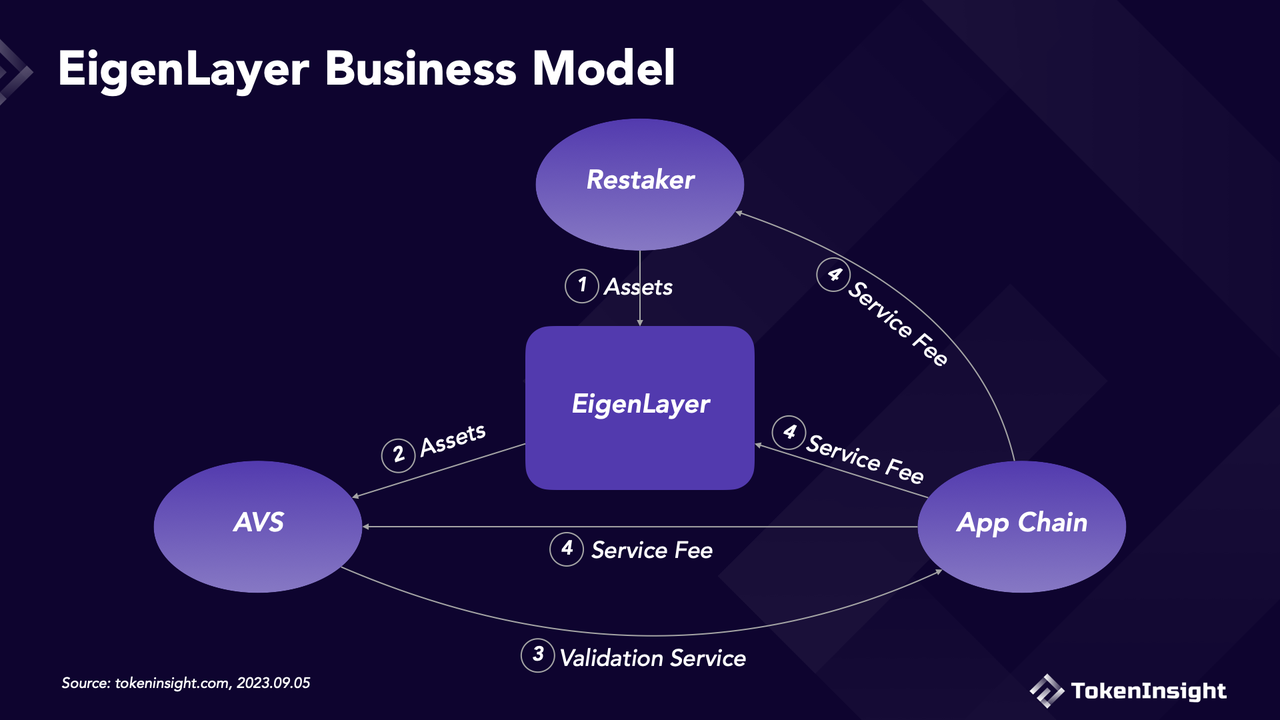
EigenLayer's Restaking service went live on the Ethereum mainnet on June 14, 2023. Currently, it offers two types of restaking options:
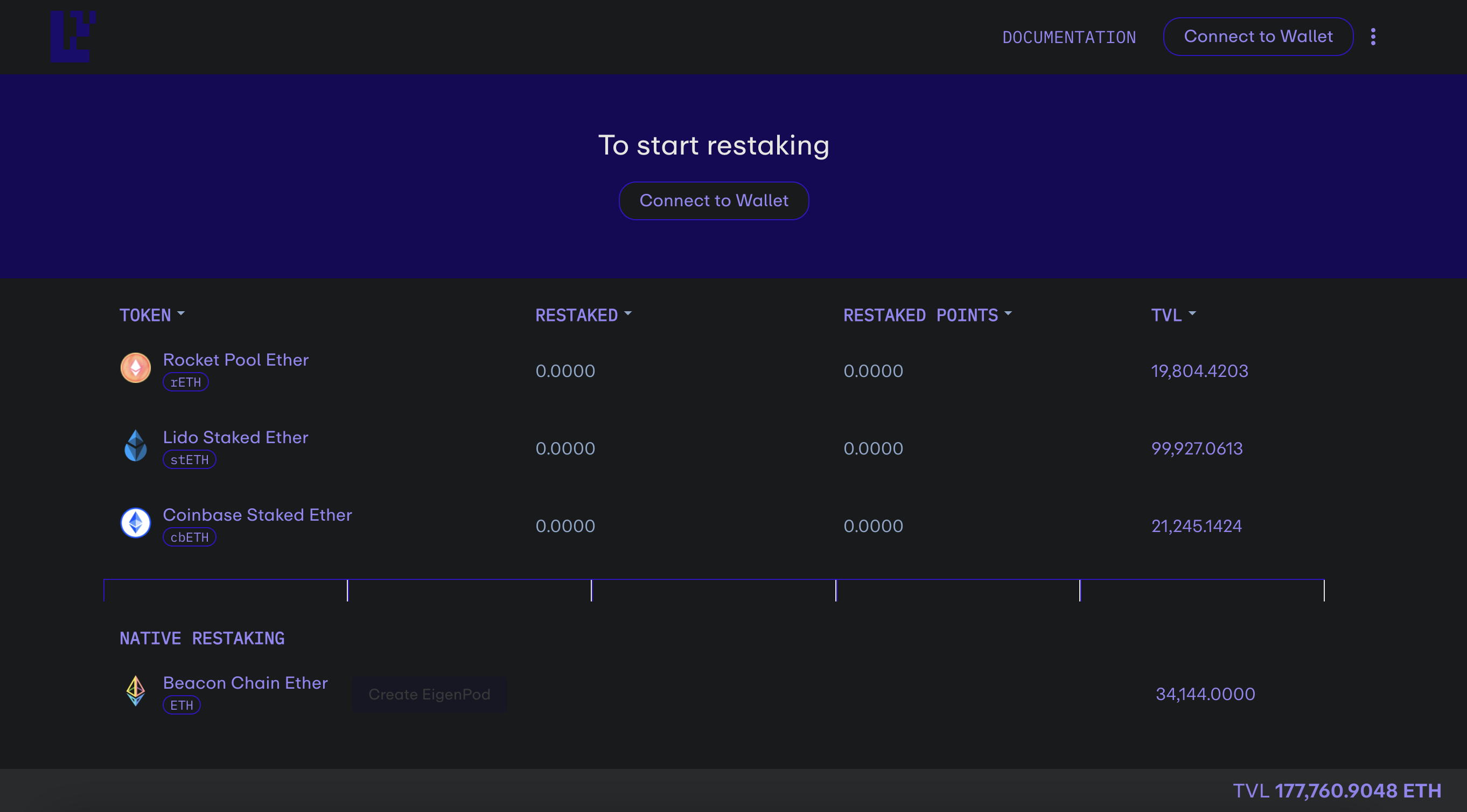
According to data from the EigenLayer official website, as of now, EigenLayer has undergone three expansions of its restaking capacity, with a total staked amount exceeding 177,000 ETH. The protocol currently supports the restaking of four types of assets: Lido Staked Ether (stETH), Rocket Pool Ether (rETH), Coinbase Staked Ether (cbETH), and Beacon Chain ETH. Among these, stETH has the highest quantity, occupying over 60% of the total staked amount.
From both the perspective of the project itself and the macro perspective of the crypto market, EigenLayer has three main reasons why it's worth paying attention to:
According to EigenLayer's claims, its Restaking mechanism can address the security fragmentation issue currently present in the Ethereum network.
Security fragmentation primarily refers to the issue of security compatibility between the Ethereum network and non-EVM-compatible application chains.
As we all know, Ethereum is one of the primary networks in the blockchain space, known for its robust security and high degree of decentralization. It operates on a PoS consensus mechanism with over 10,000 nodes and 25 million ETH staked, resulting in a high level of security. Application chains built on Ethereum using the Ethereum Virtual Machine (EVM) can inherit the underlying security of Ethereum.
On the other hand, non-EVM compatible application chains can not enjoy the same level of security as Ethereum. They must establish their own trust networks by deploying their nodes or relying on third-party validation nodes to ensure network security. This means that the security of each application chain is independent and fragmented. Compared to EVM-compatible application chains, non-EVM-compatible chains are more susceptible to attacks, and the cost of maintaining security is also higher.
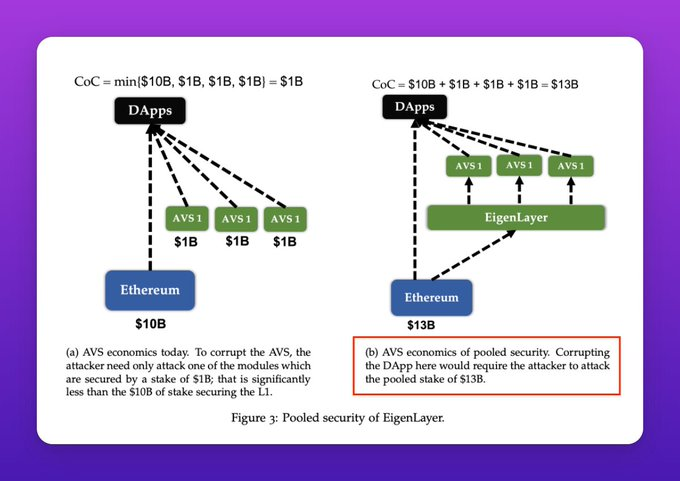
EigenLayer aims to address this issue through Restaking. By restaking, the staked LSD assets can be used across various validation protocols (AVS) to provide pooled security for non-EVM-compatible application chains.
These AVS are integrated into EigenLayer, forming a decentralized AVS marketplace. Users can choose different AVS for restaking based on factors such as rewards and security. These AVS will together act as a decentralized validation network, providing pooled security for non-EVM compatible application chains, effectively solving the problem of security fragmentation.
In simple terms, previously, attacking a network only required attacking a single AVS; now, it would require attacking multiple AVS simultaneously. This certainly increases the cost of attacks and improves security.
EigenLayer's Restaking mechanism will release a significant amount of liquidity from LSD in the future.
Since Ethereum's Shapella upgrade in April, the amount of ETH staked has seen a substantial increase. According to TokenUnlocks data, within a month after the upgrade, ETH staking increased by nearly 500,000, with a total of approximately 3.04 million ETH staked. This accounted for 16% of the total circulating ETH supply at that time.
Currently, Ethereum's staking rate is approximately 20%, and it continues to rise. Compared to other Layer 1 blockchains like Avalanche (62%) and Tron (47%), there is still considerable room for this number to increase in the future.
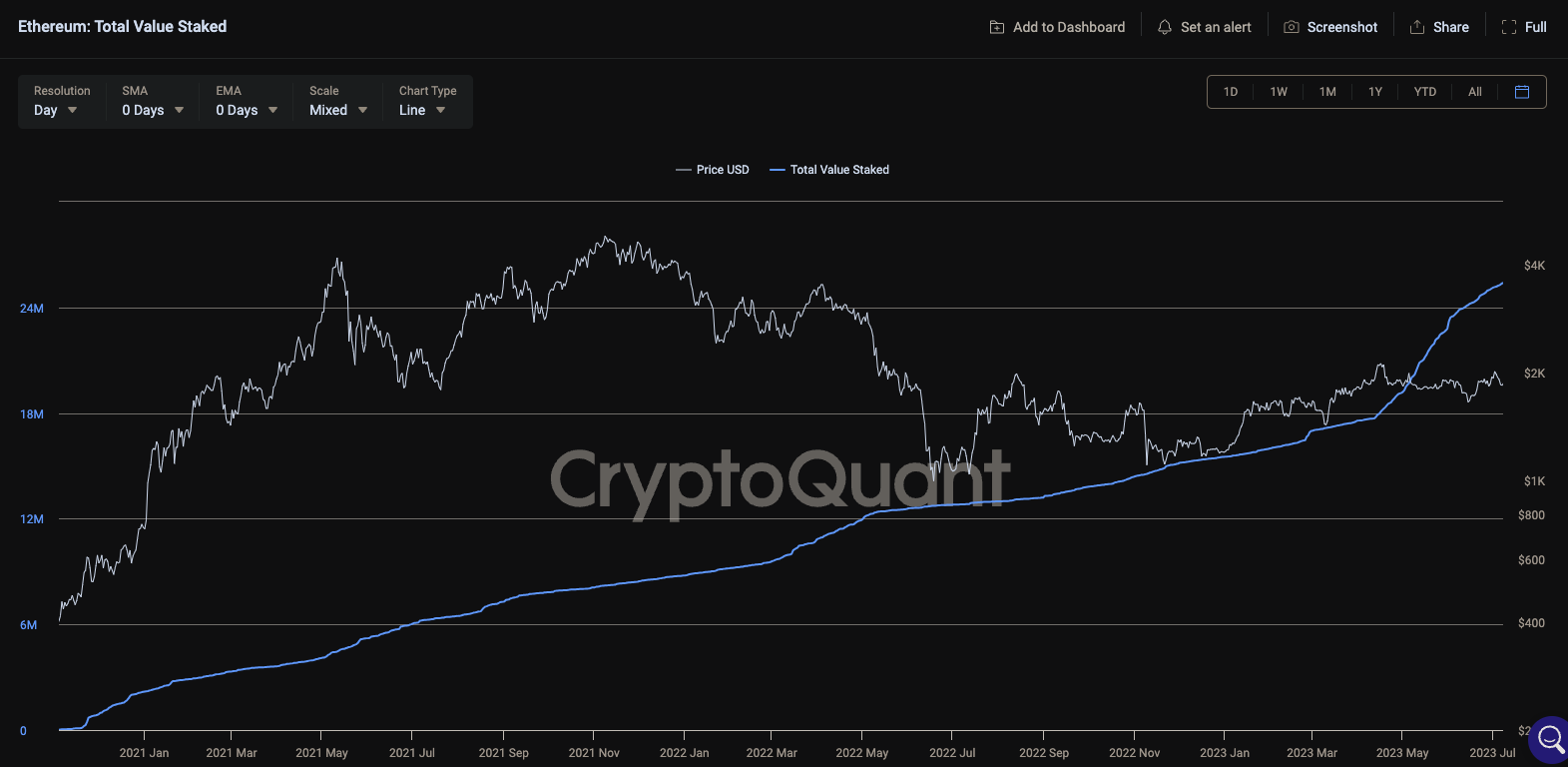
With the increasing ETH staking rate and the expansion of the entire ETH Staking market, the scale of liquid staking protocols like Lido Finance and Rocket Pool will continue to grow. The quantities of LSD assets like stETH and rETH will rise in line with the ETH staking rate. The entire LSD track holds significant potential.
This implies that EigenLayer's Restaking mechanism can release a substantial amount of liquidity from these LSD assets.
Historical data shows that within less than three months of EigenLayer Restaking launching on the mainnet, EigenLayer has increased the LSD restaking limits three times. The LSD restaking limit has gone from 3,200 tokens initially to 100,000 tokens. Moreover, each time, it took only two to three days for the LSD staking amount to reach the limit. Therefore, with the future addition of more types of LSD assets available for restaking and the expansion of the LSD market, EigenLayer is likely to raise the limit again, thereby unlocking more liquidity from LSD assets.
As a Restaking project that integrates numerous validation protocols, EigenLayer has a high likelihood of issuing its native token in the future. EigenLayer integrates various AVS and has formed its own ecosystem of validation services. Although EigenLayer is still in the early stages of development and has not yet established a complete governance model, decisions regarding the selection of AVS and the setting of core reward mechanisms will inevitably involve governance participation. Therefore, we have reason to believe that EigenLayer is highly likely to issue its native token in the future, which will be used for governance, rewards, and other purposes to support the project's development.
Furthermore, EigenLayer, as a pioneer in Restaking projects, has attracted investments from well-known early investors, such as Blockchain Capital, Polychain, Coinbase Venture, and others. This also significantly increases the likelihood of EigenLayer issuing its own token.
 APP
APP

 9740
9740