

 5m
5m
Polygon이 발표한 로드맵에 따르면, Polygon 2.0 업그레이드는 다음 네 가지 주요 구성 요소로 구성됩니다: Polygon PoS 업그레이드, 기술 아키텍처 업그레이드, 토큰 이코노믹스 업데이트, 그리고 거버넌스 업그레이드입니다.
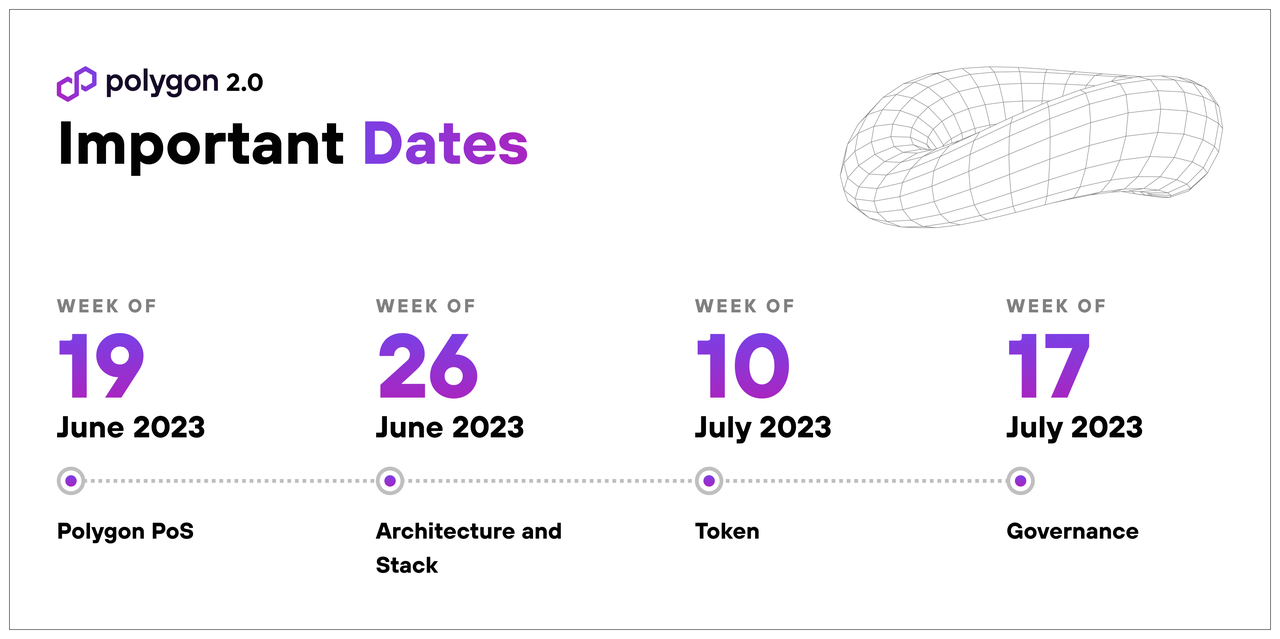
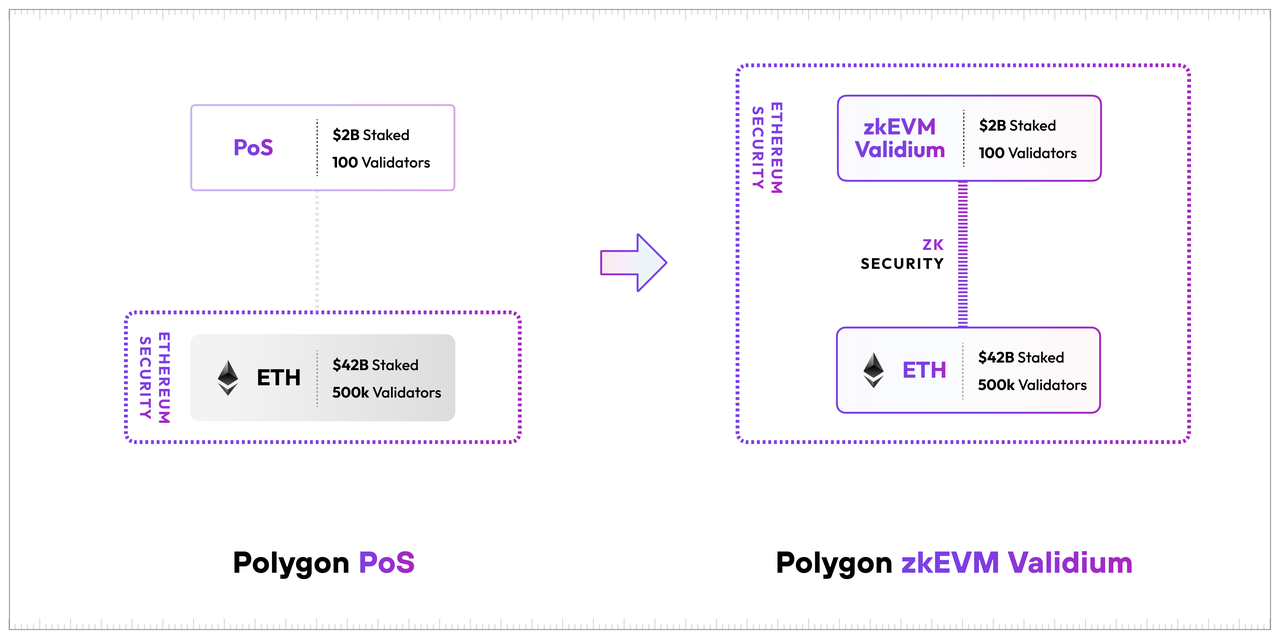
Polygon의 PoS 네트워크는 Polygon 2.0 업그레이드에서 zkEVM Validium으로 전환될 것입니다. 이는 Polygon zkEVM과 함께 완전한 Polygon 생태계를 형성하기 위한 것입니다.
zkEVM Validium은 제로 지식 증명을 기반으로 한 Layer2 스케일링 솔루션입니다. 이는 이전의 Polygon PoS와 두 가지 주요 차이점이 있습니다:
Polygon PoS 네트워크는 거래 검증을 위해 Proof of Stake (PoS) 합의를 사용합니다. 여기서 검증자들은 $MATIC 토큰을 스테이킹하여 거래를 검증합니다.
zkEVM Validium은 제로 지식 증명 기술을 통해 검증자들이 거래를 검증합니다.
Polygon PoS 네트워크는 거래 데이터를 체인 상에 저장합니다. 모든 거래 정보는 체인 상에 저장되어 언제든지 접근할 수 있습니다.
zkEVM Validium은 거래 데이터를 오프체인에 저장합니다. 거래 데이터는 블록체인 공간 제약에 구애받지 않습니다.
데이터 가용성은 zkEVM Validium과 Polygon zkEVM 사이의 가장 큰 차이점입니다. Ethereum의 sec를 기승으로 한 zkEVM 롤업과 비교하면, 데이터 가용성이 다릅니다.
보안 면에서 Polygon의 zkEVM은 온체인에 거래 데이터를 저장하는 반면, zkEVM Validium은 약간 낮은 보안성을 가지지만 오프체인 데이터 저장 메커니즘은 비용과 확장성 측면에서 이점을 제공합니다.
현재 거래 데이터를 기준으로 Polygon zkEVM의 거래 비용은 대략 한 거래당 0.02달러로, TPS(TPS, 초당 거래 처리량)는 약 2,000입니다. 업그레이드 이후에는 zkEVM Validium의 거래 비용은 거래 당 0.00005달러로 감소할 것입니다. 만약 StarkEx의 Validium 모드를 참조한다면, zkEVM Validium의 TPS는 약 9,000 정도로 증가할 것으로 예상됩니다.
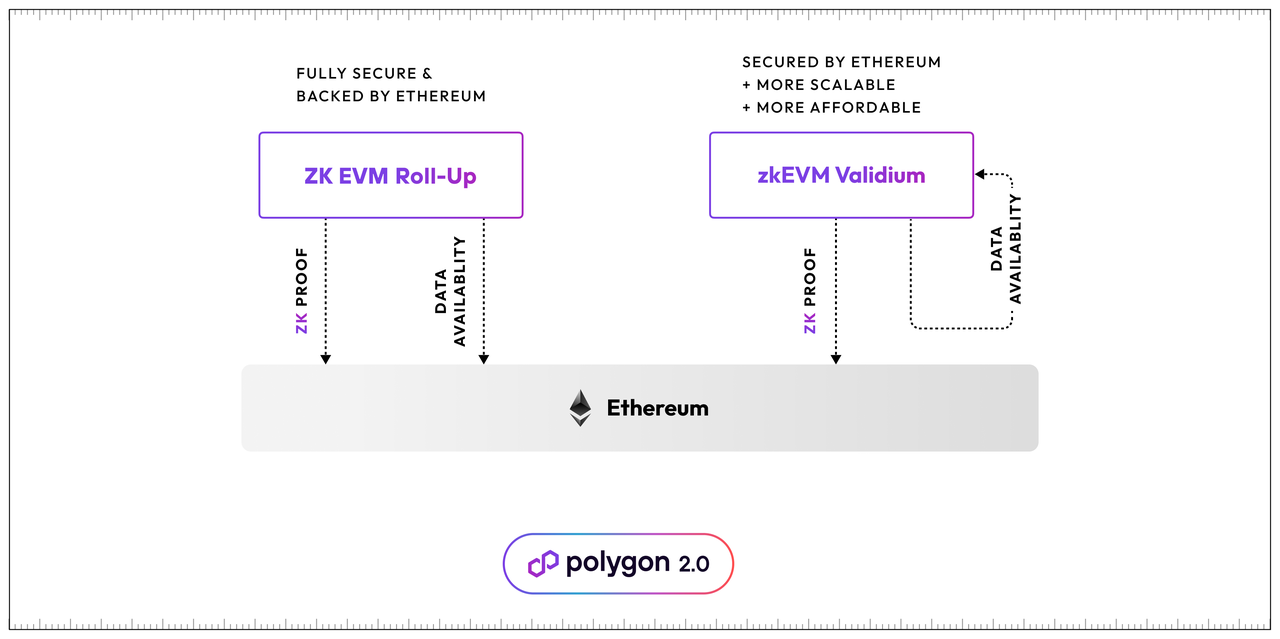
따라서 앞으로의 Polygon 생태계에서 이 두 네트워크는 다른 포커스를 가질 것입니다:
Polygon 2.0은 프로토콜 아키텍처를 업그레이드하여 계층 구조를 유지하고 네트워크 운영을 수행합니다. 이 아키텍처는 다음과 같은 4개 계층으로 구성되어 있으며, 각 계층은 다른 작업을 담당합니다:
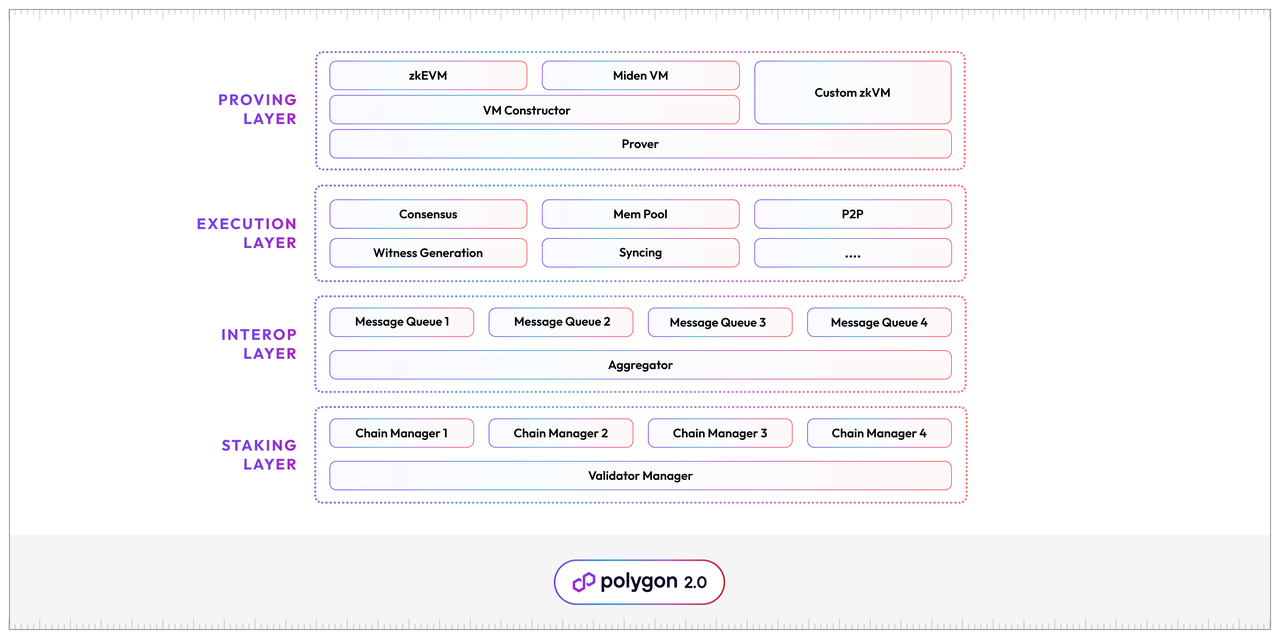
스테이킹 계층은 PoS 합의 기반으로 동작하며, 검증자와 관련된 작업을 담당합니다. 주로 Validator Manager와 Chain Manager라는 두 가지 주요 구성 요소로 구성되어 있습니다.
Validator Manager는 Polygon 생태계 내의 모든 공개 검증자를 감독하는 스마트 계약입니다. 검증자 등록, 스테이크된 액수 추적, 스테이킹/언스테이킹 요청 처리, 보상 분배 등과 같은 검증자와 관련된 다양한 측면을 처리합니다.
Chain Manager는 Polygon 생태계 내의 단일 체인에 배포된 스마트 계약으로, 각 체인에 특정한 검증자를 관리합니다.Management matters include the maximum/minimum number of validators, penalty conditions, the type/amount of tokens required for staking, etc.
Validators can become public validators within the Polygon ecosystem by staking tokens and participating as validators across multiple Polygon chains as needed. Validators are primarily responsible for transaction sequencing and verification while earning transaction fees and additional tokens as validation rewards.
The Interop Layer is responsible for cross-chain information transmission within the Polygon 2.0 ecosystem.
Within the Polygon ecosystem, each individual Polygon chain possesses a message queue. This queue comprises information destined for other Polygon chains, including details such as content, target chain, target address, and metadata. Every piece of information is accompanied by a corresponding ZK proof. Once the ZK proof for a specific piece of information is verified, the target chain proceeds to execute the transaction.
To reduce the cost of verifying ZK proofs on Ethereum, Polygon 2.0 plans to introduce an aggregator within the Interop layer. This aggregator gathers multiple ZK proofs generated by the message queues and aggregates them into a single ZK proof, subsequently sent to Ethereum for verification. The aggregator is managed by Polygon's public validator pool, aiming to reduce the overall validation cost.
The Execution Layer is responsible for the actual execution of transactions. It enables each single Polygon chain to generate ordered transactions and assists in execution. The Execution Layer comprises multiple general blockchain network components, including familiar ones like P2P, Consensus, Mem Pool, and Databases.
The Proving Layer is responsible for generating ZK proofs for every transaction (including cross-chain transactions) on Polygon chains and assisting in building different types of VMs. It primarily consists of three components:
The Prover is a high-performance ZK prover that supports arbitrary transaction types. It possesses efficient proof verification capabilities and can assist in verifying transaction proofs.
The Custom zkVM is a modular framework for virtual machines. Developers can easily construct the desired virtual machine through its interface.
VMs aid validators in simulating proof execution environments and transaction formats. Simulations are generally achieved through the VM Constructor. Currently, Polygon 2.0 includes two types of VMs: zkEVM and Miden VM.
Polygon 2.0 plans to convert its native token $MATIC into $POL, which will serve as the unified utility token for the Polygon ecosystem.
$POL will have an initial supply of 10 billion tokens, migrating 1:1 from $MATIC. $MATIC holders will have a period폴리곤 토큰의 경우, 보유 기간이 4년 이상인 경우 토큰을 업그레이드할 수 있습니다. $MATIC의 고정 공급과 달리 $POL은 다음 10년 동안 연간 2%의 인플레이션을 경험할 것입니다. 이 인플레이션 비율은 거버넌스 프로세스를 통해 조정될 수 있습니다.
$POL의 가장 중요한 특징은 크로스 체인 상호운용성입니다. 폴리곤 생태계 내의 모든 체인에서 사용할 수 있습니다. $POL은 다른 체인에서 거래를 확인하고 다양한 프로토콜을 연결하여 폴리곤 생태계의 발전을 도움으로써 사람들에게 혜택을 제공할 수 있습니다. 게다가 $POL 보유자는 여러 체인에서 검증자가 될 수 있으며, 네트워크 보안에 기여하고 참여에 대한 보상을 받을 수 있습니다.
$POL에는 네 가지 주요 유틸리티가 있습니다:
폴리곤 2.0의 검증 프로세스에 참여하기 위해 검증자는 $POL를 스테이킹해야 합니다.
폴리곤 2.0은 검증자에게 지정된 양의 $POL를 보상으로 제공할 것입니다. 보상 할당은 미래의 커뮤니티 거버넌스 결정에 따라 조정될 수 있습니다.
$POL은 거버넌스 목적으로 사용될 수 있습니다. 폴리곤 2.0은 $POL 보유자가 관리하는 새로운 커뮤니티 트레져리를 도입하여 폴리곤 생태계의 발전을 지원할 것입니다.
검증자는 폴리곤 생태계 내에서 여러 체인을 검증하고 $POL 형태의 거래 수수료를 받을 수 있습니다.
폴리곤 2.0의 거버넌스 메커니즘은 핵심 프로토콜, 시스템 스마트 계약 및 커뮤니티 자금 세 가지 측면에서 업그레이드될 예정입니다.
폴리곤 2.0의 핵심 프로토콜은 PIP (폴리곤 개선 제안) 프레임워크를 도입합니다. 이는 이더리움의 EIP (이더리움 개선 제안) 프레임워크와 유사하며, PIP는 핵심 프로토콜 개발의 핵심 구성 요소에 대한 업그레이드 제안을 개발자들이 제출할 수 있도록 돕습니다.
폴리곤 2.0은 시스템 스마트 계약을 업그레이드하는데 책임을 지는 생태계 위원회를 도입합니다. 이 위원회는 토큰 기반의 거버넌스 모델을 통해 의사결정을 내릴 것입니다. 투표권은 네이티브 폴리곤 토큰의 보유량을 기준으로 분배될 것입니다.
또한, 생태계 위원회는 계약 업그레이드를 모니터링하기 위한 대시보드를 출시할 예정입니다.
폴리곤 2.0은 폴리곤 생태계 내의 유망한 프로젝트를 지원하기 위해 생태계 기금을 설립할 계획입니다. 또한, 폴리곤은 자금 할당 및 관련 커뮤니티 거버넌스 업무를 수행할 커뮤니티 트레져리 위원회를 조직할 것입니다.
 앱으로
앱으로

 5676
5676