In this article, we will be discussing zkSync Era, a Layer 2 ecosystem that has gained significant popularity recently due to the congestion and high transaction fees on the Ethereum network. zkSync Era allows for faster and cheaper transactions, and since its launch in March 2023, it has been experiencing rapid growth. We will be providing an overview of the entire ecosystem, including DeFi, cross-chain bridges, NFTs, and more, to give you a better understanding of this new ecosystem and its potential for growth.
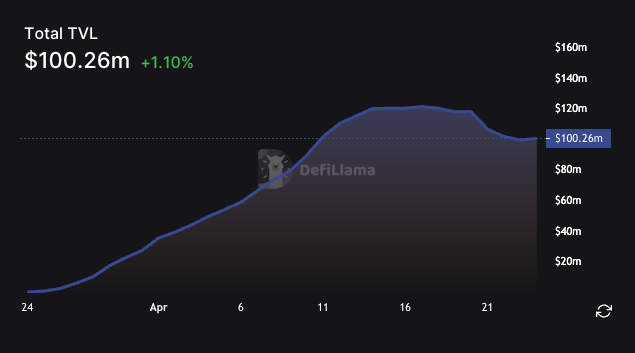
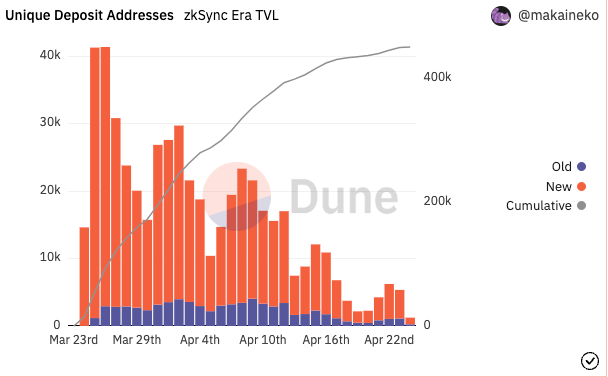
zkSync Era is a recently popular new Layer 2 ecosystem. The mainnet was launched on March 24, 2023, and according to DeFiLlama, the total value locked in zkSync Era surpassed 100 million dollars on April 10, only 17 days after the mainnet launch. According to Dune Analytics, the daily number of cross-chain wallet interactions on zkSync Era once reached 40,000 (on the third day after the mainnet launch). As of April 23, 2023, the cumulative number of interacting addresses has exceeded 450,000.
There are rumors that it's highly likely to distribute airdrop rewards to users actively interacting with it. Therefore, TokenInsight aims to provide users with an overview of the entire ecosystem landscape and brief introductions to some of them. Overall is to help users better understand these projects.
PS: If you want to learn more about how to interact with zkSync for a chance to receive airdrops and how to use zkSync, please check our zkSync Airdrop course!
zkSync Era is a Layer 2 scaling solution for Ethereum that uses zero-knowledge rollup architecture to provide faster, cheaper transactions compared to the Ethereum mainnet. By moving most activity off the layer1 network, it reduces network congestion and transfer fees while maintaining Ethereum's security and finality.
It faces competition from other Layer 2 solutions like Arbitrum, Optimism, and Starkware. Despite some trade-offs, zkSync plays a crucial role in addressing Ethereum's scalability challenges and promoting mainstream adoption.
According to our current statistics, there are a total of 44 projects that have gone live on zkSync Era, of which more than 20 are native projects on zk. Therefore, we have classified these projects into 8 main categories: DeFi-type DEX, yield farming aggregator, perpetual contract derivatives, lending protocols, wallets, infrastructure, cross-chain bridges, and NFTs. The following will briefly introduce the key projects in each category. Please note that the information in this article may not be complete and is for reference only. Corrections and feedback are welcome!
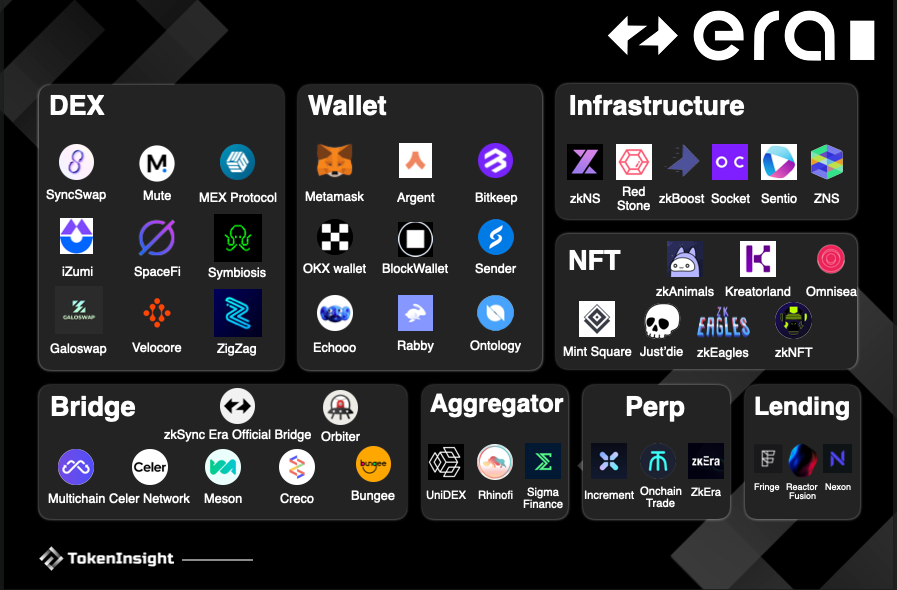
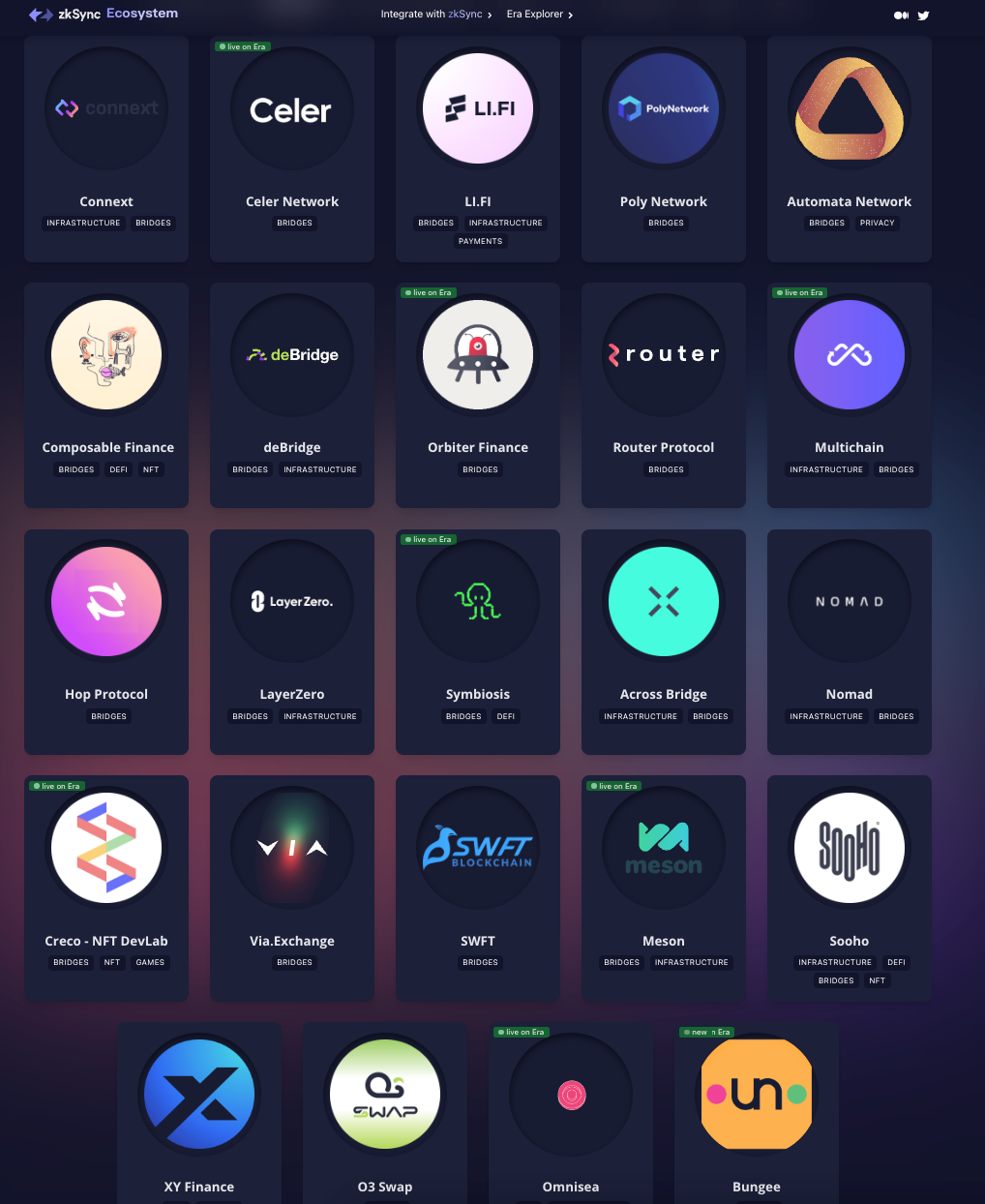
According to the official disclosure of the zkSync ecosystem, there are a total of 24 cross-chain bridges expected to support zkSync Era, among which 7 have already been fully supported and launched. These include the official zkSync Era Bridge, Orbiter, Multichain, Celer Network, Meson, Creco, and Bungee.
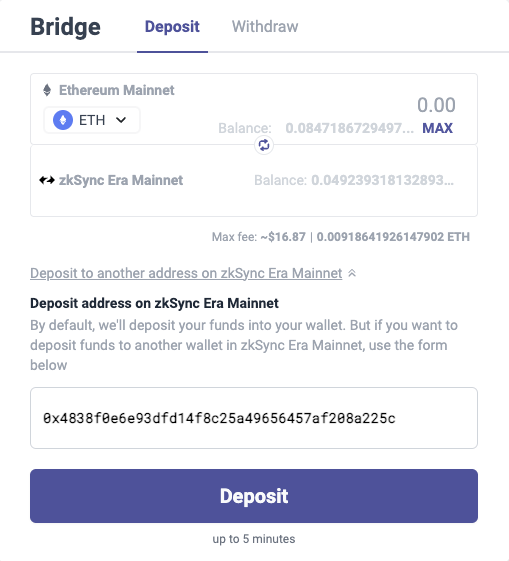
zkSync Era bridge is the official zkSync Era cross-chain bridge, and it is also the most reliable cross-chain method we believe.
The official bridge needs to be linked to a browser wallet such as MetaMask to transfer assets. The official bridge only supports the transfer of any ERC-20 token from the Ethereum mainnet to zkSync Era.
The core contracts of the official bridge are Deposit & Withdrawal, a set of contracts that can communicate with each other and are deployed on the mainnet and Layer 2 networks respectively. The mainnet contract can receive user deposits and lock them, and can communicate with the Layer 2 contract to inform it how much a user has deposited. The Layer 2 contract can mint and send tokens. When withdrawing, the Layer 2 contract can destroy the tokens and inform the mainnet contract that a certain address has destroyed a certain amount of tokens. After that, the withdrawal action will be available to be finalized by anyone in the L1 bridge (by proving the inclusion of the L2 -> L1 message, which is done when calling the finalizeWithdraw method on the L1 bridge contract). After the method is called, the funds are unlocked from the L1 bridge and sent to the withdrawal recipient. For more details on the underlying principles, please refer to guide of bridging.
While the zkSync standard bridge can be used without permission from a smart contract perspective, the UI only displays tokens that have been added to our SDK.
If you don't find it in the default list, you can customize three indicators: address, name, and decimal places to manually add the token you want to transfer. If you really want to add your token to the UI displayed on their frontend, you can submit a suggestion at this link: Portal Request.
By default, it will deposit your funds into your wallet. But if you want to deposit funds to another wallet in zkSync Era Mainnet, use the form below.
Orbiter Finance is a decentralized bridge that spans across Rollup Layer2. Its feature is that it only serves transfers between Ethereum EVM chains. The Layer2 and mainnet it supports are: StarkNet, zkSync, Loopring, Arbitrum, Arbitrum Nova, Optimism, Polygon, BNB Chain, ZKSpace, Immutable, dYdX, Metis, and Boba.
Orbiter bridge charges two types of fees: Trading fee and Withholding fee.
In Orbiter Finance, you can also become a Maker, which is essentially providing liquidity as an LP. Makers assist senders in cross-chain asset transactions to ensure interoperability and adaptability in an efficient manner. They consistently provide liquidity under various market conditions and optimize Ethereum Layer 2 transactions to ensure stability. For more details on becoming a Maker, please refer to the Maker System.
Meson is the faster and safer way to execute stablecoin cross-chain swaps across all leading blockchains and layer-2 rollups.
Meson has launched on 16 high-performance chains including Ethereum, BNB Chain, Tron, Avalanche, Polygon, Fantom, Aurora (NEAR), Cronos (Cosmos), Conflux eSpace, Moonbeam (Polkadot), Moonriver (Kusama), Aptos and EOS as well as Layer-2 rollups such as Arbitrum, Optimism and zkSync. Meson will continue to work on network expansion for the rest of 2023 with plan to roll out on more L2 rollups and non-EVM chains like Sui, Algorand and Solana.
In the meantime, Meson closely monitors the stablecoins market as it evolves and plans to introduce more widely-adopted stablecoins, such as DAI, BUSD, etc. to meet the growing demand on the market.
As the most basic function in the DeFi ecosystem, DEXs have the most projects on zkSync Era. According to the official disclosure, 103 projects supporting DEXs are expected to be built on zkSync Era. We have identified the top 9 DEXs that have gone live on the ecosystem in our ecosystem map.
SyncSwap is currently the highest-ranked project in terms of TVL on zkSync Era. It is a decentralized exchange (DEX) first launched in April 2022. According to DeFiLlama data, as of April 23, 2023, its TVL is approximately $35.23 million. Its minimalist UI design, smooth and user-friendly UX interaction, combined with the faster transaction speed of the zkSync Era network, provide an excellent overall experience, giving a great first impression to users. SyncSwap supports five networks, including zkSync Era: zkSync Era mainnet, zkSync Era testnet, Scroll Alpha (another Layer2 network using zkEVM), Polygon zk EVM testnet, and Ethereum mainnet.
SyncSwap aims to be a one-stop DeFi platform with the security of the Ethereum network and a great trading experience (cheap + fast). Its ultimate vision is to accelerate the adoption of a large number of users in the zkSync ecosystem.
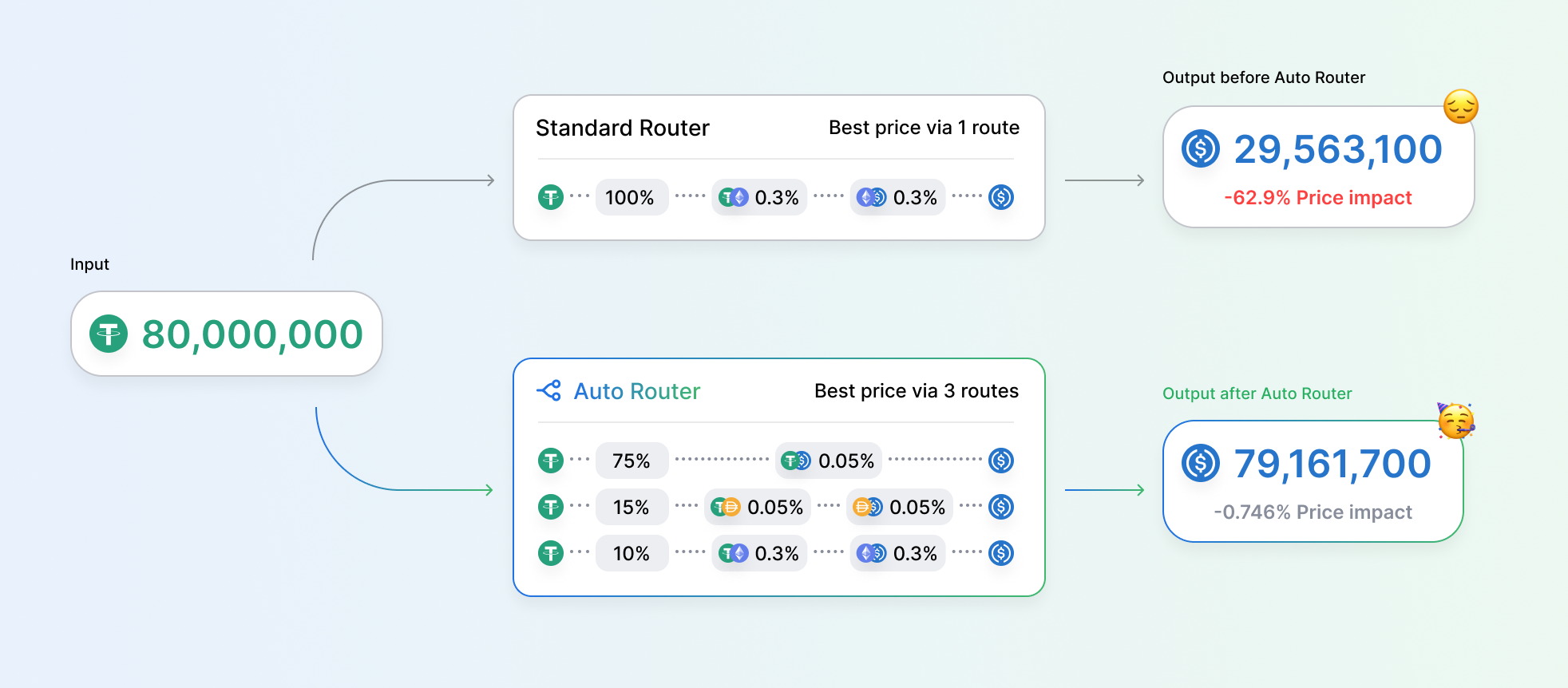
Its core product, the Multi-Pool DEX protocol, has the following features:
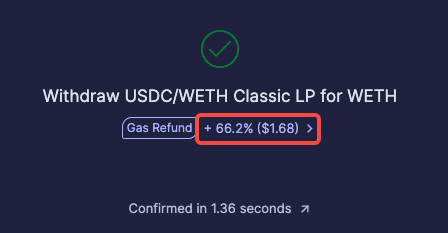
To reward users actively participating in trading and providing liquidity, SyncSwap has initiated a Loyalty Program, which regularly issues reward certificates called ySYNC. The higher a user's trading volume and the more fees they contribute, the greater the rewards they receive. Rewards are distributed to users in the form of non-transferable tokens called ySYNC, with $1 in fees earning 1 ySYNC. However, ySYNC can be exchanged for veSYNC governance rights. Rewards will also be sent periodically in epochs, each lasting 24 hours, running continuously for a month. For more details, please refer to this document.
SYNC is the officially recognized native token of SyncSwap, representing governance rights in SyncSwap. The maximum supply will be 100,000,000 tokens. Specific tokenomics and distribution are still in development, so please stay tuned and follow this document for updates.
Mute is also a DEX on zkSync, with three main features:
Among these features, the most core one is the Mute Switch exchange, while the other two are incentive mechanisms developed to maintain the liquidity of the exchange. The exchange can be characterized by three features: 1. Support for limit orders (Not ready yet). 2. Support for two AMM algorithms, suitable for stablecoin pairs and regular coin pairs (stablecoins are more similar to the Curve model, while regular coins are similar to Uniswap's constant product model). 3. Built on zkSync, providing gas-saving and fast settlement performance.
Velocore is a DeFi protocol deployed on the zkSync network, built on the foundations of Solidly and Velodrome Finance. It aims to provide users with secure, fast, and low-cost transactions, as well as various opportunities for income growth. Velocore's goal is to integrate various DeFi services into one platform, making them easily accessible and easy to use, thus enriching the DeFi ecosystem of the zkSync Era.
Velocore has launched two tokens, namely the ERC-20 utility token $VC and the ERC-721 governance token $veVC. $VC holders can vote-escrow their tokens and receive a $veVC (also known as veNFT) in exchange, and the number of $veVC tokens obtained will increase as the vote-escrowed period increases.
Currently, Velocore primarily includes the following features:
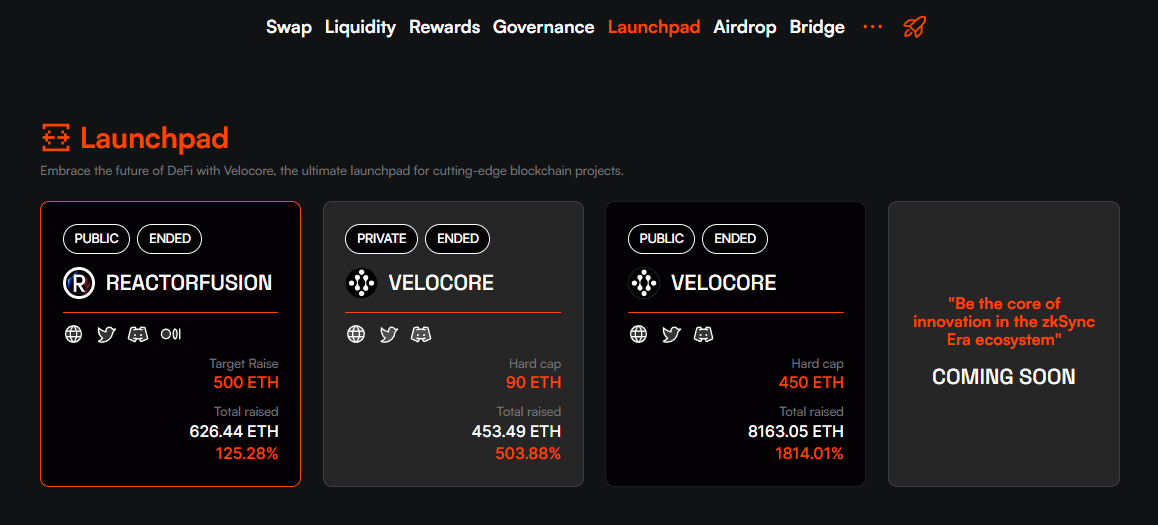
As mentioned above, Velocore adopts a new emission model to ensure fair token distribution. This is because the emission model of Solidly has certain drawbacks. For instance, the $SOLID earned by liquidity providers decreases gradually at a rate of 2% per week. This design was intended to incentivize LPs to participate early, but it also resulted in early participants gaining unfair advantages and being unfriendly to later entrants.
To address these issues, Velocore adjusted the mechanism, with the emission decaying at 1% per week (epoch). At the same time, $veVC holders can also receive a certain percentage of Rebase, calculated with the following formula: (veVC.totalSupply ÷ VC.totalsupply)³ × 0.5 × Emissions, thus reducing vote power dilution for $veVC. This design can balance the amount of emission at each stage, and although early LPs can still receive more rewards, it still maintains some attractiveness to later entrants, which ensures that LPs can receive relatively fair rewards and continue to earn stable income in the Velocore ecosystem.
Galoswap is a DEX + NFT trading market on zkSync Era. According to its official documentation, the project also plans to provide decentralized perpetual contract derivative trading services and Launchpad project issuance services, but currently only has a simple spot trading swap function on its website, with only 5 trading pairs. The project has launched an LP card reward mechanism to incentivize liquidity providers to stake and lock their liquidity. Galo Token ($GALO) is the native token of the project, with a total of 100,000,000 tokens, and the specific contract address and distribution plan have not been disclosed, only that the token will have a burning mechanism.
SpaceFi is a cross-chain Web3 platform that combines decentralized exchanges, NFT marketplaces, launchpads, and other functions, and is based on the Evmos and zkSync Era ecosystems.
Symbiosis is a multi-chain liquidity DEX that supports Ethereum mainnet, zkSync Era, Arbitrum, BNB chain, Polygon, Avalanche, BOBA, Telos, Kava EVM, and more. The project's design style is very retro, with a black background and bright green text as its main style. In addition to normal cross-chain transactions, it also has a main feature of providing cross-chain liquidity: Cross-chain Zaps. This functionality allows users to supply any token from any blockchain in one click (one transaction) to liquidity pools owned by Symbiosis.
Reactor Fusion is a native lending market based on zkSync Era, and is a fork of Compound Finance. It provides a unique bribe reward token economic model.
Currently, ReactorFusion has a total TVL of approximately $15.63 million and a total borrowed amount of approximately $9.02 million. The platform currently only supports two assets, ETH and USDC.
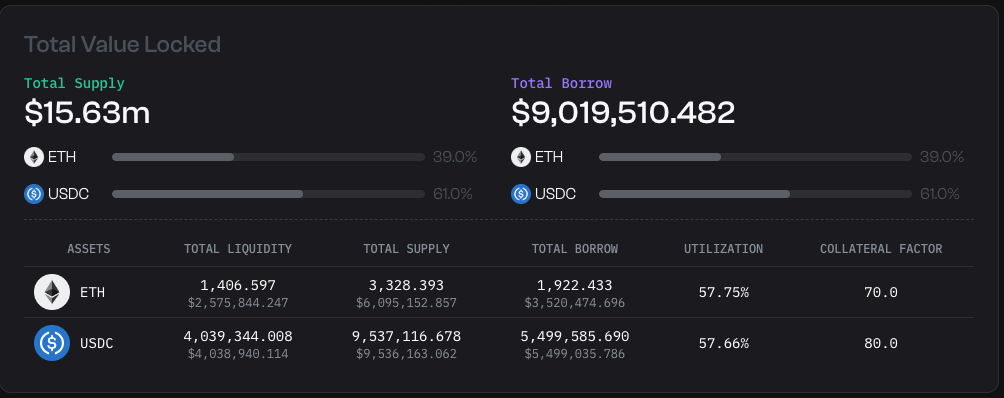
Sonne and Mare protocols rely on manual claiming and periodic off-chain reward distribution, which introduces centralization risks and limits protocol activities to a one-week processing cycle since reward distribution has to be manually processed. In contrast, ReactorFusion automates all of these processes through smart contracts, and rewards are reflected in liquidity in real-time. Similar to Compound, ReactorFusion also relies on Collateral Factor and Reserve Factor mechanisms to implement lending.
ReactorFusion's native token RF recently completed a public sale on Velocore, but the project team has not disclosed the specific use cases for the token. For more information about the sale details, please refer to this link: Reactor Finance public fund raising.
Increment ($INCR) is an AMM liquidity protocol built on the zkSync Era. It introduces a virtual liquidity pool supported by collateral similar to Perp Finance, providing liquidity for assets and using Curve V2's AMM for trade execution. Its features include:
Users can interact with the protocol in four main ways:
NCR is the governance token of the Increment protocol. The community will use the INCR token for voting, governance, and curating the basic infrastructure components of the Increment ecosystem. For more detailed token economics information, please visit: $INCR tokenomic by TokenInsight
Investors in the project include: Parafi Capital, Delphi Digital, Dialectic, AngelDAO, Skyvision Capital, LedgerPrime and other high-quality institutions. The product has not been launched yet, and the INCR token does not currently have an IDO, making it a "small and beautiful" project worth watching. We will provide updates as they become available.
Nexon Finance is a lending protocol on zkSync Era. The product is already live, with a TVL of approximately $3.25 million and a total borrowed amount of approximately $466,000. The borrowing rate is about 14%, and about 85% of the share is currently unused. Currently, it supports depositing ETH to borrow USDC. The project has a comprehensive audit report, contract address, and GitHub disclosure, but has not disclosed its tokenomics.
Mint Square is currently the main NFT marketplace on Ethereum L2 ZK Rollups (StarkNet, zkSync). Its product is similar in style to OpenSea and currently has 39 verified projects. Projects such as zkAnimals, zkAPE, zkalien, zkPunks, and ERA Name Service have trading volumes exceeding 50 ETH.
zkAnimals is a collection of 3,000 NFT PFP cc0 (meaning "no rights reserved") based on zkSync. On March 28, 2023, zkAnimals completed its public minting and was listed on the secondary NFT marketplace Mint Square. As of April 25, 2023, the project has a total trading volume of approximately 150 ETH, with a floor price of 0.032 ETH and a total of 1.8k holding addresses.
zkAnimals was launched in June 2022, during the early stages of the zkSync Era. The goal of zkAnimals is to become a commercial brand for gaming and virtual fashion services on Ethereum L2.
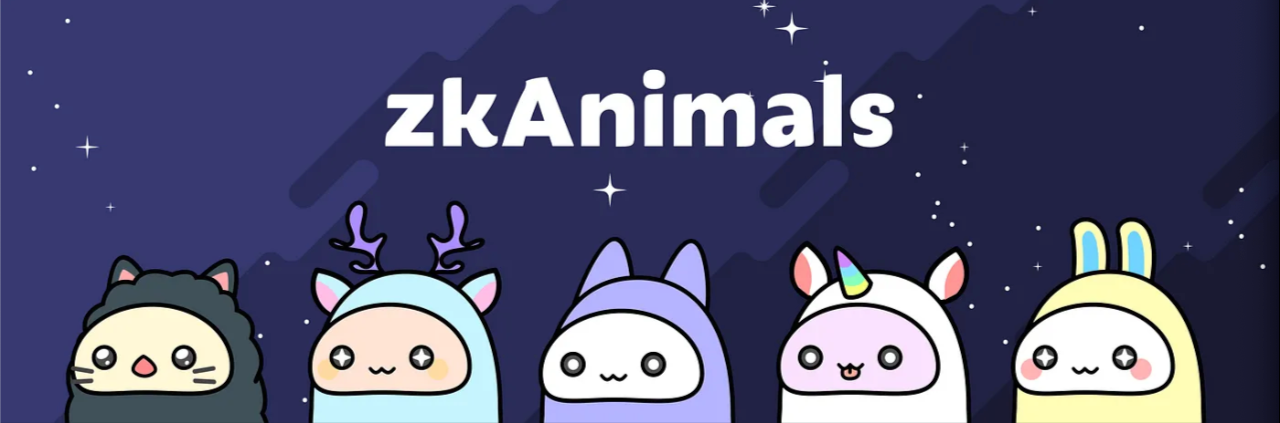
Like most PFP projects, zkAnimals offers varying returns based on rarity. The development of zkAnimals is divided into three types of NFTs: common, rare, and epic. For more information, please refer to their official documentation: What is zkAnimals?
Kreatorland is aiming to build a Click-Launch-List NFTs for Artists & Marketplace platform where
artists, designers and creators can launch, create, own, and trade their digital assets using KND, the
utility and governance token of the platform. Major features of Kreatorland are:
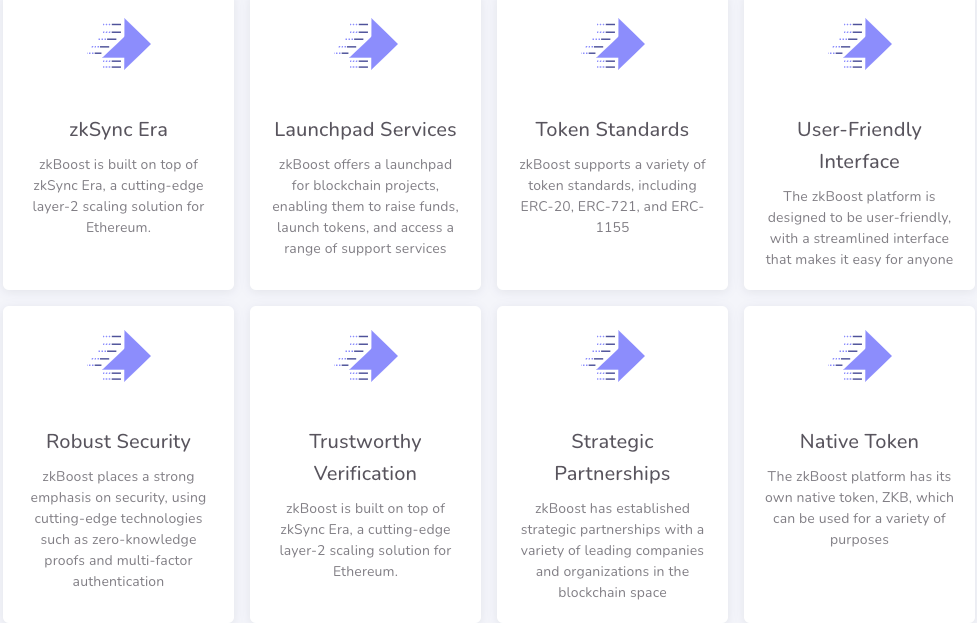
zkBoost is a tool on zkSync Era that allows anyone to easily create their own token on zkSync and launch their own project. It supports creating tokens that follow ERC-20, ERC-721, and ERC-1155 standards. Additionally, zkBoost has its own launchpad that allows projects to set a date for their token's public release, fundraising amounts, and more.
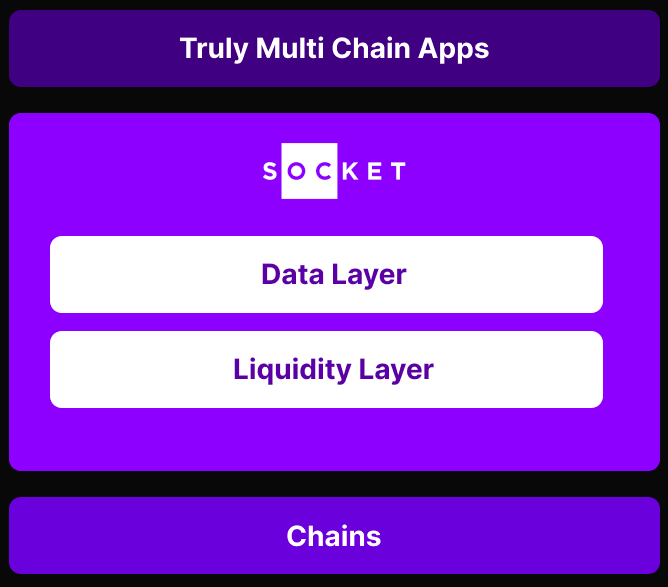
Socket is an interoperability protocol for secure & efficient data and asset transfers across chains. Socket is not a bridge, or a cross-chain app - it is an infrastructure that allows developers to build these things easily. Developers can use Socket to build apps with interoperability as a core part of app infrastructure.
Sender Wallet is a multi-chain wallet that primarily supports the following blockchains: Ethereum, NEAR, and most EVM-compatible chains such as Avalanche, Polygon, BNB Chain, Optimism, Arbitrum, Scroll Alpha, and zkSync Era. Currently, Sender has both Google and Chrome browser extensions, as well as mobile apps for Apple and Android.
Rabby Wallet is also a SlowMist security-audited web3 multi-chain wallet that supports 48 chains, including zkSync Era. However, it currently does not support mobile clients. Its biggest feature is that Rabby Wallet will automatically switch networks based on the website that the user is browsing, without the need for manual confirmation.
zkNS is a decentralized identity DID on the zkSync Era ecosystem, which provides domain name services for zkSync. This project, originally named Star (Aster Protocol), was inspired by the Loot project and aims to be a metaverse aggregator. It successfully raised $1 million in January 2022 (with investors including Youbi Capital, Pluto Capital, etc.). In September 2022, it was deployed on Polygon and began working on domain name business on Omnichain in October 2022 at Aptos. In the same year, it released its domain name project on the Sui test and development network in December 2022. In March 2023, it announced that it would do OP domain names.
In zkNS, domain names can only end in ".zk".
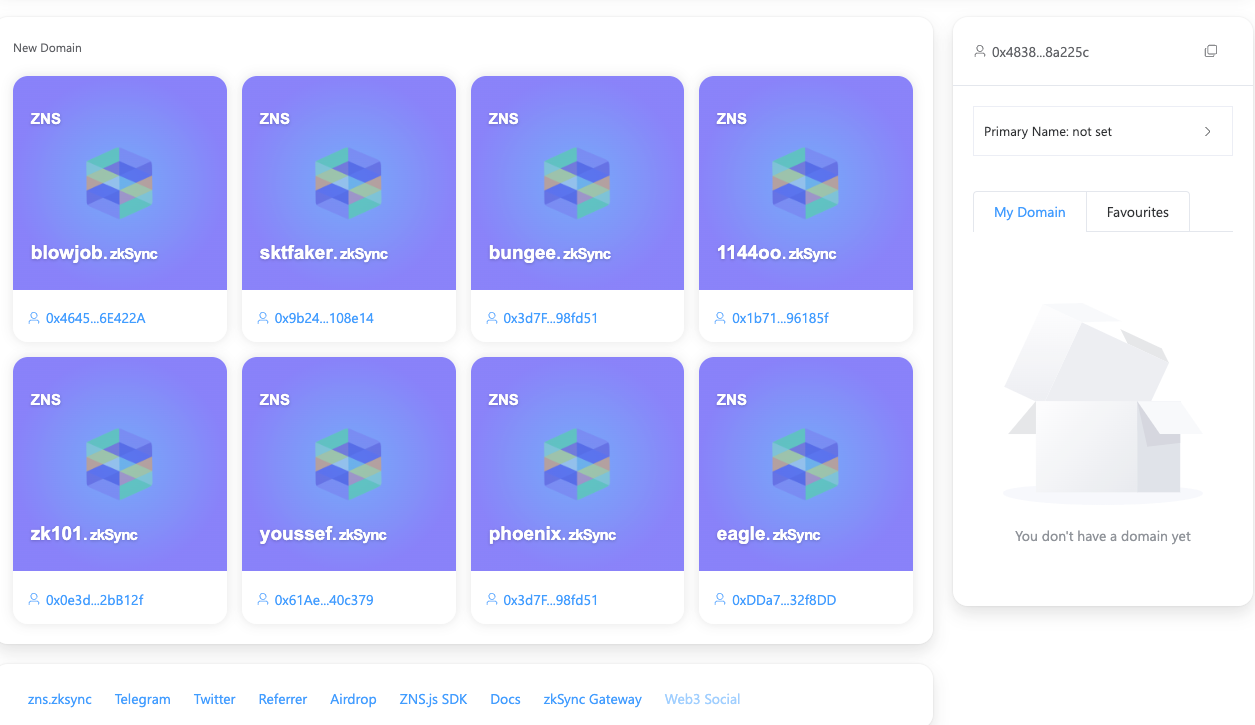
ZNS Domain is also a domain name service project on zkSync, belonging to the decentralized identity DID sector. Compared to the previous project, ZNS Domain's documentation is more detailed, and the product is more refined. In ZNS Domain, domain names end in ".zkSync".
ZNS consists of two main parts: the registry and the resolver. The ZNS registry consists of a smart contract that maintains a list of all domain names and subdomains, as well as stores three key pieces of information for each domain name:
The domain name owner can be an external account (user) or a smart contract. The registrar is just a smart contract that owns a domain name and distributes the subdomains of that domain name to users based on a set of rules defined in the contract. In the ZNS registry, domain name owners can:
Since its launch, the hype around zkSync Era has significantly decreased, and there are four main reasons for this:
In this article, we provided a comprehensive overview of the zkSync Era ecosystem. zkSync Era is a new Layer 2 scaling solution that officially launched on March 24, 2023, and surpassed a total locked value of $100 million within just 17 days. Although the hype around it has decreased, the ecosystem now includes 44 projects covering various fields, including DeFi, cross-chain bridges, and NFTs. Moreover, according to rumors, zkSync Era may distribute airdrop rewards to actively engaged users.
Despite competition from other Layer 2 solutions such as Arbitrum, Optimism, and Starkware, zkSync plays a crucial role in addressing Ethereum's scalability challenges and promoting mainstream adoption. In this article, we focused on top projects in each field to help users better understand them. However, the zkSync Era ecosystem faces four major challenges: lack of ecosystem development, lack of top-tier project endorsements in each field, low average quality of existing projects, and frequent security incidents leading to investor disinterest. Nevertheless, as the ecosystem continues to evolve, we expect zkSync Era to achieve more breakthroughs and accomplishments in the future.
 APP
APP